

On This Day in Lifestyles: February 1, 1884
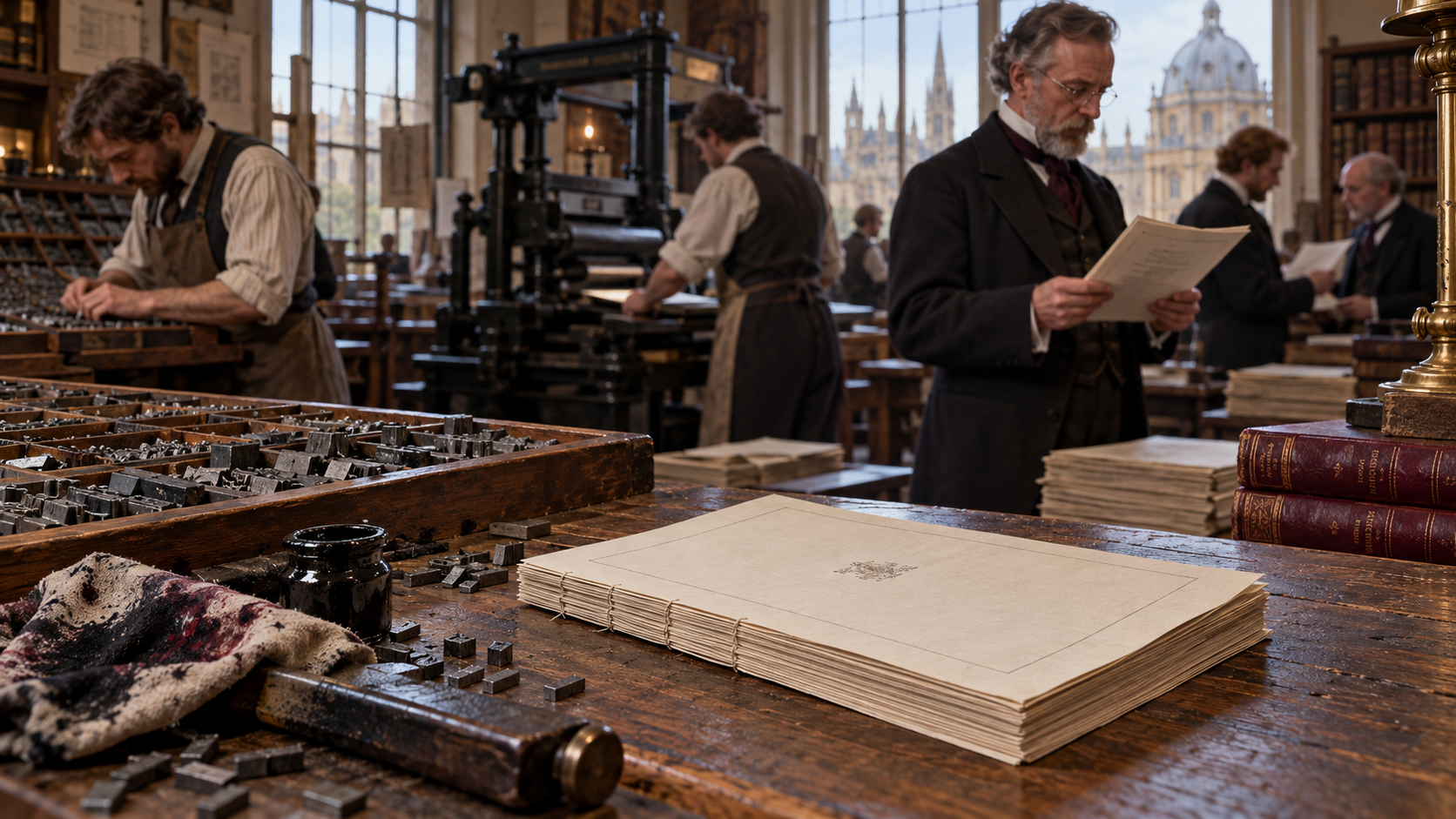
On February 1, 1884, Oxford University Press issued the first fascicle of what would become the Oxford English Dictionary. Titled for the opening stretch of the alphabet, the slim installment carried the ambitious project from scholars’ slips and editorial rooms into readers’ hands. It offered definitions, dated quotations, variant spellings, and word histories rather than a simple list of meanings. The date matters because it converted years of preparation into something the public could encounter directly. A broad change in culture became visible at human scale, through choices, routines, and spaces that ordinary people could recognize.
The undertaking had begun decades earlier with the Philological Society’s call for a dictionary built from historical evidence. Volunteers mailed millions of quotation slips showing how words had appeared in real writing. Editor James Murray organized that paper flood in his famous Scriptorium, where assistants sorted evidence across centuries and decided how the language’s changing uses should be represented. That context explains why the milestone resonated beyond a single institution. Ideas that had once seemed specialized or remote were moving into public life, where they could be tested, repeated, debated, and woven into daily experience.
Publishing in fascicles made the enormous work financially and practically possible. Subscribers could receive sections while editors continued laboring on later letters, and the public could finally judge a method that treated English as an evolving record rather than a fixed rulebook. The first issue also made visible the patient, collaborative work of readers whose names were far less famous than the editors’. The immediate impact was practical as well as symbolic. Participants adjusted habits and expectations, while newspapers, photographs, advertising, and conversation carried the story outward. The excitement of novelty existed alongside limits that later memory can easily smooth away.
The dictionary eventually grew into one of the world’s most influential reference works, continually revised as new vocabulary and evidence appear. Its debut changed the experience of looking up a word: a definition could open into biography, migration, technology, class, and culture. Digital access now makes that historical depth searchable, but the central idea remains the same—meaning is best understood through documented use. Its legacy is larger than an anniversary. The event survives in institutions and habits people now take for granted, while also inviting questions about access, representation, responsibility, and preservation. Looking back restores the human decisions behind a familiar part of modern life. The anniversary also reminds us that everyday life is where large historical forces become personal, repeated, debated, and ultimately durable.
The first fascicle of the dictionary later known as the Oxford English Dictionary reached subscribers with entries from the opening portion of the alphabet.
This detail helps place the anniversary in its original setting.
Editors organized millions of quotation slips sent by volunteer readers, using dated examples to trace changing spellings and meanings.
The wider context explains why the moment drew public attention.
Issuing the work in installments let readers use early sections while the enormous research and editing process continued.
Its legacy remains visible in contemporary culture and everyday life.
Explore more of “This Day in Lifestyles”
Discover more moments in everyday life, design, education, travel, food, fashion, and culture. Each story connects a calendar date with an event that changed how people lived.