

On This Day in Lifestyles: February 15, 1965
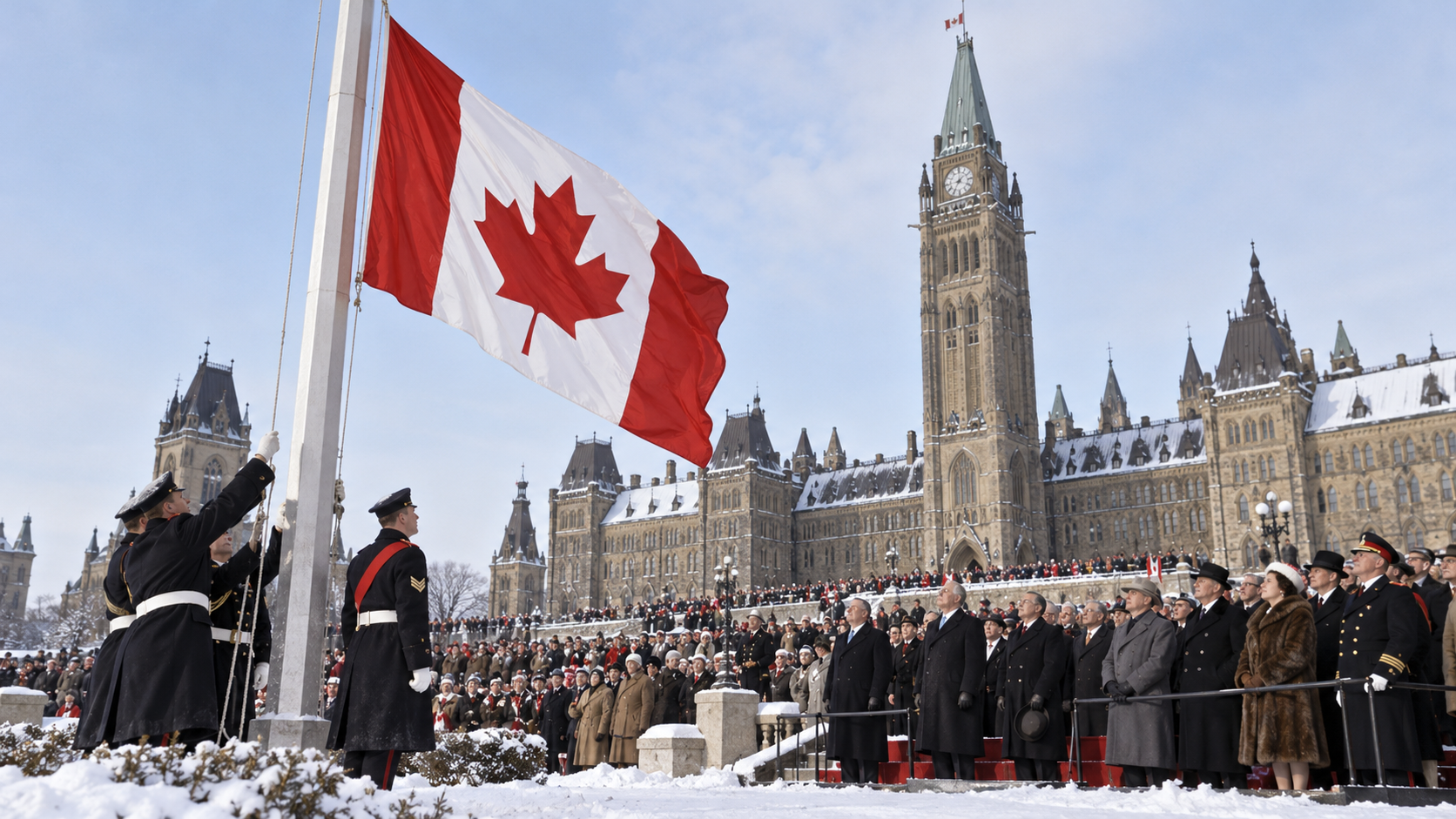
On February 15, 1965, Canada’s red-and-white Maple Leaf flag was raised for the first time in an official ceremony on Parliament Hill. The new banner replaced the Canadian Red Ensign for federal use and presented a clear visual identity centered on a single maple leaf. In the winter air, a political debate became a public ritual visible across the country. The occasion became memorable because a large historical shift took a form people could see and feel. It joined public significance with an ordinary action, turning an abstract change into a shared experience that could be described at dinner tables and remembered later.
For decades, Canadians had discussed whether a distinct national flag should replace symbols closely tied to Britain. The debate intensified under Prime Minister Lester B. Pearson and divided Parliament, veterans’ groups, parties, and families. A committee reviewed thousands of proposals before the simple design by George Stanley was selected. Royal proclamation made it official, but public acceptance developed through repeated use. Seen against its background, the moment was the product of sustained work rather than sudden inspiration. Earlier advocates, craftspeople, researchers, performers, organizers, or users supplied the knowledge and pressure that allowed the event to happen when it did.
Flags operate through everyday repetition. The Maple Leaf soon appeared at schools, border crossings, sports events, embassies, backpacks, uniforms, and family celebrations. Its geometry could be recognized at a distance and reproduced in many sizes. For some observers it signaled greater independence and unity; for others the change felt like a loss of inherited tradition. Both responses gave the ceremony emotional weight. Its first effects unfolded through details: schedules, rooms, tools, printed pages, broadcasts, conversation, and the movement of bodies through new routines. Those details show how history enters life—not as a slogan, but as hundreds of small adjustments made by real people.
The flag became one of Canada’s most recognizable symbols and a flexible marker of citizenship, protest, tourism, remembrance, and international presence. It cannot resolve the country’s linguistic, regional, Indigenous, or political tensions, but it provides a shared image through which those debates are staged. The first raising shows how design can move from committee work into memory by entering repeated public life. Later generations inherited both the achievement and its unresolved tensions. The event helped establish a durable practice or institution, yet its meaning continues to evolve as society asks harder questions about inclusion, power, environmental cost, memory, and cultural ownership. The anniversary also reminds us that everyday life is where large historical forces become personal, repeated, debated, and ultimately durable.
Canada’s new red-and-white Maple Leaf flag was officially raised on Parliament Hill.
This detail helps place the anniversary in its original setting.
A parliamentary committee reviewed thousands of proposals before selecting George Stanley’s single-leaf design.
The wider context explains why the moment drew public attention.
The flag offered a distinctive national image that quickly entered schools, travel, sport, government, and family life.
Its legacy remains visible in contemporary culture and everyday life.
Explore more of “This Day in Lifestyles”
Discover more moments in everyday life, design, education, travel, food, fashion, and culture. Each story connects a calendar date with an event that changed how people lived.