

On This Day in Lifestyles: February 16, 1923
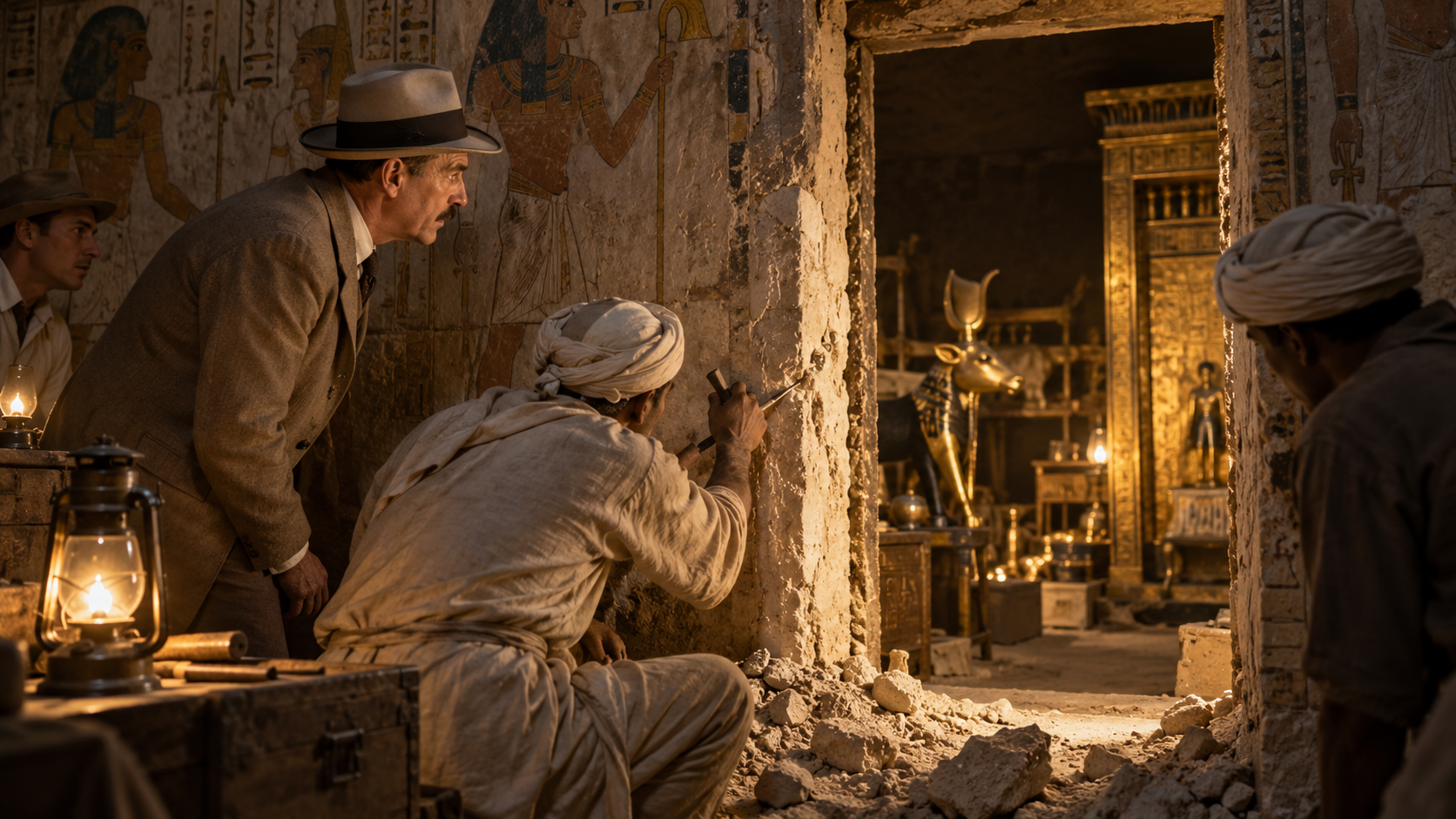
On February 16, 1923, archaeologist Howard Carter formally opened the sealed burial chamber of Tutankhamun in Egypt’s Valley of the Kings. Beyond the doorway stood nested shrines surrounding the young pharaoh’s sarcophagus. The discovery transformed a cramped excavation into a global cultural event, linking careful archaeological work with public fascination for an ancient life preserved in remarkable detail. The date matters because it converted years of preparation into something the public could encounter directly. A broad change in culture became visible at human scale, through choices, routines, and spaces that ordinary people could recognize.
Carter’s team, funded by Lord Carnarvon, had located the tomb entrance in November 1922 after years of searching. An earlier breach into the antechamber revealed furniture, chariots, statues, and other objects, but the burial chamber remained closed while officials, conservators, and invited observers prepared. Photography by Harry Burton documented arrangements before objects were moved, creating an invaluable visual record of the excavation. That context explains why the milestone resonated beyond a single institution. Ideas that had once seemed specialized or remote were moving into public life, where they could be tested, repeated, debated, and woven into daily experience.
Opening the chamber required more than dramatic discovery. Fragile materials had to be stabilized, cataloged, photographed, packed, and transported in intense heat and dust. Newspapers turned the tomb into international spectacle, influencing jewelry, clothing, movies, interior design, and tourism. That excitement often centered European excavators, however, while minimizing Egyptian labor, expertise, political claims, and the country’s struggle for greater control of its antiquities. The immediate impact was practical as well as symbolic. Participants adjusted habits and expectations, while newspapers, photographs, advertising, and conversation carried the story outward. The excitement of novelty existed alongside limits that later memory can easily smooth away.
Tutankhamun became one of the most recognizable figures from the ancient world, and the tomb’s contents reshaped scholarship as well as popular style. Modern archaeology increasingly emphasizes conservation, context, local collaboration, and ethical stewardship rather than treasure hunting. The 1923 opening remains powerful because it reveals two histories at once: an ancient burial and the modern systems through which the past is uncovered, interpreted, displayed, and owned. Its legacy is larger than an anniversary. The event survives in institutions and habits people now take for granted, while also inviting questions about access, representation, responsibility, and preservation. Looking back restores the human decisions behind a familiar part of modern life. The anniversary also reminds us that everyday life is where large historical forces become personal, repeated, debated, and ultimately durable.
Carter’s team formally entered Tutankhamun’s sealed burial chamber, where nested shrines enclosed the royal sarcophagus.
This detail helps place the anniversary in its original setting.
Photographer Harry Burton documented objects in place while conservators cataloged and stabilized fragile materials.
The wider context explains why the moment drew public attention.
The discovery advanced archaeology but also raises questions about colonial power, Egyptian expertise, ownership, and museum display.
Its legacy remains visible in contemporary culture and everyday life.
Explore more of “This Day in Lifestyles”
Discover more moments in everyday life, design, education, travel, food, fashion, and culture. Each story connects a calendar date with an event that changed how people lived.