

On This Day in Lifestyles: February 28, 1983
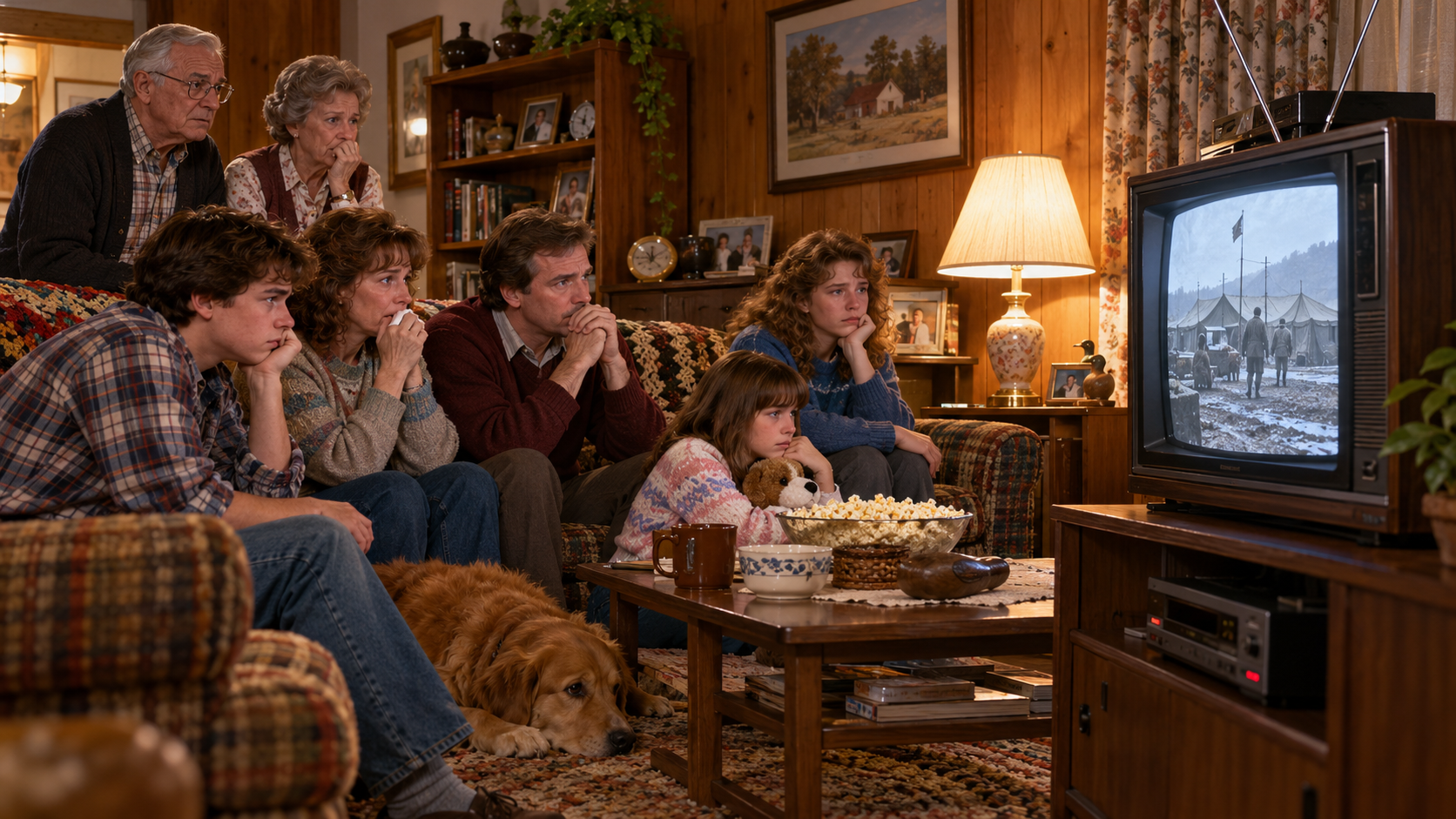
On February 28, 1983, M*A*S*H ended its eleven-season run with the two-and-a-half-hour finale “Goodbye, Farewell and Amen.” More than 100 million viewers watched the characters of the fictional 4077th prepare to leave Korea. The broadcast became the highest-rated series finale in American television, turning millions of separate living rooms into one enormous farewell gathering. The date matters because it converted years of preparation into something the public could encounter directly. A broad change in culture became visible at human scale, through choices, routines, and spaces that ordinary people could recognize.
The series had premiered in 1972, adapting characters and a setting from a film and novel about a mobile army surgical hospital. Mixing comedy with grief, it used the Korean War to explore friendship, medicine, military authority, and the emotional costs of conflict. Its tonal flexibility helped it survive changes in cast and the end of the Vietnam War, remaining popular without abandoning darker themes. That context explains why the milestone resonated beyond a single institution. Ideas that had once seemed specialized or remote were moving into public life, where they could be tested, repeated, debated, and woven into daily experience.
The finale gave major characters individual departures while confronting trauma, loss, and uncertainty. A real brush fire that damaged the outdoor set was incorporated into the story, intensifying the sense of ending. In an era dominated by three broadcast networks, viewers watched simultaneously, then discussed the episode at work and school. Ratings measured not just popularity but the concentrated power of scheduled television. The immediate impact was practical as well as symbolic. Participants adjusted habits and expectations, while newspapers, photographs, advertising, and conversation carried the story outward. The excitement of novelty existed alongside limits that later memory can easily smooth away.
Streaming and fragmented media have made an audience of that scale much harder to assemble around one scripted episode. Yet finales still promise closure, reunion, and collective emotion, while M*A*S*H continues through syndication and archives. The 1983 broadcast remains a landmark of television as social ritual: a story mattered partly because so many people experienced its last chapter at the same time. Its legacy is larger than an anniversary. The event survives in institutions and habits people now take for granted, while also inviting questions about access, representation, responsibility, and preservation. Looking back restores the human decisions behind a familiar part of modern life. The anniversary also reminds us that everyday life is where large historical forces become personal, repeated, debated, and ultimately durable.
More than 100 million viewers watched, giving the episode a 60.3 rating and a 77 share.
This detail helps place the anniversary in its original setting.
The two-and-a-half-hour event resolved many character stories and incorporated a real fire that damaged the outdoor set.
The wider context explains why the moment drew public attention.
The broadcast captures an era when a few networks could gather an enormous national audience around one scheduled program.
Its legacy remains visible in contemporary culture and everyday life.
Explore more of “This Day in Lifestyles”
Discover more moments in everyday life, design, education, travel, food, fashion, and culture. Each story connects a calendar date with an event that changed how people lived.