

On This Day in Politics: February 11, 1990
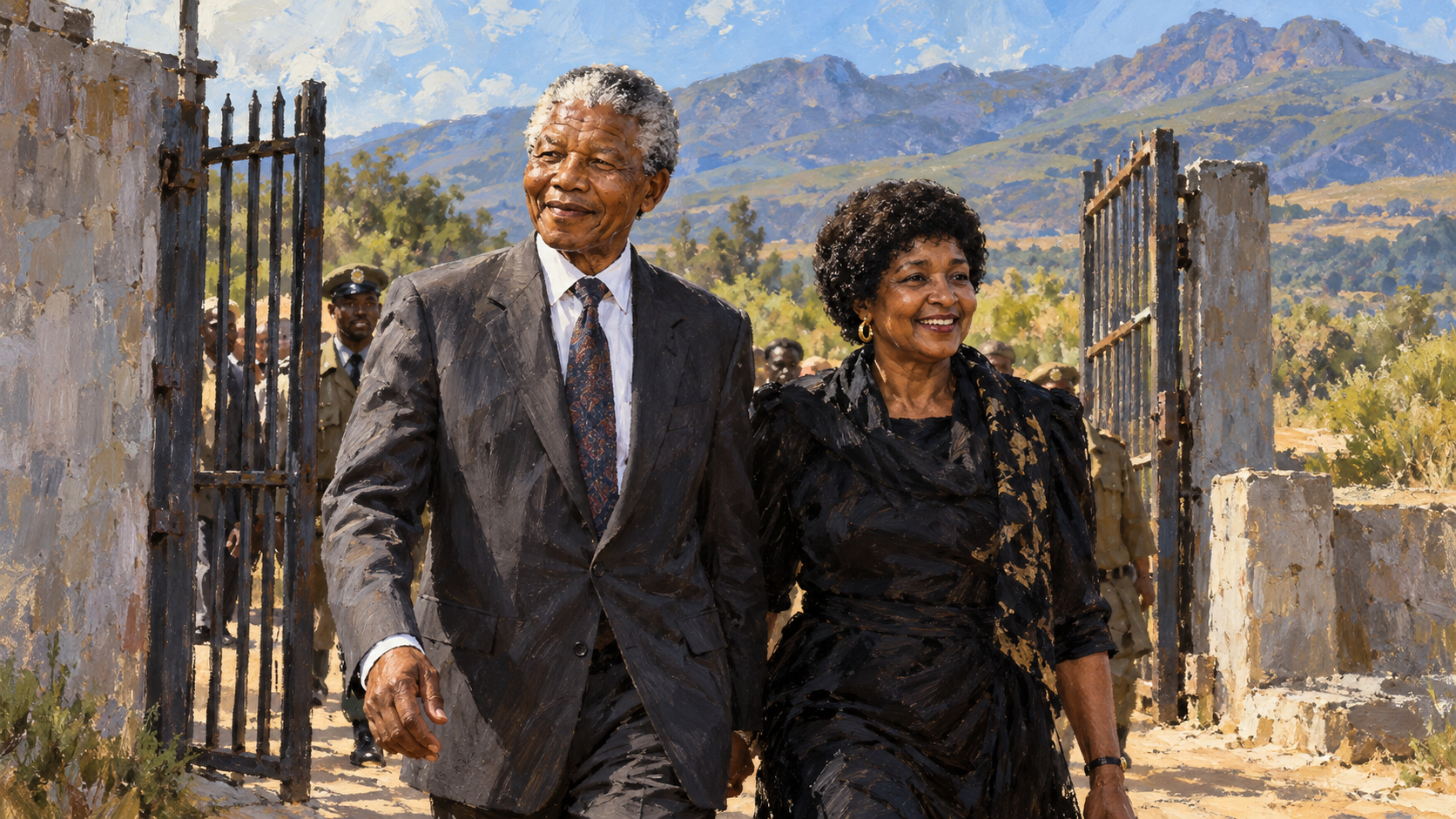
On February 11, 1990, Nelson Mandela walked out of Victor Verster Prison near Paarl, South Africa, after twenty-seven years in custody. Accompanied by Winnie Mandela, he emerged into public life as crowds and international television audiences watched a moment that had once seemed distant. President F. W. de Klerk’s government released him unconditionally, following its announcement earlier that month that the African National Congress and other banned organizations could operate legally again. Mandela’s freedom was a major breakthrough in the struggle against apartheid. It did not end the system that day, install a democratic government, or settle the difficult negotiations that still lay ahead.
Mandela had become one of the most recognizable symbols of opposition to South Africa’s system of racial domination during his imprisonment. Much of his confinement was spent on Robben Island, followed by periods at Pollsmoor and Victor Verster. His absence from public life did not erase his political importance, and demands for his release became central to domestic resistance and international pressure. In 1985, he had rejected a conditional release offer tied to renouncing violence while the broader conflict continued. The unconditional release of 1990 therefore represented a different political opening. It allowed him to engage openly with supporters, colleagues, and opponents rather than accept freedom on the earlier terms.
Later on the day of his release, Mandela addressed a large gathering from Cape Town City Hall. His return brought renewed attention to the goals of the liberation movement and to the need for a political settlement that would dismantle apartheid. Celebration coexisted with uncertainty: discriminatory institutions remained, political violence continued, and the government and its opponents had yet to agree on a democratic constitutional order. Mandela’s release also did not mean that the ANC abandoned its armed struggle that afternoon. The organization suspended armed action in August 1990 as talks developed. These distinctions matter because the images of a prison gate opening can compress a prolonged and contested transition into a misleading impression of instant resolution.
Negotiations and conflict continued over the following four years before South Africa held its first democratic national elections in 1994 and Mandela became president. His freedom made his direct public participation in that process possible, but the transition involved many organizations, communities, negotiators, and voters. The February anniversary is consequently both personal and political: it commemorates the end of a long imprisonment and the beginning of a new phase of open engagement. The distance between release and democratic government shows how much work remained after the televised celebration. February 11 endures as a defining moment because a leader long confined by the apartheid state could now participate publicly in the struggle to replace its political order.
Victor Verster, near Paarl, was Mandela's final place of imprisonment. The famous departure of February 11 did not take place at Robben Island.
The government announced the lifting of bans on the ANC and other organizations on February 2. Mandela's release followed nine days later.
The 1990 release was unconditional. That distinguishes it from the 1985 offer Mandela rejected while still imprisoned.
The City Hall address took place later on the day he left prison. Public celebration did not remove the legal and political structures of apartheid.
Talks produced further steps during 1990, including the ANC's August suspension of armed action. Those developments should not be dated to the release itself.
South Africa's democratic election followed in 1994. The four-year interval is a reminder that release opened a transition whose outcome still required extensive negotiation.
Explore more of "On This Day ..."
Discover more events from the same date across news, politics, technology, sports, and other fields. Each link highlights significant moments that shaped history on different fronts.