

On This Day in Tech: February 10, 1996
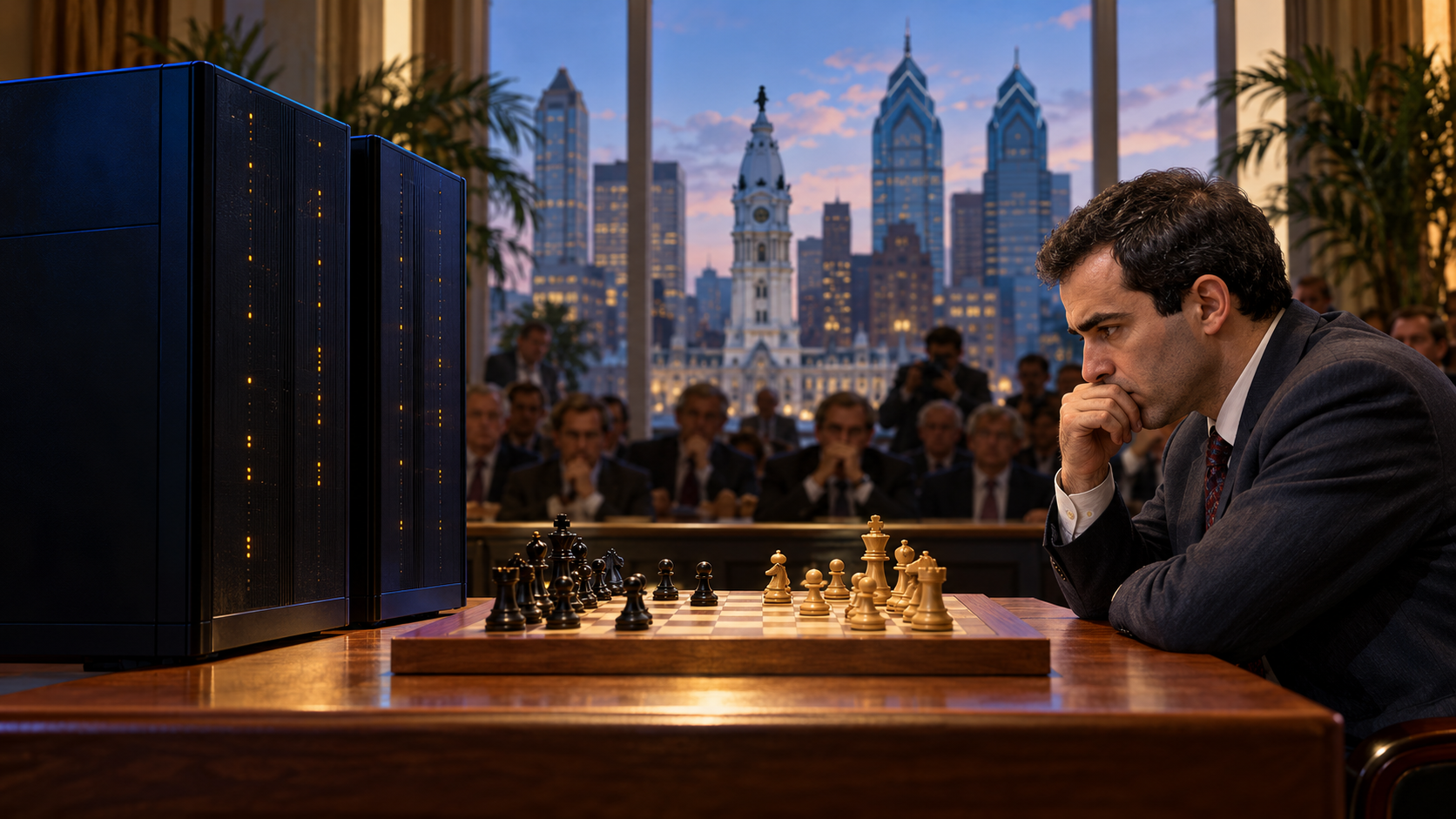
On February 10, 1996, in Philadelphia, Pennsylvania, IBM’s Deep Blue chess computer and world champion Garry Kasparov began a closely watched six-game match. Deep Blue won the opening game, becoming the first computer to defeat a reigning world champion in a classical tournament game. Kasparov later recovered and won the 1996 match, but the first game demonstrated that specialized computing could challenge elite human calculation. The event emerged from a specific set of technical goals rather than from a single flash of invention. Engineers, operators, and institutions had spent years translating laboratory ideas into equipment that could work under real conditions. What happened that day gave the public a clear, observable milestone, while the larger project still depended on testing, funding, training, and careful coordination.
Computer-chess research had progressed for decades through better search methods, evaluation functions, custom hardware, and larger stores of opening knowledge. Chess offered a demanding test because an enormous number of possible positions had to be narrowed using both calculation and judgment. Deep Blue paired powerful parallel processors with purpose-built chess chips that examined large numbers of candidate moves. That background matters because the milestone joined hardware, software, standards, and human judgment into one working system. The design had to perform reliably enough for practical use, not merely demonstrate an isolated principle. Earlier experiments had established pieces of the solution, but the February event showed how those pieces could be combined at a scale or level of confidence that changed what planners believed was possible.
During the game, the machine converted its positional and tactical analysis into a winning attack while Kasparov tried to create practical complications. Kasparov resigned after forty-three moves, giving IBM a historic game victory even though the overall contest remained undecided. The match attracted attention far beyond chess because it offered a visible comparison between expert human reasoning and machine computation. The outcome was important on its own terms, yet it should not be mistaken for the final form of the technology. Performance limits, cost, safety, access, and competing approaches still shaped what came next. Even so, the date provided evidence that specialists, policymakers, businesses, or consumers could evaluate, and it moved the idea from proposal toward an operational path.
The result validated IBM’s engineering approach and intensified interest in high-performance computing as a tool for complex decision problems. Deep Blue was a specialized system, not a general intelligence, and its single-game victory did not mean computers understood chess as humans do. A stronger Deep Blue won the 1997 rematch, and the project became a lasting reference point in debates about artificial intelligence and human expertise. Later improvements often looked very different from the equipment used on the anniversary itself, but they built on the same underlying breakthrough in capability, organization, or public acceptance. The legacy also includes lessons about how technology spreads: success depends on institutions, standards, and users as much as on a machine. Remembering the event precisely helps separate the verified achievement of that day from developments that followed months or years later.
The key setting was Philadelphia, Pennsylvania. The people and institutions most directly involved were IBM’s Deep Blue chess computer and world champion Garry Kasparov began a closely watched six-game match, connecting research with practical operations.
Before the anniversary, Computer-chess research had progressed for decades through better search methods, evaluation functions, custom hardware, and larger stores of opening knowledge. The unresolved challenge was clear: Chess offered a demanding test because an enormous number of possible positions had to be narrowed using both calculation and judgment.
The technology at the center of the story can be summarized this way: Deep Blue paired powerful parallel processors with purpose-built chess chips that examined large numbers of candidate moves. It supplied the practical foundation for the milestone.
The immediate result was documented in concrete terms: Kasparov resigned after forty-three moves, giving IBM a historic game victory even though the overall contest remained undecided. Still, Deep Blue was a specialized system, not a general intelligence, and its single-game victory did not mean computers understood chess as humans do.
The longer significance rests on more than novelty. A stronger Deep Blue won the 1997 rematch, and the project became a lasting reference point in debates about artificial intelligence and human expertise.
The event connects to a broader pattern in technology history: reliable systems mature through testing, standards, investment, and use. Later versions changed, but the verified accomplishment on February 10, 1996 remained the reference point.
Explore more of "On This Day ..."
Discover more events from the same date across news, politics, technology, sports, and other fields. Each link highlights significant moments that shaped history on different fronts.