

On This Day in Politics: February 16, 1918
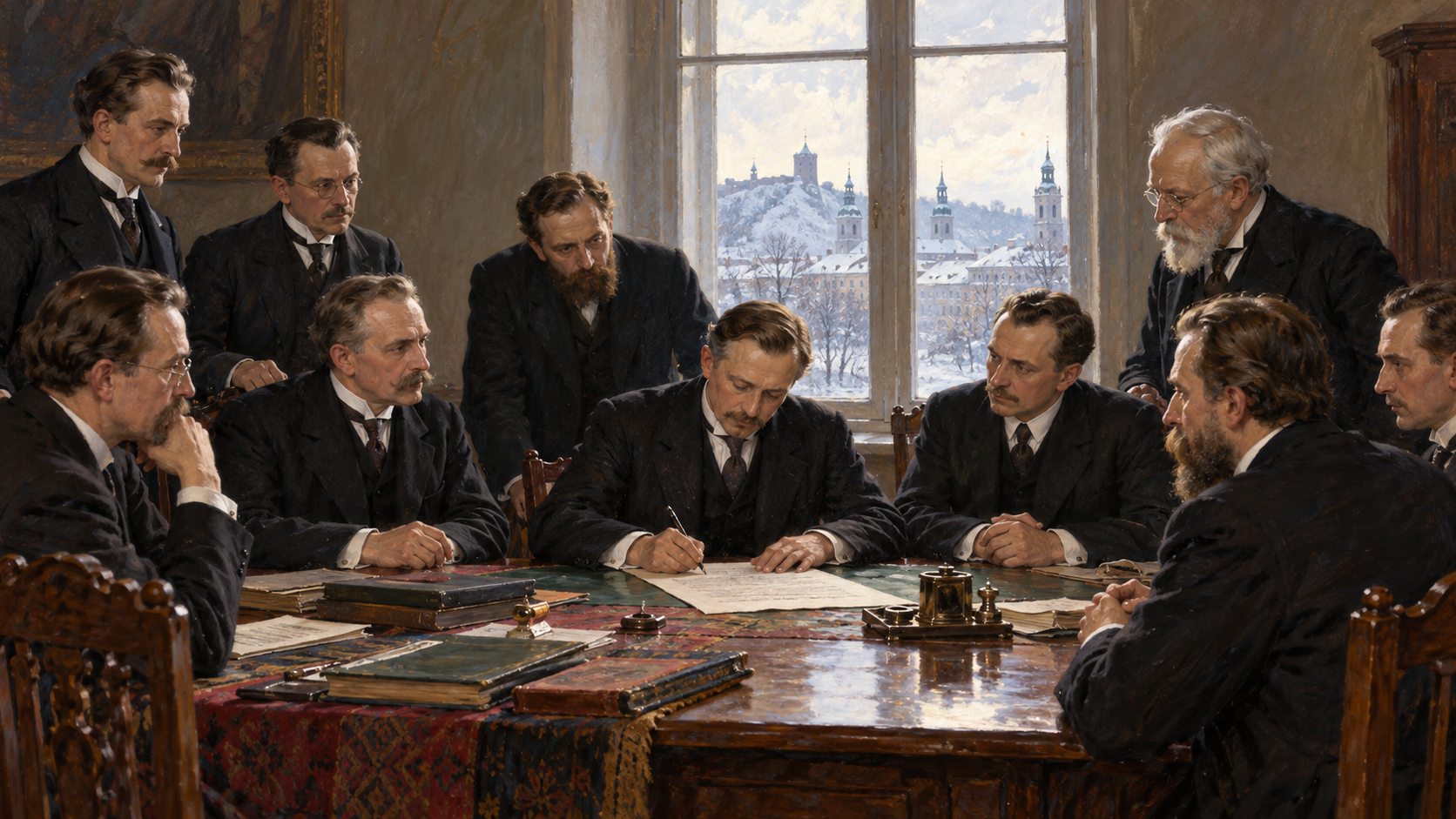
On February 16, 1918, twenty members of the Council of Lithuania signed an act in Vilnius proclaiming the restoration of an independent Lithuanian state. The declaration called for government founded on democratic principles, identified Vilnius as the capital, and rejected the state ties that had bound Lithuania to other nations. It was a statement of political purpose made during the First World War, when the future of the region remained uncertain. Signing the document did not immediately give the council effective control of the country, but it established a clear claim to statehood and a basis for the work that followed.
The council had been chosen by the Lithuanian conference held in Vilnius in September 1917. Its members represented different political currents, and the independence project required them to find common ground despite competing pressures. Lithuania was under German occupation, while the collapse of imperial authority elsewhere created possibilities that had previously seemed remote. The February act was adopted unanimously under the chairmanship of Jonas Basanavičius. That agreement mattered because it presented independence as a collective national claim rather than the preference of a single faction. The signatories committed themselves publicly to a political future whose institutions and international position still had to be secured.
The declaration connected independence with democratic authorization. It left the foundations of the state and its relations with other countries to a constituent assembly elected by the people. This separated the council’s immediate task of proclaiming statehood from the broader authority needed to determine a lasting constitutional order. The distinction also showed why the act was a beginning rather than a completed system of government. A declaration could state principles and reject dependency, but officials, representative institutions, and practical administration had to give those principles force. The new state’s future therefore depended on subsequent political organization as well as on changing conditions beyond Lithuania’s borders.
February 16 became a central reference point in Lithuania’s understanding of its own constitutional continuity. The act’s significance extended beyond the immediate circumstances of 1918: the declaration restoring independence in March 1990 expressly invoked it as part of the legal foundation of the Lithuanian state. That later use helps explain why the earlier document is remembered as more than a wartime appeal. It connected historical statehood with the claim that legitimate government should rest on the people’s will. The anniversary honours the signatories while also pointing to a continuing challenge of independence movements: turning a persuasive declaration of national rights into institutions capable of protecting and sustaining those rights.
The Vilnius conference of September 1917 elected the twenty-member council. Its mandate provided an organizational base for the declaration.
The signatories worked in wartime conditions and under German occupation. The act expressed a claim to independence before full governing power existed.
All twenty council members signed the February 16 act. Their unanimity gave the declaration weight across different political tendencies.
A future constituent assembly was to settle the state’s foundations. The council did not claim that its declaration answered every constitutional question.
The 1990 restoration act referred directly to the 1918 declaration, treating it as a continuing constitutional foundation.
The House of Signatories in Vilnius preserves the memory of this moment when a group of representatives committed themselves to restoring statehood.
Explore more of "On This Day ..."
Discover more events from the same date across news, politics, technology, sports, and other fields. Each link highlights significant moments that shaped history on different fronts.