

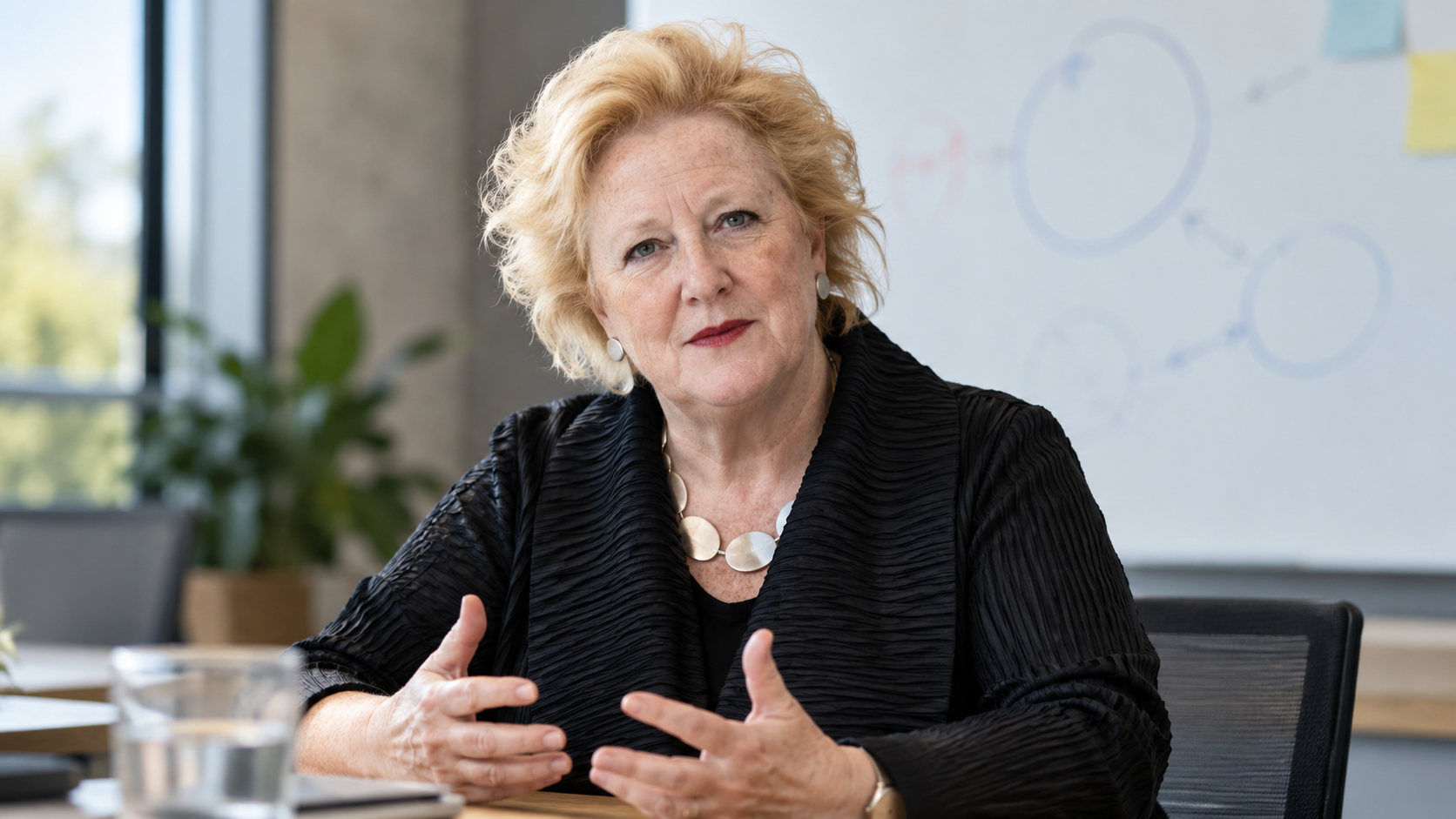
“The truth won’t set us free until we develop the skills and the habit and the talent and the moral courage to use it.”
Margaret Heffernan closed her 2012 TED talk “Dare to Disagree” with this challenge after describing physician Alice Stewart and statistician George Kneale. Stewart’s research connected prenatal X-rays with childhood cancer, while Kneale treated his job as trying to prove her wrong. Their productive opposition strengthened the work. Heffernan used the story to show that open information is not enough. Organizations can possess the relevant facts and still fail when people fear conflict, authority discourages challenge, or evidence threatens identity.
Using truth requires skills that are both analytical and social. People must know how to test claims, ask disconfirming questions, separate criticism of an idea from rejection of a person, and revise a view without humiliation. Leaders must create channels where concern can travel upward and where the messenger is protected. Constructive disagreement works when participants share a purpose and standards of evidence, not when argument becomes a contest for dominance.
Courage alone cannot repair a system designed to punish candor. Advising employees to speak up while rewarding conformity transfers organizational risk to the individual. Anonymous reporting, independent review, premortems, red teams, and explicit dissent roles can make challenge safer, but only if leaders respond visibly and fairly. Disagreement also has limits: manufactured controversy should not give unsupported claims equal standing with strong evidence. The goal is better thinking, not endless debate.
The quote matters in businesses saturated with data and dashboards. More information can reinforce consensus if everyone interprets it through the same assumptions. Teams should ask what evidence would change the decision, who sees the problem differently, and which concern has not been voiced because the cost feels too high. Heffernan’s message is that truth becomes useful through practiced behavior. A thinking organization is not one without conflict; it is one capable of turning principled conflict into correction before silence becomes failure. A useful meeting practice is to separate proposal ownership from criticism. Before discussion, the group can assign someone to identify the strongest contrary evidence and ask the proposer to summarize that challenge fairly before responding. The decision record should note what would cause reconsideration later. These steps reduce the social cost of disagreement and prevent confidence from being mistaken for completeness. Over time, teams learn that changing a position after good challenge is a sign of judgment rather than weakness. That habit is the organizational form of the moral courage Heffernan describes. Better disagreement creates earlier correction, stronger commitment, and more defensible choices.
Heffernan ended her TEDGlobal 2012 talk “Dare to Disagree” with the line after showing how rigorous opposition strengthened scientific work.
Her examples connected organizational silence with preventable harm despite the availability of relevant information.
Facts require skills of testing, listening, disconfirmation, and revision before they can improve decisions.
Individual courage must be supported by systems that protect dissent and distinguish evidence-based challenge from noise.
Data-rich organizations can still become willfully blind when incentives and authority suppress unwelcome interpretation.
Structured disagreement helps teams correct assumptions before consensus turns a visible risk into an avoidable failure.
Explore more "Quotes of The Day"
Discover more notable quotes from influential voices across politics, science, business, technology, sports, and culture. Each quote offers insight into how ideas, beliefs, and decisions shape the world around us.