

On This Day in Health: September 2, 1952
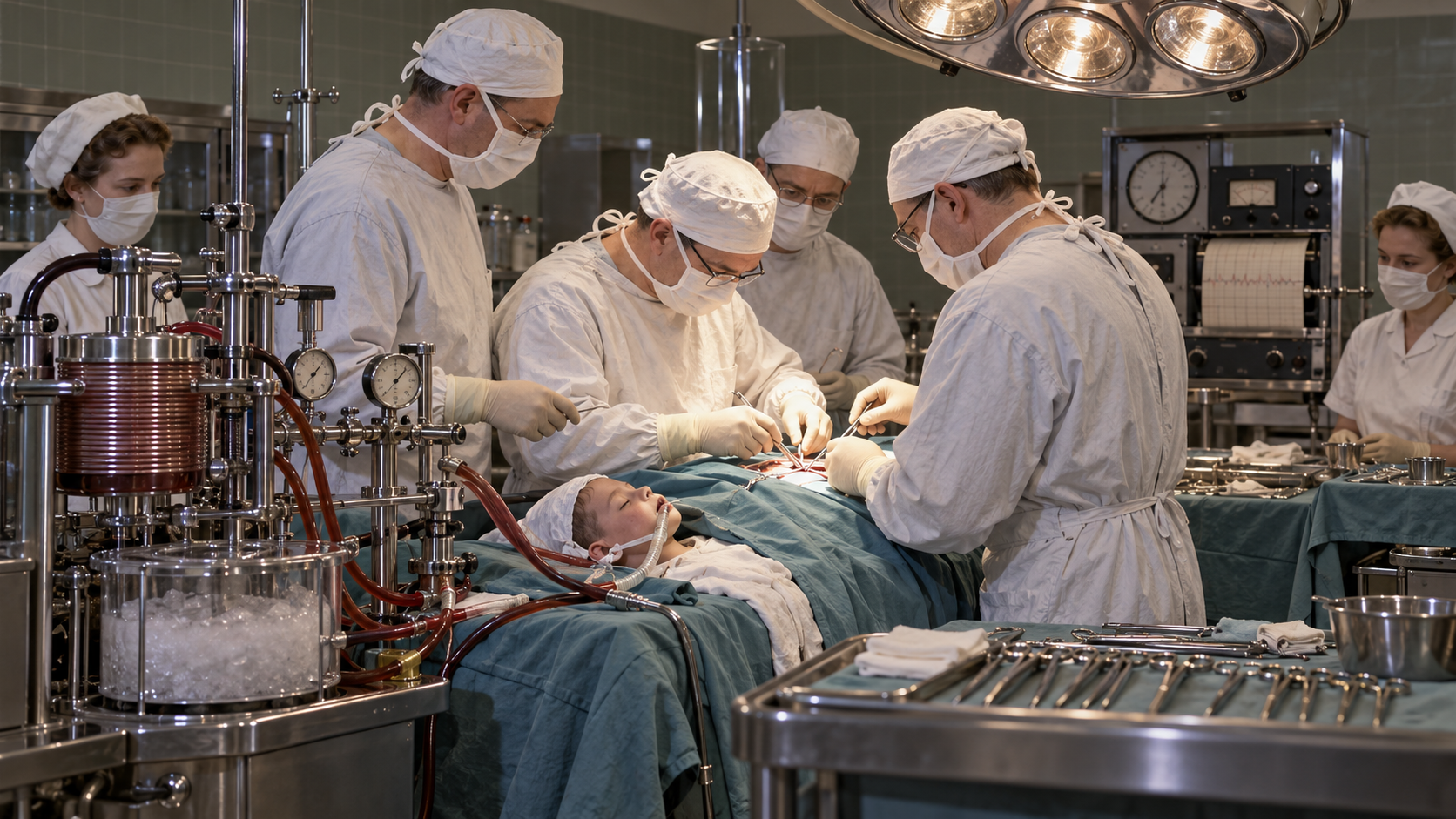
On September 2, 1952, surgeon F. John Lewis and a University of Minnesota team completed a successful open-heart operation under direct vision. They repaired an atrial septal defect in a five-year-old girl after cooling her body and briefly stopping blood flow to the heart. This date matters because it fixes a broad medical story to a specific moment, place, and group of people. It also shows how health history is shaped by institutions and practical choices as well as laboratory discoveries.
The background was already developing before that day. Surgeons could operate around the heart, but opening its chambers posed a different problem: blood obscured the field and interrupting circulation threatened the brain within minutes. Reliable heart-lung machines were not yet available. Experimental work suggested that deep hypothermia could slow metabolism and create a short operating window. Those conditions defined what participants could attempt and what patients or communities could reasonably expect. They also explain why later accounts sometimes compress years of preparation into a single anniversary. Looking at that preparation keeps credit broad and makes the turning point easier to understand without turning it into a miracle story.
What happened on the date was consequential but limited. Lewis, Richard Varco, Mansur Taufic, C. Walton Lillehei, and their colleagues cooled the child to about 28 degrees Celsius. With inflow occluded, Lewis opened the atrium and closed the defect during only several minutes of interrupted circulation. The patient recovered and lived into adulthood. Hypothermia allowed only brief, relatively simple repairs and carried risks including ventricular fibrillation. The technique could not address many complex congenital defects, and later operations required cardiopulmonary bypass or other methods that supported circulation for longer periods. The distinction is important: the event did not instantly solve the underlying health problem, and later progress depended on follow-up research, training, policy, funding, and public trust. Contemporary evidence also helps separate what participants knew then from interpretations added after the result became famous.
Its longer legacy reaches beyond the original setting. The operation demonstrated that the inside of the human heart could be repaired successfully. It helped launch a remarkable period of cardiac innovation in Minnesota and contributed to the development of bypass, pacemakers, and modern congenital heart surgery. Modern open-heart care rests on technologies and teams far beyond this first procedure, but the operation remains a clear example of clinicians matching physiology, timing, and surgical precision to overcome a once prohibitive barrier. Seen in context, the anniversary is useful because it connects a concrete historical episode with continuing questions about evidence, access, safety, and responsibility in health care. That connection is stronger when the people affected, the limits of the achievement, and the work still unfinished remain part of the account.
Lewis, Richard Varco, Mansur Taufic, C. Walton Lillehei, and their colleagues cooled the child to about 28 degrees Celsius. With inflow occluded, Lewis opened the atrium and closed the defect during only several minutes of interrupted circulation. The patient recovered and lived into adulthood.
Hypothermia allowed only brief, relatively simple repairs and carried risks including ventricular fibrillation. The technique could not address many complex congenital defects, and later operations required cardiopulmonary bypass or other methods that supported circulation for longer periods.
The operation demonstrated that the inside of the human heart could be repaired successfully. It helped launch a remarkable period of cardiac innovation in Minnesota and contributed to the development of bypass, pacemakers, and modern congenital heart surgery.
Surgeons could operate around the heart, but opening its chambers posed a different problem: blood obscured the field and interrupting circulation threatened the brain within minutes. Reliable heart-lung machines were not yet available. Experimental work suggested that deep hypothermia could slow metabolism and create a short operating window.
surgeon F. John Lewis and a University of Minnesota team completed a successful open-heart operation under direct vision. They repaired an atrial septal defect in a five-year-old girl after cooling her body and briefly stopping blood flow to the heart.
Modern open-heart care rests on technologies and teams far beyond this first procedure, but the operation remains a clear example of clinicians matching physiology, timing, and surgical precision to overcome a once prohibitive barrier.
Explore more of "On This Day ..."
Discover more events from the same date across news, politics, technology, sports, and other fields. Each link highlights significant moments that shaped history on different fronts.