

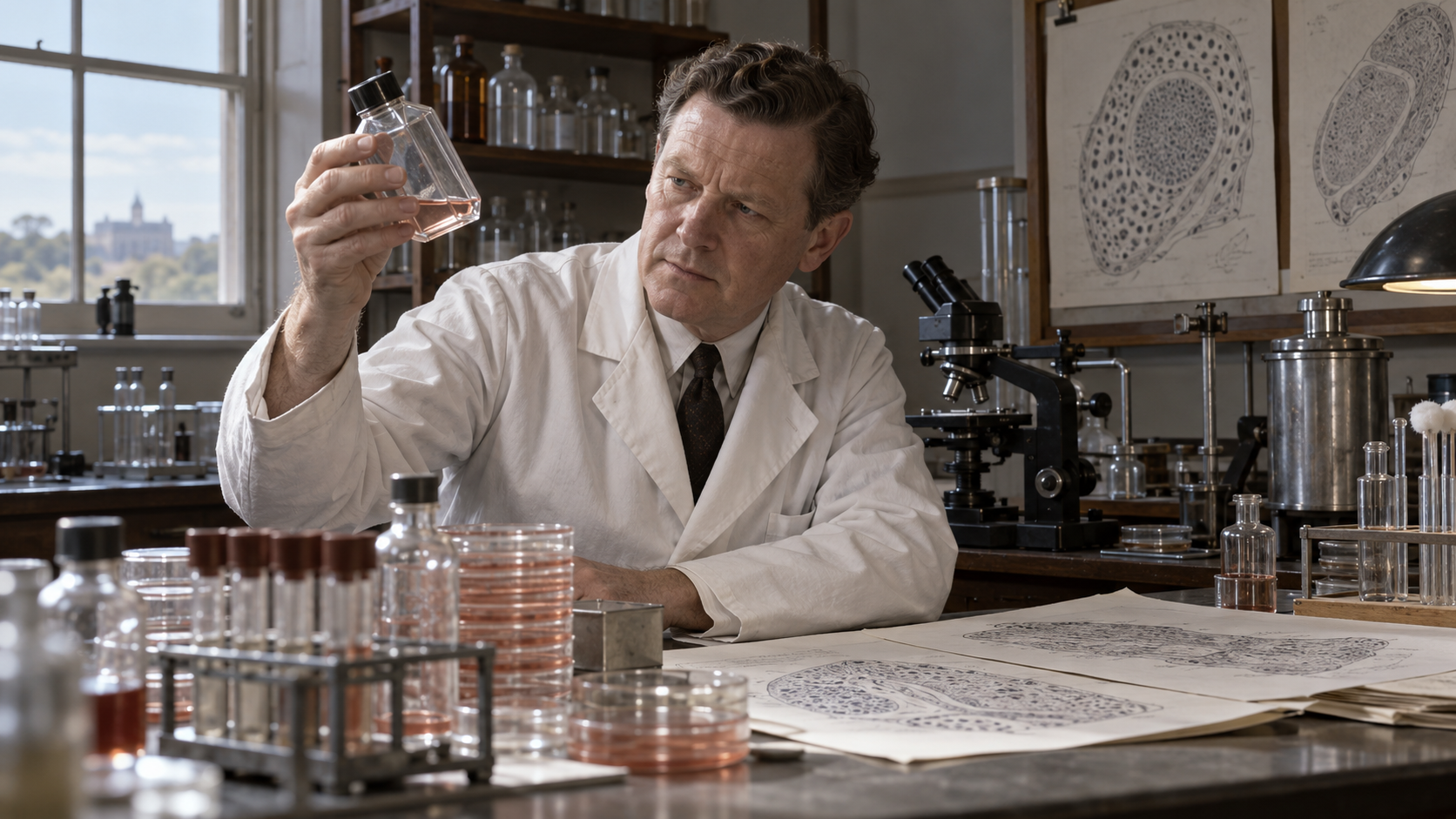
On This Day in Health: September 3, 1899
On September 3, 1899, Frank Macfarlane Burnet was born in Traralgon, Victoria, Australia. He would become one of the twentieth century's most influential immunologists and share the 1960 Nobel Prize in Physiology or Medicine for work on acquired immunological tolerance. This date matters because it fixes a broad medical story to a specific moment, place, and group of people. It also shows how health history is shaped by institutions and practical choices as well as laboratory discoveries.
The background was already developing before that day. Immunologists needed to explain how the body distinguishes its own tissues from foreign material. Transplant rejection showed the power of that recognition, while observations from development suggested that immune identity might be learned rather than fixed completely by heredity. Those conditions defined what participants could attempt and what patients or communities could reasonably expect. They also explain why later accounts sometimes compress years of preparation into a single anniversary. Looking at that preparation keeps credit broad and makes the turning point easier to understand without turning it into a miracle story.
What happened on the date was consequential but limited. Burnet proposed in 1949 that exposure to foreign cells during fetal life could teach the developing immune system to accept them later. Peter Medawar and colleagues supplied experimental support in animals, turning a theoretical idea into a foundation for understanding immune tolerance. The theory did not by itself make organ transplantation safe. Rejection, infection, tissue matching, and the toxic effects of immunosuppressive drugs remained major clinical obstacles, and researchers continued to refine how tolerance develops and sometimes fails. The distinction is important: the event did not instantly solve the underlying health problem, and later progress depended on follow-up research, training, policy, funding, and public trust. Contemporary evidence also helps separate what participants knew then from interpretations added after the result became famous.
Its longer legacy reaches beyond the original setting. Burnet's broader career also included major work in virology and the clonal selection theory of antibody formation. His tolerance concept helped researchers interpret transplantation, autoimmune disease, and the immune system's balance between defense and self-restraint. Current medicine still pursues ways to induce precise tolerance so that a transplant can be accepted or an autoimmune attack quieted without broadly weakening immunity. Seen in context, the anniversary is useful because it connects a concrete historical episode with continuing questions about evidence, access, safety, and responsibility in health care. That connection is stronger when the people affected, the limits of the achievement, and the work still unfinished remain part of the account.
Burnet proposed in 1949 that exposure to foreign cells during fetal life could teach the developing immune system to accept them later. Peter Medawar and colleagues supplied experimental support in animals, turning a theoretical idea into a foundation for understanding immune tolerance.
The theory did not by itself make organ transplantation safe. Rejection, infection, tissue matching, and the toxic effects of immunosuppressive drugs remained major clinical obstacles, and researchers continued to refine how tolerance develops and sometimes fails.
Burnet's broader career also included major work in virology and the clonal selection theory of antibody formation. His tolerance concept helped researchers interpret transplantation, autoimmune disease, and the immune system's balance between defense and self-restraint.
Immunologists needed to explain how the body distinguishes its own tissues from foreign material. Transplant rejection showed the power of that recognition, while observations from development suggested that immune identity might be learned rather than fixed completely by heredity.
Frank Macfarlane Burnet was born in Traralgon, Victoria, Australia. He would become one of the twentieth century's most influential immunologists and share the 1960 Nobel Prize in Physiology or Medicine for work on acquired immunological tolerance.
Current medicine still pursues ways to induce precise tolerance so that a transplant can be accepted or an autoimmune attack quieted without broadly weakening immunity.
Explore more of "On This Day ..."
Discover more events from the same date across news, politics, technology, sports, and other fields. Each link highlights significant moments that shaped history on different fronts.