

On This Day in Health: September 24, 1898
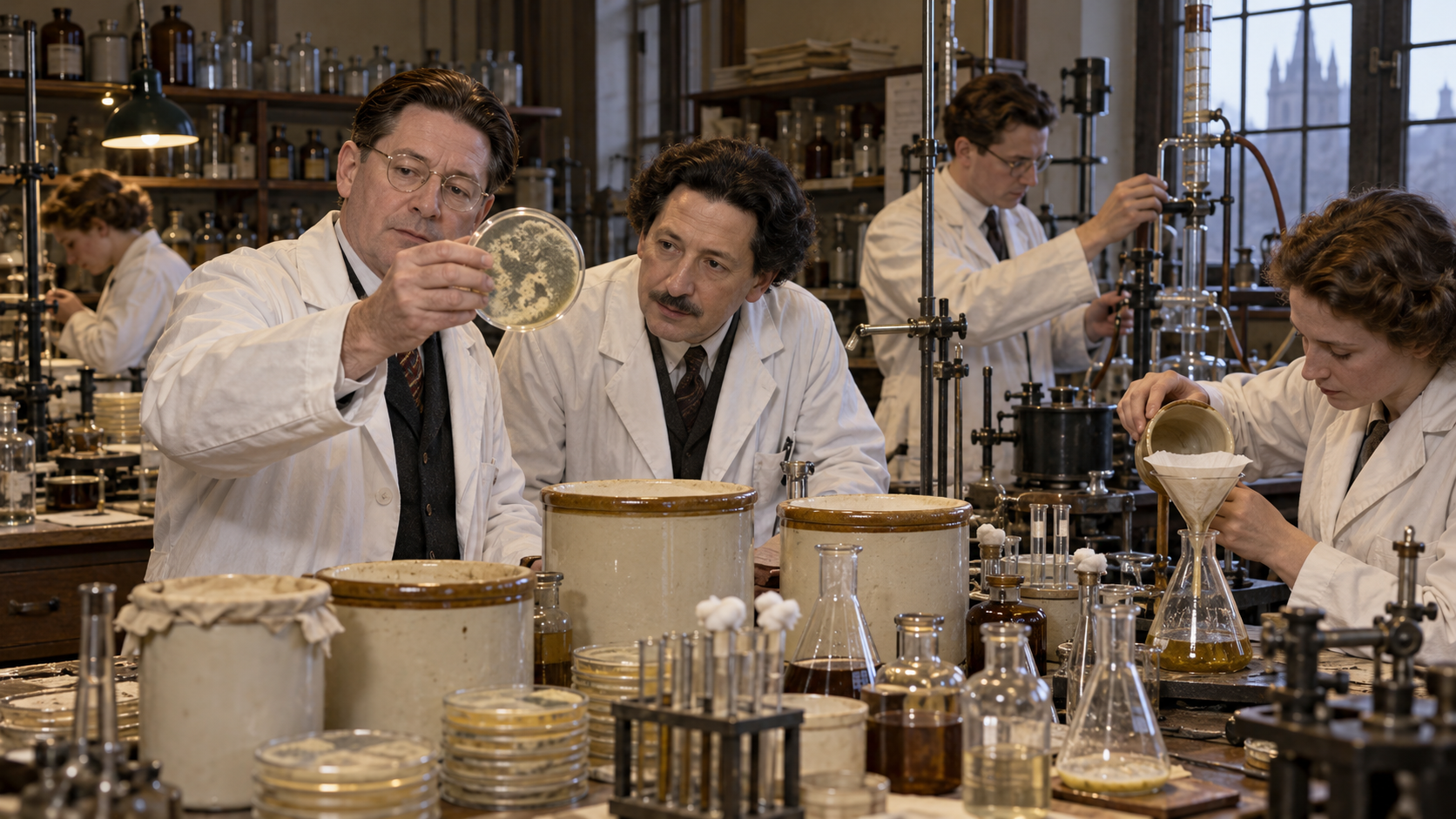
On September 24, 1898, Howard Walter Florey was born in Adelaide, South Australia. As an Oxford pathologist, he later led the multidisciplinary team that transformed Alexander Fleming's observation of penicillin into an antibacterial treatment that could be tested, produced, and used in patients. This date matters because it fixes a broad medical story to a specific moment, place, and group of people. It also shows how health history is shaped by institutions and practical choices as well as laboratory discoveries.
The background was already developing before that day. Fleming had reported in 1929 that a Penicillium mold inhibited bacteria, but the active substance was unstable and difficult to purify. A decade later, Florey and biochemist Ernst Chain organized a systematic search for naturally occurring antibacterial compounds, supported by chemists and laboratory staff. Those conditions defined what participants could attempt and what patients or communities could reasonably expect. They also explain why later accounts sometimes compress years of preparation into a single anniversary. Looking at that preparation keeps credit broad and makes the turning point easier to understand without turning it into a miracle story.
What happened on the date was consequential but limited. The Oxford group developed methods to extract and concentrate penicillin, showed that it protected infected mice, and began early human treatment in 1941. Limited supplies meant the first critically ill patient could not receive enough drug, a painful demonstration of both promise and scarcity. Florey did not discover penicillin alone, and the familiar story can understate Chain, Norman Heatley, Margaret Jennings, technicians, patients, governments, and manufacturers. Turning a laboratory effect into medicine required coordinated science, engineering, clinical judgment, and large-scale production. The distinction is important: the event did not instantly solve the underlying health problem, and later progress depended on follow-up research, training, policy, funding, and public trust. Contemporary evidence also helps separate what participants knew then from interpretations added after the result became famous.
Its longer legacy reaches beyond the original setting. Wartime collaboration in Britain and the United States expanded manufacturing. Penicillin then transformed treatment of many bacterial infections and helped establish antibiotics as a central part of medicine. Fleming, Chain, and Florey shared the 1945 Nobel Prize. Antimicrobial resistance now places that legacy under pressure. Florey's work remains a model for translation, while its success also carries a responsibility to use antibiotics carefully and preserve their effectiveness. Seen in context, the anniversary is useful because it connects a concrete historical episode with continuing questions about evidence, access, safety, and responsibility in health care. That connection is stronger when the people affected, the limits of the achievement, and the work still unfinished remain part of the account.
The Oxford group developed methods to extract and concentrate penicillin, showed that it protected infected mice, and began early human treatment in 1941. Limited supplies meant the first critically ill patient could not receive enough drug, a painful demonstration of both promise and scarcity.
Florey did not discover penicillin alone, and the familiar story can understate Chain, Norman Heatley, Margaret Jennings, technicians, patients, governments, and manufacturers. Turning a laboratory effect into medicine required coordinated science, engineering, clinical judgment, and large-scale production.
Wartime collaboration in Britain and the United States expanded manufacturing. Penicillin then transformed treatment of many bacterial infections and helped establish antibiotics as a central part of medicine. Fleming, Chain, and Florey shared the 1945 Nobel Prize.
Fleming had reported in 1929 that a Penicillium mold inhibited bacteria, but the active substance was unstable and difficult to purify. A decade later, Florey and biochemist Ernst Chain organized a systematic search for naturally occurring antibacterial compounds, supported by chemists and laboratory staff.
Howard Walter Florey was born in Adelaide, South Australia. As an Oxford pathologist, he later led the multidisciplinary team that transformed Alexander Fleming's observation of penicillin into an antibacterial treatment that could be tested, produced, and used in patients.
Antimicrobial resistance now places that legacy under pressure. Florey's work remains a model for translation, while its success also carries a responsibility to use antibiotics carefully and preserve their effectiveness.
Explore more of "On This Day ..."
Discover more events from the same date across news, politics, technology, sports, and other fields. Each link highlights significant moments that shaped history on different fronts.