

On This Day in Health: September 28, 2008
On September 28, 2008, the second World Rabies Day was held on September 28, establishing the date used ever since. The observance honors Louis Pasteur, who died on that date in 1895 and whose laboratory developed the first effective rabies vaccine. This date matters because it fixes a broad medical story to a specific moment, place, and group of people. It also shows how health history is shaped by institutions and practical choices as well as laboratory discoveries.
The background was already developing before that day. Rabies is almost invariably fatal after symptoms begin, yet it is preventable through vaccination of animals, prompt wound washing, and post-exposure prophylaxis. Dog-mediated transmission causes most human deaths globally, especially where veterinary programs and access to treatment are limited. Those conditions defined what participants could attempt and what patients or communities could reasonably expect. They also explain why later accounts sometimes compress years of preparation into a single anniversary. Looking at that preparation keeps credit broad and makes the turning point easier to understand without turning it into a miracle story.
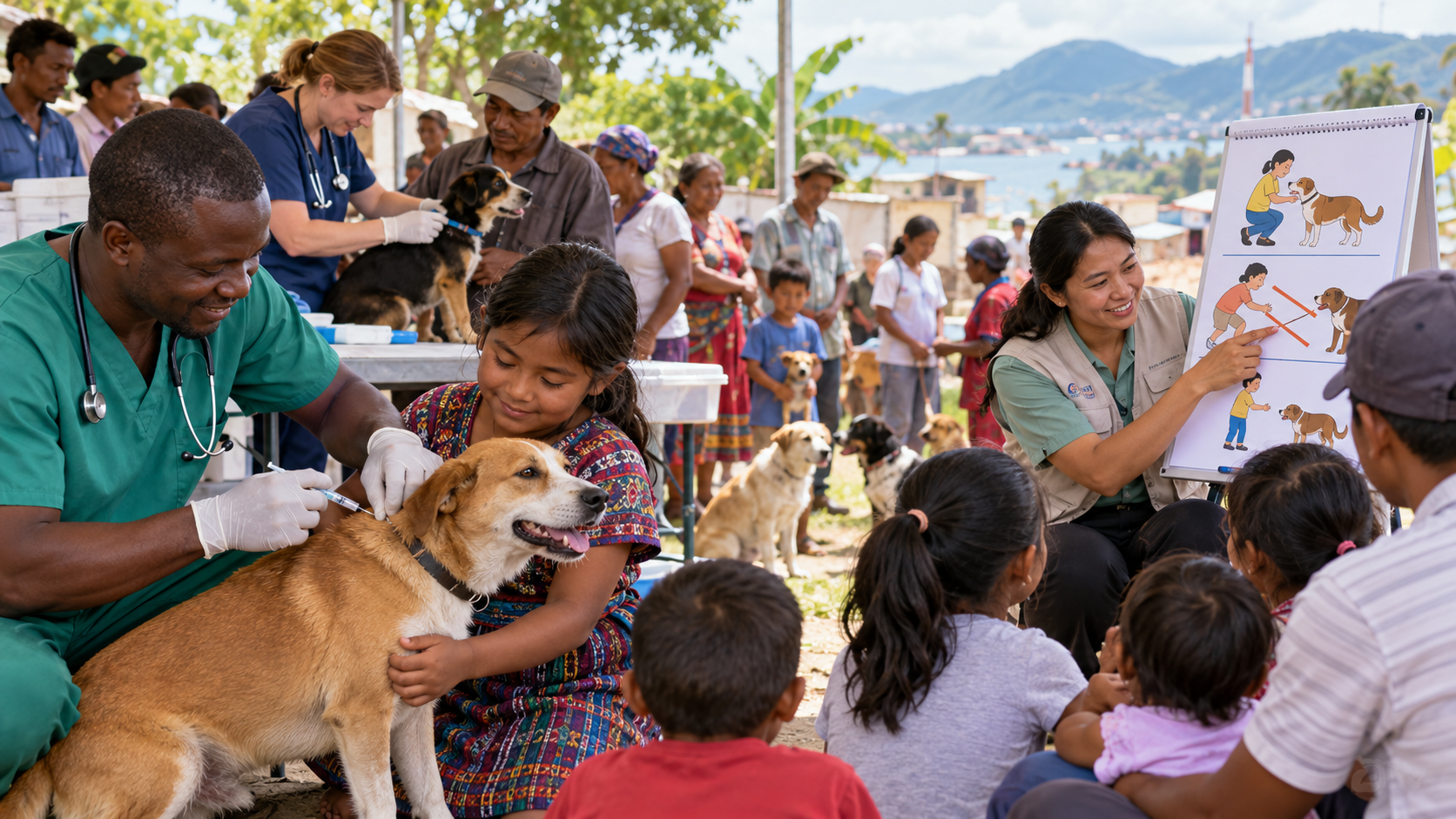
What happened on the date was consequential but limited. The campaign brought public-health agencies, veterinarians, clinicians, schools, and community groups together around education and mass dog vaccination. Moving the observance to Pasteur's death anniversary created a stable international date linked directly to the history of prevention. A commemorative day does not deliver vaccines or guarantee access to immunoglobulin and post-exposure care. Estimates of rabies deaths are also uncertain because cases often occur in places with weak surveillance and limited laboratory confirmation. The distinction is important: the event did not instantly solve the underlying health problem, and later progress depended on follow-up research, training, policy, funding, and public trust. Contemporary evidence also helps separate what participants knew then from interpretations added after the result became famous.
Its longer legacy reaches beyond the original setting. World Rabies Day helped sustain a One Health message: preventing human deaths requires controlling the virus in dogs, monitoring wildlife, educating communities, and ensuring that exposed people receive timely treatment. International programs now pursue elimination of dog-mediated human rabies deaths. The date's practical lesson is simple but demanding. Rabies prevention succeeds when human medicine, veterinary services, laboratories, schools, and local governments coordinate before a bite becomes a fatal emergency. Seen in context, the anniversary is useful because it connects a concrete historical episode with continuing questions about evidence, access, safety, and responsibility in health care. That connection is stronger when the people affected, the limits of the achievement, and the work still unfinished remain part of the account.
The campaign brought public-health agencies, veterinarians, clinicians, schools, and community groups together around education and mass dog vaccination. Moving the observance to Pasteur's death anniversary created a stable international date linked directly to the history of prevention.
A commemorative day does not deliver vaccines or guarantee access to immunoglobulin and post-exposure care. Estimates of rabies deaths are also uncertain because cases often occur in places with weak surveillance and limited laboratory confirmation.
World Rabies Day helped sustain a One Health message: preventing human deaths requires controlling the virus in dogs, monitoring wildlife, educating communities, and ensuring that exposed people receive timely treatment. International programs now pursue elimination of dog-mediated human rabies deaths.
Rabies is almost invariably fatal after symptoms begin, yet it is preventable through vaccination of animals, prompt wound washing, and post-exposure prophylaxis. Dog-mediated transmission causes most human deaths globally, especially where veterinary programs and access to treatment are limited.
the second World Rabies Day was held on September 28, establishing the date used ever since. The observance honors Louis Pasteur, who died on that date in 1895 and whose laboratory developed the first effective rabies vaccine.
The date's practical lesson is simple but demanding. Rabies prevention succeeds when human medicine, veterinary services, laboratories, schools, and local governments coordinate before a bite becomes a fatal emergency.
Explore more of "On This Day ..."
Discover more events from the same date across news, politics, technology, sports, and other fields. Each link highlights significant moments that shaped history on different fronts.