

On This Day in Business: March 18, 1850
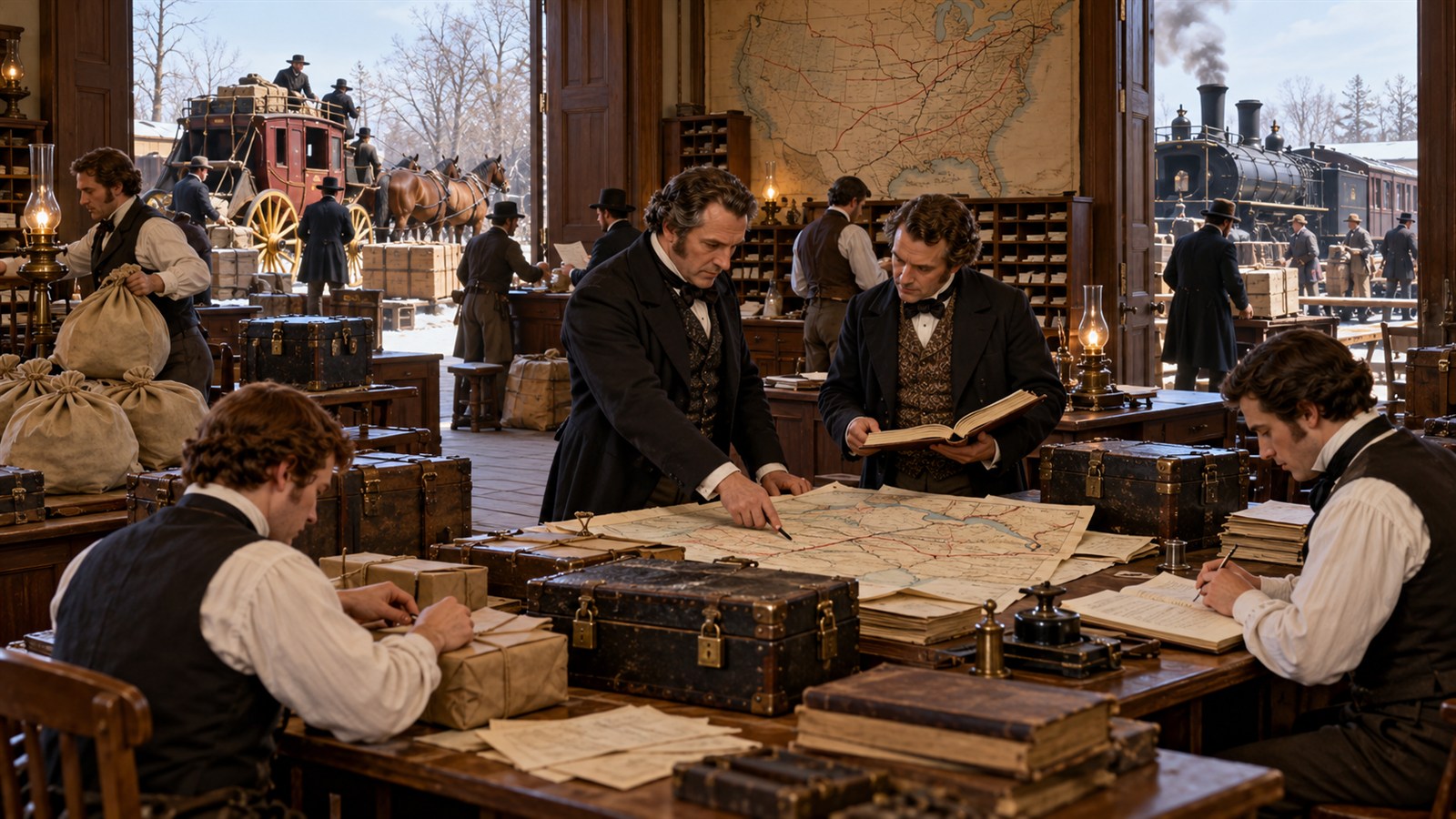
On March 18, 1850, three regional express businesses combined to form the American Express Company. Henry Wells, William G. Fargo, and John Butterfield brought together routes and operations that moved money, securities, parcels, and other valuable items across a growing country. Railroads were expanding, but customers still needed trusted firms to collect shipments, coordinate transfers, and deliver beyond station platforms. The merger created a larger network with the name recognition and operational reach to serve merchants, banks, and individuals across multiple regions.
Trust was the essential product. A customer handing over cash or negotiable documents could not watch them throughout the journey, so the company had to provide secure custody, accurate records, dependable agents, and reliable delivery. Scale helped because a wider network increased convenience and spread administrative costs, but it also made control harder. American Express needed procedures that local offices and transportation partners could follow consistently. Its recognizable brand reduced uncertainty when senders and recipients had never met the same employee.
As communications and transportation changed, the company moved into adjacent financial services. Money orders and traveler's cheques turned reputation and distribution into standardized payment products. Later, charge cards and a global merchant network shifted the business further from physical express shipments toward information, credit, and payment authorization. Not every transition was smooth, and regulation and competition continually changed the economics. Still, the company repeatedly reused a central capability: helping value move between parties who needed assurance that a transaction would be honored.
The 1850 combination shows how networks can grow by consolidating fragmented routes and shared standards. American Express did not own every railroad or destination; it coordinated handoffs and made the entire journey feel like one service. That same logic later applied to travel and payments, where customers value acceptance across many independent locations. The company's history also demonstrates that a durable brand is built operationally. Its name mattered because agents, records, security, and settlement repeatedly fulfilled the promise behind it. March 18 marks the creation of an institution whose business evolved while its core role as a trusted intermediary endured. The founders' network position also helped them see adjacent demand before outsiders. Handling valuable shipments revealed where payments were slow, travel was risky, and customers needed guarantees. Each transaction generated knowledge about routes and trust relationships that could support a new service. American Express repeatedly turned that operational view into products. Its diversification was not random; it followed the movement of value and used an established reputation to enter situations where acceptance by distant parties mattered most.
Mid-nineteenth-century rail and stage networks moved quickly but remained fragmented, leaving customers to manage risky handoffs for valuable shipments.
Wells, Fargo, Butterfield, and their associates combined three express operations to create broader coverage and a more recognizable service.
American Express was founded on March 18, 1850, to carry parcels, currency, securities, and business documents through a coordinated network.
Growth required trustworthy agents, secure custody, consistent records, and reliable settlement across locations the central office could not directly observe.
The company later extended its reputation into money orders, traveler's cheques, charge cards, and a global payment-acceptance network.
Its evolution shows how a trusted intermediary can change technologies while continuing to reduce risk between distant parties.
Explore more of "On This Day ..."
Discover more events from the same date across news, politics, technology, sports, and other fields. Each link highlights significant moments that shaped history on different fronts.