

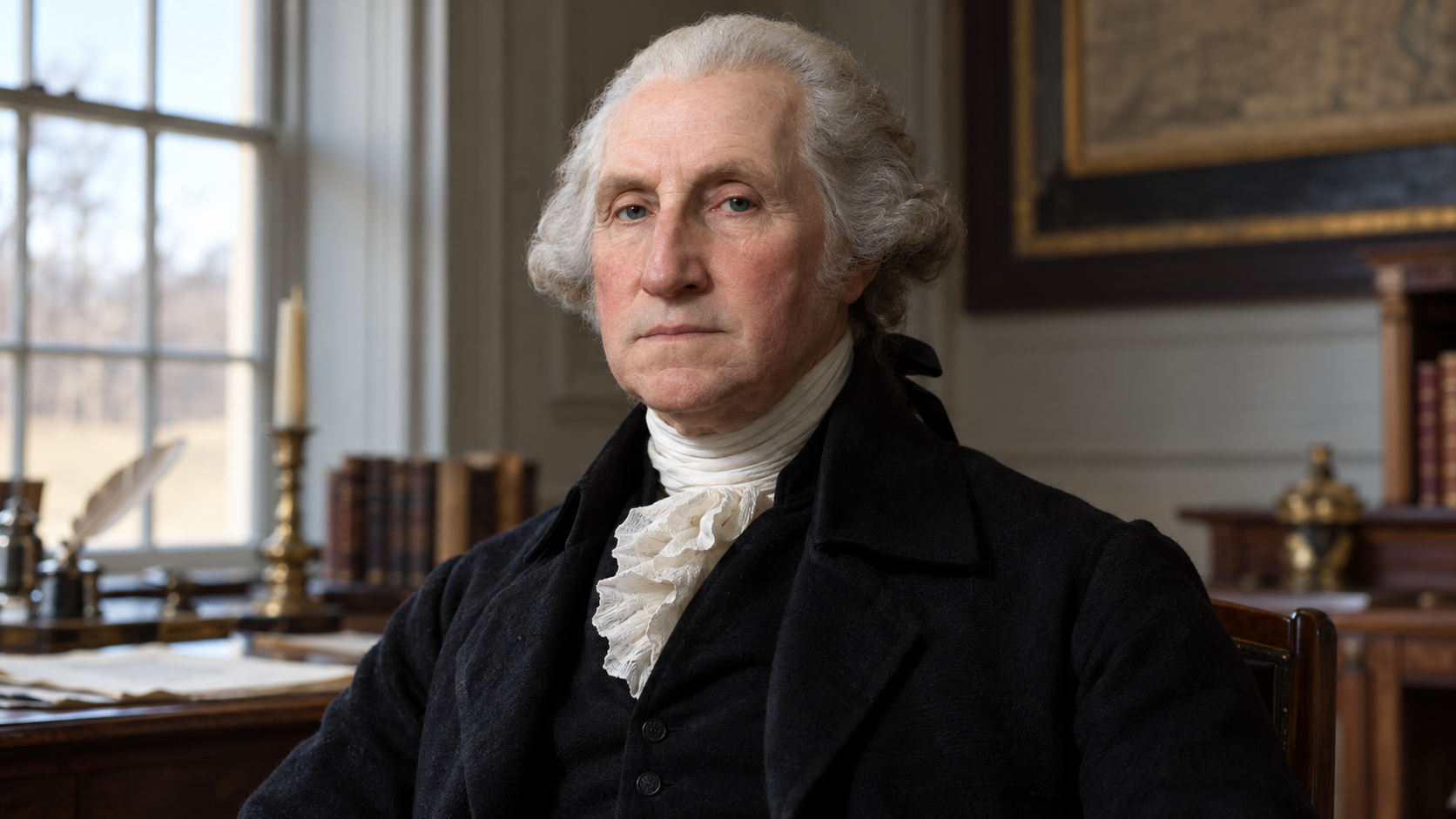
“Observe good faith and justice towards all nations; cultivate peace and harmony with all.”
George Washington offered this counsel in his Farewell Address of 1796, a public letter explaining his decision to leave the presidency after two terms. Published in a Philadelphia newspaper on September 19, the address was not delivered as a farewell speech before an audience. It combined an account of his retirement with advice about the republic’s future. Alexander Hamilton helped prepare the document, and Washington drew on an earlier draft by James Madison. The passage on good faith opens a discussion of relations with other countries. Its language gives peaceful conduct a moral dimension: nations should consider fairness alongside advantage. That is a more demanding standard than simply avoiding an inconvenient war. It asks whether the way a government deals with others can be defended as well as whether it produces an immediate benefit.
The argument also depends on political judgment. Washington warned that lasting hostility toward one country or excessive attachment to another could distort the decisions of American citizens and officials. Foreign policy shaped by affection or resentment might mistake another country’s interests for the nation’s own. The sentence about harmony therefore belongs beside his warnings about dependence, rather than standing alone as a promise of universal agreement. He advocated impartial commercial relations and caution about permanent alliances, while recognizing that extraordinary emergencies could require temporary associations. This qualification matters. The address does not say that every international commitment is inherently wrong, nor that Americans could prosper without dealing with the rest of the world. Its concern is preserving the capacity to decide, honor obligations, and assess circumstances without being carried along by inherited loyalties.
For present-day readers, the quotation offers a way to distinguish peaceful ambition from uncritical friendliness. A government can seek cooperation while scrutinizing the terms of a partnership. It can object to another government’s actions without turning a disagreement into permanent animosity toward an entire people. Those are editorial applications of the passage, not specific policies Washington prescribed for a future world he could not know. Modern questions about alliances, trade, security, and international institutions require evidence beyond an eighteenth-century address. The useful discipline is to ask what a commitment serves, what costs it carries, and whether public debate can examine it honestly. Good faith also implies taking promises seriously; changing circumstances do not make every prior obligation disposable. Washington’s language is memorable because it links diplomatic restraint with independence of mind. February 2 marks this post’s position in the series, while the quotation’s historical setting remains the retirement announcement of September 1796.
The Farewell Address was published as a letter to the public in September 1796. Washington used his departure from office to present counsel about the republic's durability.
The foreign-relations passage addresses the dangers of entrenched hostility and emotional attachment. Both could expose domestic decisions to outside influence.
Good faith calls for fair dealing, while harmony describes a diplomatic objective. Neither phrase promises that every country's interests will coincide.
Washington made room for temporary alliances in extraordinary emergencies. Reading the advice as a categorical ban on international cooperation removes that qualification.
The Senate has preserved a tradition of reading the address to mark Washington's birthday. That institutional remembrance does not make this February entry an anniversary of its publication.
The passage invites scrutiny of motives and commitments in foreign policy. Its practical question is whether a nation's decisions reflect considered interests or habitual attraction and aversion.
Explore more "Quotes of The Day"
Discover more notable quotes from influential voices across politics, science, business, technology, sports, and culture. Each quote offers insight into how ideas, beliefs, and decisions shape the world around us.