

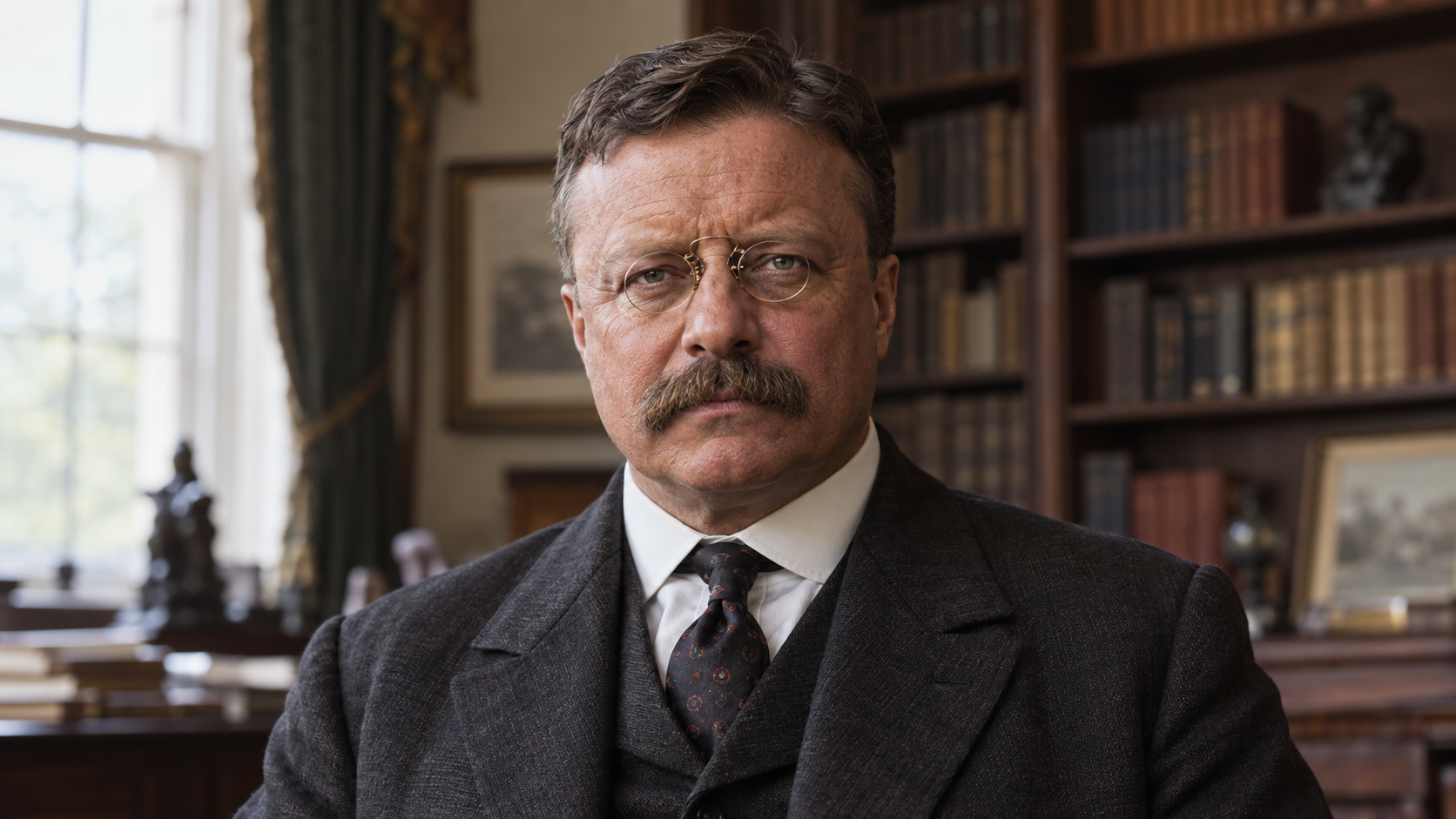
It is not the critic who counts; not the man who points out how the strong man stumbles, or where the doer of deeds could have done them better.
Theodore Roosevelt delivered Citizenship in a Republic at the Sorbonne in Paris on April 23, 1910, after leaving the presidency. This sentence opens the passage now widely associated with the man in the arena. Its original subject is citizenship, particularly the responsibilities that accompany education, leisure, and social advantage. Roosevelt argues that a republic depends on the conduct of ordinary citizens as well as on the quality of its leaders. He directs part of his address at people who have the means to contribute but retreat into a posture of superiority. The critic in this passage is a spectator who ridicules effort without accepting the burdens of useful work.
The contrast becomes clearer in the lines that follow. Roosevelt praises a person who enters the arena, makes mistakes, and continues to strive in a worthy cause. The cause matters: he is not treating motion, ambition, or a willingness to take risks as valuable regardless of purpose. Nor does he claim that every attempt deserves the same recognition as success. His argument distinguishes the limitations of an imperfect contribution from the emptiness of refusing to contribute at all. A responsible participant must encounter circumstances that cannot be controlled completely, whereas a detached observer can imagine flawless alternatives without ever testing them against the difficulties that action creates.
The sentence needs qualification when applied to public office. Criticism is an essential part of political accountability, and people affected by a government decision do not have to hold office themselves before they can challenge it. Roosevelt’s larger speech criticizes cynicism and disengagement, rather than supplying a blanket exemption from review for anyone who acts. Indeed, his emphasis on character, duty, and worthy purposes makes the quality of an action central to its evaluation. The address also contains assumptions about national power and civilization that belong to its era and deserve scrutiny. Admiring its argument for participation does not require accepting every historical judgment or social hierarchy expressed elsewhere in the speech.
For contemporary political life, the arena can represent the demanding work of organizing, administering, negotiating, or serving a community. Each requires decisions under uncertainty and a willingness to accept responsibility for consequences. Roosevelt encourages readers to distinguish constructive scrutiny from a performance of disdain that treats all involvement as foolish. That distinction works in both directions. A participant should not dismiss a well-supported objection as mere negativity, and an observer should consider whether a criticism identifies a usable improvement or only advertises distance from the problem. The passage earns its continuing relevance by connecting courage with service. Its challenge is to undertake work worth doing while remaining answerable for how that work is performed.
Roosevelt spoke at the Sorbonne during his 1910 European travels. The speech's title, Citizenship in a Republic, identifies a civic argument broader than the famous arena passage.
The audience's educational and social advantages are part of his challenge. Greater opportunity creates responsibilities to contribute to the life of a republic.
The critic described here avoids the work being criticized. Roosevelt contrasts that stance with an imperfect attempt to pursue a worthy purpose.
The qualification about the cause is essential. Effort by itself does not establish that a political action is wise, lawful, or beneficial.
Citizens can use the passage to examine whether their engagement offers a practical contribution, including informed criticism and proposals for improvement.
Officeholders cannot use it to cancel accountability. Scrutiny from people outside the arena remains necessary when public decisions affect their lives.
Explore more "Quotes of The Day"
Discover more notable quotes from influential voices across politics, science, business, technology, sports, and culture. Each quote offers insight into how ideas, beliefs, and decisions shape the world around us.