

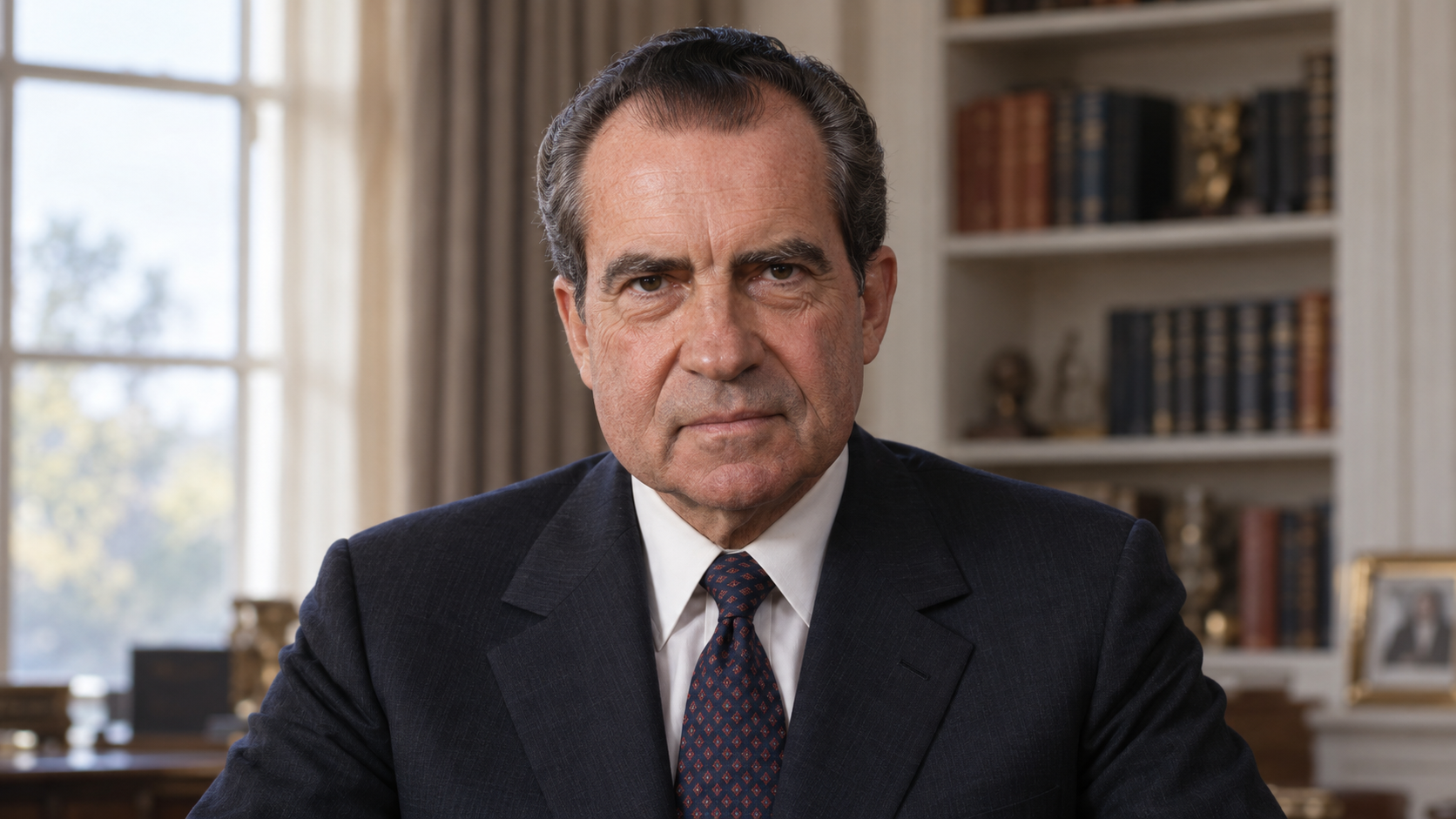
The greatest honor history can bestow is the title of peacemaker.
Richard Nixon made this declaration in his first inaugural address on January 20, 1969. The speech opened his presidency amid the Vietnam War and intense division over the direction of American public life. He asked listeners to see the transfer of authority as an opportunity to pursue peace and unity. The sentence places peacemaking above the many other honors a leader might seek from history. Its wording is aspirational: Nixon is describing the distinction he hopes to earn, rather than reporting an achievement already secured. Reading it at the beginning of the administration preserves the uncertainty of that moment and the obligations created by such an ambitious public promise.
The surrounding address connects peace abroad with an effort to reduce hostility within the country. Nixon speaks of disagreement that has hardened into anger and asks people to hear one another. In foreign affairs, he presents a move from confrontation toward negotiation as a direction for policy. These themes share a claim that relationships can change through deliberate political work. Peacemaking is not simply a personal preference for calm. It requires decisions about interests, risks, commitments, and the terms on which opponents might coexist. The title he praises can only acquire substance through actions that reduce conflict or make a durable settlement possible.
The claim also creates a demanding problem of evaluation. A leader can employ the language of peace while disagreeing with critics about which means will achieve it. Negotiation, military pressure, withdrawal, alliances, and assurances may be defended as instruments of the same stated goal, though their consequences differ profoundly. The quotation cannot establish that a policy was peaceful merely because its author wished to be called a peacemaker. Nor should it substitute for evidence about the people who bear the costs of a policy. An inaugural address supplies a standard and a starting position; an assessment of an administration requires examination of what happened afterward, including results that challenge the government’s preferred account.
For contemporary readers, Nixon’s sentence is useful because it separates a prestigious political claim from the work needed to deserve it. Announcing an intention to end conflict is easier than constructing conditions under which an agreement can hold. The historical honor he invokes would require attention to durability, security, and the treatment of those whose lives are affected. That scrutiny should remain open even when an outcome is presented as a triumph. The quotation does not supply a verdict on Nixon’s presidency or a formula for resolving every international dispute. It gives readers a clear measure against which a promise can be tested: whether the pursuit of personal or national prestige actually produces a more secure and less destructive political relationship.
The statement appears in Nixon's first inaugural address of January 20, 1969. It describes an honor he hopes his administration's work might earn.
The address links peace abroad with a call to reduce anger and division at home, placing negotiation within a broader appeal for changed relationships.
Calling peacemaking a supreme honor establishes a standard; it does not demonstrate that the standard has been met.
Different policies can be justified in the language of peace. Their actual consequences require assessment beyond the intention stated in an inaugural address.
Readers can examine the durability of agreements, the security they provide, and the costs imposed on affected populations.
The quotation is most useful as a test of a leadership promise. It should not become a shortcut that grants a historical verdict without examining the record.
Explore more "Quotes of The Day"
Discover more notable quotes from influential voices across politics, science, business, technology, sports, and culture. Each quote offers insight into how ideas, beliefs, and decisions shape the world around us.