

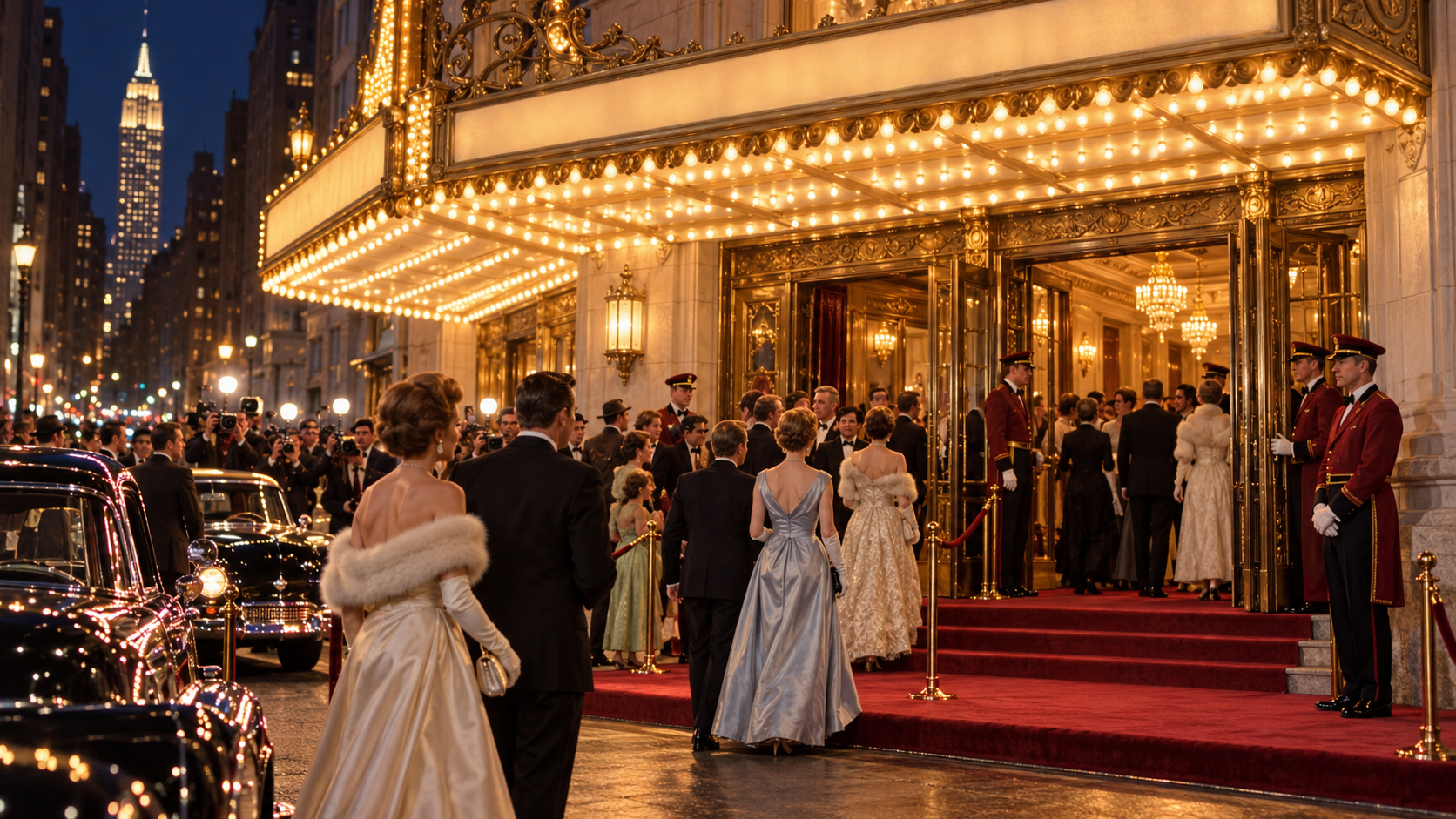
On This Day in Lifestyles: March 2, 1965
On March 2, 1965, The Sound of Music held its world premiere at New York City’s Rivoli Theatre in a March of Dimes benefit. Directed by Robert Wise and starring Julie Andrews and Christopher Plummer, the film adapted the successful Rodgers and Hammerstein stage musical and Maria von Trapp’s family story for a wide cinematic canvas. The date matters in lifestyle history because a movie premiere could grow into a durable form of shared family memory. Rather than remaining an isolated announcement or demonstration, the moment gave people a new way to think about cinema-going, singing together, touring film locations, and revisiting favorite stories. Its importance became visible through familiar places, objects, and routines, where a broad historical change could be felt at human scale.
The production combined studio sets with location filming around Salzburg and presented its nearly three-hour story in a reserved-seat roadshow format with 70mm projection and stereophonic sound. Its New York premiere preceded openings in other cities and a broader April release. The setting shaped how contemporaries understood the event. moviegoers, performers, musicians, families, critics, and tourism workers encountered it through roadshow theaters, soundtrack albums, television, schools, stage productions, and home media. Those details show that social change usually travels through ordinary systems such as workplaces, schools, shops, homes, streets, or public institutions. What seems inevitable in hindsight depended on people testing, organizing, purchasing, teaching, maintaining, or protecting the idea in real time.
Audiences embraced the songs, alpine scenery, family performances, and story of moral choice, even as some critics found the treatment sentimental. Repeat theatrical runs, television broadcasts, records, school performances, and home video made the film part of family ritual far beyond 1965. In daily life, families learned the songs, audiences returned for repeat screenings, and travelers connected popular culture with real places in Austria. The episode also exposed questions about sentiment versus historical complexity and entertainment versus the responsibilities of adapting lived experience. Access and influence were never perfectly even, and later generations adapted the original development to different communities, values, and technologies. Still, the event changed expectations by making a common cultural reference that crossed generations easier to imagine, recognize, or demand.
The movie became one of the era’s great box-office successes and helped stabilize its studio. Its melodies and images remain widely recognized, while historians continue to distinguish the real von Trapp family’s experience from the reshaped dramatic narrative. Today, echoes remain in annual viewings, sing-alongs, stage revivals, soundtrack listening, and visits to Salzburg locations. Looking back helps separate the documented milestone from the myths that often accumulate around famous anniversaries. It also reminds us that lifestyle history is built from choices about design, health, work, leisure, communication, memory, and public space. On this day, the Rivoli premiere launched a film whose afterlife became as important as its opening night.
The Sound of Music held its world premiere at New York City’s Rivoli Theatre in a March of Dimes benefit. Directed by Robert Wise and starring Julie Andrews and Christopher Plummer, the film adapted the successful Rodgers and Hammerstein stage musical and Maria von Trapp’s family story for a wide cinematic canvas.
The production combined studio sets with location filming around Salzburg and presented its nearly three-hour story in a reserved-seat roadshow format with 70mm projection and stereophonic sound. Its New York premiere preceded openings in other cities and a broader April release.
Audiences embraced the songs, alpine scenery, family performances, and story of moral choice, even as some critics found the treatment sentimental. Repeat theatrical runs, television broadcasts, records, school performances, and home video made the film part of family ritual far beyond 1965.
The larger theme was that a movie premiere could grow into a durable form of shared family memory.
The movie became one of the era’s great box-office successes and helped stabilize its studio. Its melodies and images remain widely recognized, while historians continue to distinguish the real von Trapp family’s experience from the reshaped dramatic narrative.
Today the story remains visible in annual viewings, sing-alongs, stage revivals, soundtrack listening, and visits to Salzburg locations.
Explore more of “This Day in Lifestyles”
Discover more moments in everyday life, design, education, travel, food, fashion, and culture. Each story connects a calendar date with an event that changed how people lived.