

On This Day in Lifestyles: March 1, 1872
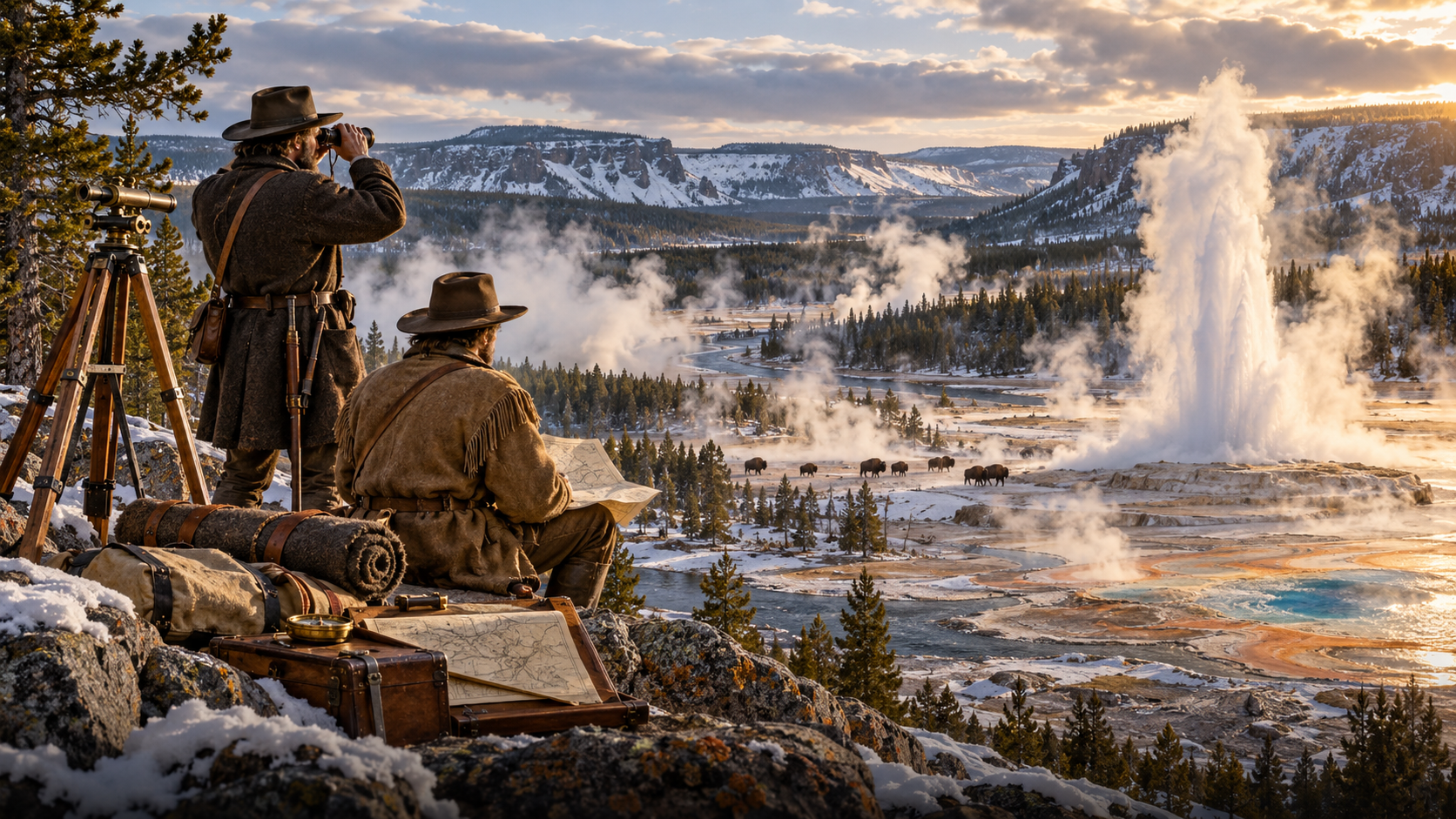
On March 1, 1872, President Ulysses S. Grant signed the Yellowstone National Park Protection Act, setting aside a vast landscape at the headwaters of the Yellowstone River as a public park and pleasuring ground. Congress acted after explorers, scientists, photographers, and painters brought the region’s geysers, canyons, wildlife, and thermal basins to national attention. The date matters in lifestyle history because a spectacular landscape could be held for shared enjoyment rather than immediate development. Rather than remaining an isolated announcement or demonstration, the moment gave people a new way to think about travel, conservation, and time outdoors. Its importance became visible through familiar places, objects, and routines, where a broad historical change could be felt at human scale.
The decision departed from the common federal practice of transferring public land into private ownership. Hayden Expedition reports, William Henry Jackson’s photographs, and Thomas Moran’s art made distant scenery legible to lawmakers and the public, while the earlier Yosemite grant offered a partial legal model. The setting shaped how contemporaries understood the event. visitors, scientists, rangers, nearby communities, and Native nations encountered it through expedition reports, photographs, paintings, rail travel, guidebooks, and public policy. Those details show that social change usually travels through ordinary systems such as workplaces, schools, shops, homes, streets, or public institutions. What seems inevitable in hindsight depended on people testing, organizing, purchasing, teaching, maintaining, or protecting the idea in real time.
Yellowstone helped turn scenic travel, outdoor recreation, and nature study into recognizable parts of American public life. Yet early management was weak, Native histories were often misrepresented, and wildlife protection lagged behind the promise written into law. In daily life, families planned journeys around scenery, citizens learned to see conservation as a public responsibility, and outdoor landmarks became part of national culture. The episode also exposed questions about preservation versus development, truthful Indigenous history, visitor pressure, and ecological care. Access and influence were never perfectly even, and later generations adapted the original development to different communities, values, and technologies. Still, the event changed expectations by making long-term protection of extraordinary places easier to imagine, recognize, or demand.
The park became a model for protected landscapes around the world and helped lead to a professional National Park Service in 1916. Its story still joins wonder with continuing questions about stewardship, Indigenous connections, access, wildlife, and tourism. Today, echoes remain in park trips, ranger programs, wildlife safeguards, conservation debates, and the idea of shared natural heritage. Looking back helps separate the documented milestone from the myths that often accumulate around famous anniversaries. It also reminds us that lifestyle history is built from choices about design, health, work, leisure, communication, memory, and public space. On this day, Yellowstone’s creation connected law, leisure, science, and the difficult work of caring for a place across generations.
President Ulysses S. Grant signed the Yellowstone National Park Protection Act, setting aside a vast landscape at the headwaters of the Yellowstone River as a public park and pleasuring ground. Congress acted after explorers, scientists, photographers, and painters brought the region’s geysers, canyons, wildlife, and thermal basins to national attention.
The decision departed from the common federal practice of transferring public land into private ownership. Hayden Expedition reports, William Henry Jackson’s photographs, and Thomas Moran’s art made distant scenery legible to lawmakers and the public, while the earlier Yosemite grant offered a partial legal model.
Yellowstone helped turn scenic travel, outdoor recreation, and nature study into recognizable parts of American public life. Yet early management was weak, Native histories were often misrepresented, and wildlife protection lagged behind the promise written into law.
The larger theme was that a spectacular landscape could be held for shared enjoyment rather than immediate development.
The park became a model for protected landscapes around the world and helped lead to a professional National Park Service in 1916. Its story still joins wonder with continuing questions about stewardship, Indigenous connections, access, wildlife, and tourism.
Today the story remains visible in park trips, ranger programs, wildlife safeguards, conservation debates, and the idea of shared natural heritage.
Explore more of “This Day in Lifestyles”
Discover more moments in everyday life, design, education, travel, food, fashion, and culture. Each story connects a calendar date with an event that changed how people lived.