

On This Day in Lifestyles: March 3, 1931
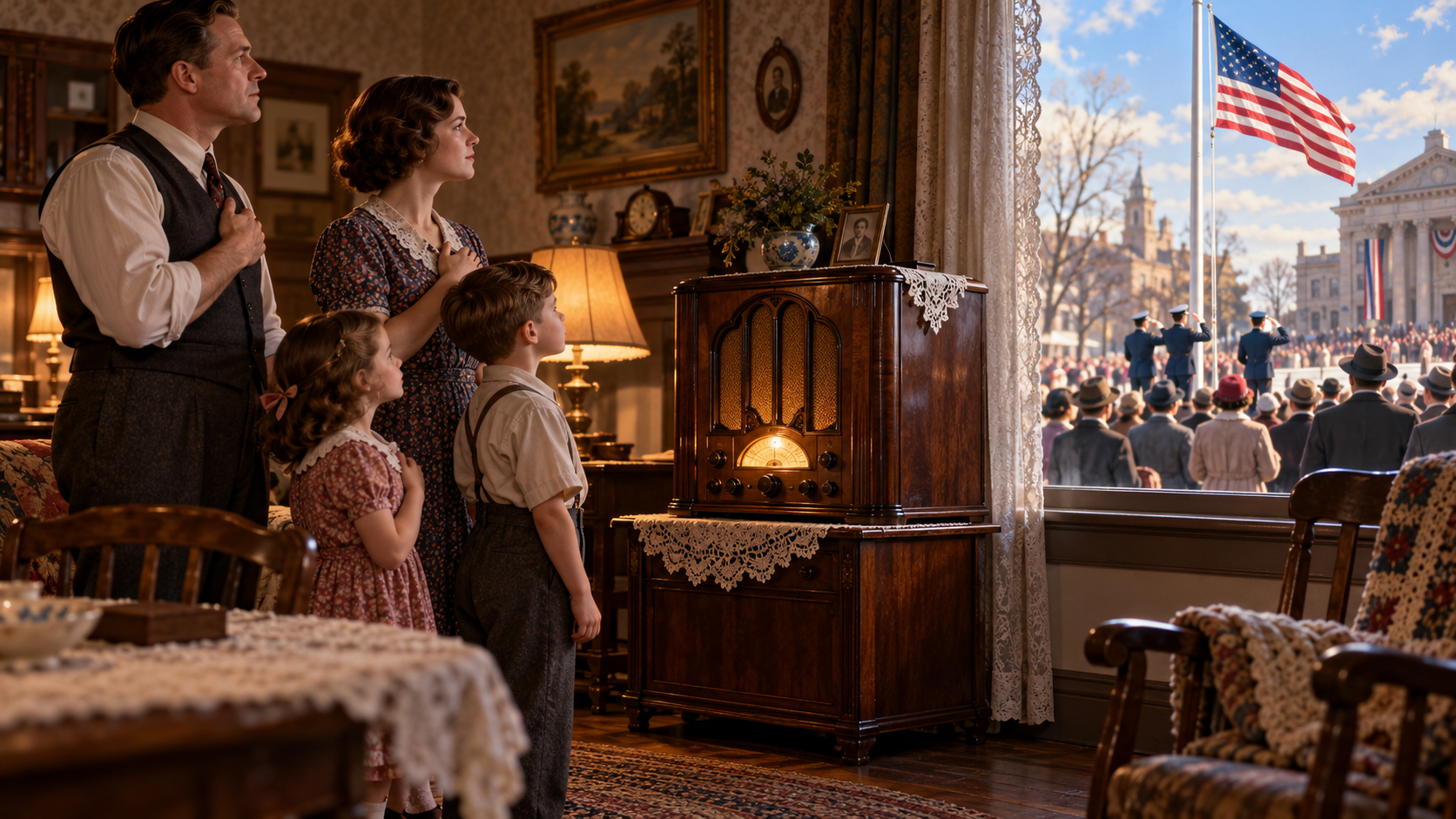
On March 3, 1931, President Herbert Hoover signed a congressional resolution designating The Star-Spangled Banner as the United States national anthem. Francis Scott Key had written the words after witnessing the 1814 bombardment of Fort McHenry, setting them to a melody already familiar from an English song. The date matters in lifestyle history because a familiar song became an officially recognized national ritual. Rather than remaining an isolated announcement or demonstration, the moment gave people a new way to think about standing, singing, listening, and reflecting together at public events. Its importance became visible through familiar places, objects, and routines, where a broad historical change could be felt at human scale.
The song’s rise was gradual rather than sudden. Military ceremonies, patriotic gatherings, sporting events, schools, and public campaigns expanded its use during the nineteenth and early twentieth centuries, while supporters pressed Congress for official recognition. The setting shaped how contemporaries understood the event. students, veterans, musicians, athletes, spectators, officials, and communities with different experiences of the nation encountered it through sheet music, schools, military bands, radio, sports venues, recordings, and civic ceremonies. Those details show that social change usually travels through ordinary systems such as workplaces, schools, shops, homes, streets, or public institutions. What seems inevitable in hindsight depended on people testing, organizing, purchasing, teaching, maintaining, or protecting the idea in real time.
Formal adoption strengthened the anthem’s place in assemblies, broadcasts, stadiums, memorials, and moments of national crisis. Its demanding range also made performance a public test of preparation, interpretation, and participation, prompting countless arrangements and community traditions. In daily life, people encountered the anthem in repeated communal settings where music signaled the beginning of a shared occasion. The episode also exposed questions about unity and dissent, musical difficulty, historical memory, and the meaning of patriotic expression. Access and influence were never perfectly even, and later generations adapted the original development to different communities, values, and technologies. Still, the event changed expectations by making a recognized musical language for public commemoration easier to imagine, recognize, or demand.
The anthem remains a central civic ritual and a subject of debate about history, protest, belonging, and whose experiences national symbols represent. Understanding its origins gives modern performances more context than ceremony alone can provide. Today, echoes remain in school ceremonies, sporting events, memorials, official occasions, and continuing discussion about national identity. Looking back helps separate the documented milestone from the myths that often accumulate around famous anniversaries. It also reminds us that lifestyle history is built from choices about design, health, work, leisure, communication, memory, and public space. On this day, the 1931 law formalized a tradition that Americans still perform, interpret, and debate.
President Herbert Hoover signed a congressional resolution designating The Star-Spangled Banner as the United States national anthem. Francis Scott Key had written the words after witnessing the 1814 bombardment of Fort McHenry, setting them to a melody already familiar from an English song.
The song’s rise was gradual rather than sudden. Military ceremonies, patriotic gatherings, sporting events, schools, and public campaigns expanded its use during the nineteenth and early twentieth centuries, while supporters pressed Congress for official recognition.
Formal adoption strengthened the anthem’s place in assemblies, broadcasts, stadiums, memorials, and moments of national crisis. Its demanding range also made performance a public test of preparation, interpretation, and participation, prompting countless arrangements and community traditions.
The larger theme was that a familiar song became an officially recognized national ritual.
The anthem remains a central civic ritual and a subject of debate about history, protest, belonging, and whose experiences national symbols represent. Understanding its origins gives modern performances more context than ceremony alone can provide.
Today the story remains visible in school ceremonies, sporting events, memorials, official occasions, and continuing discussion about national identity.
Explore more of “This Day in Lifestyles”
Discover more moments in everyday life, design, education, travel, food, fashion, and culture. Each story connects a calendar date with an event that changed how people lived.