

On This Day in Lifestyles: March 4, 1933
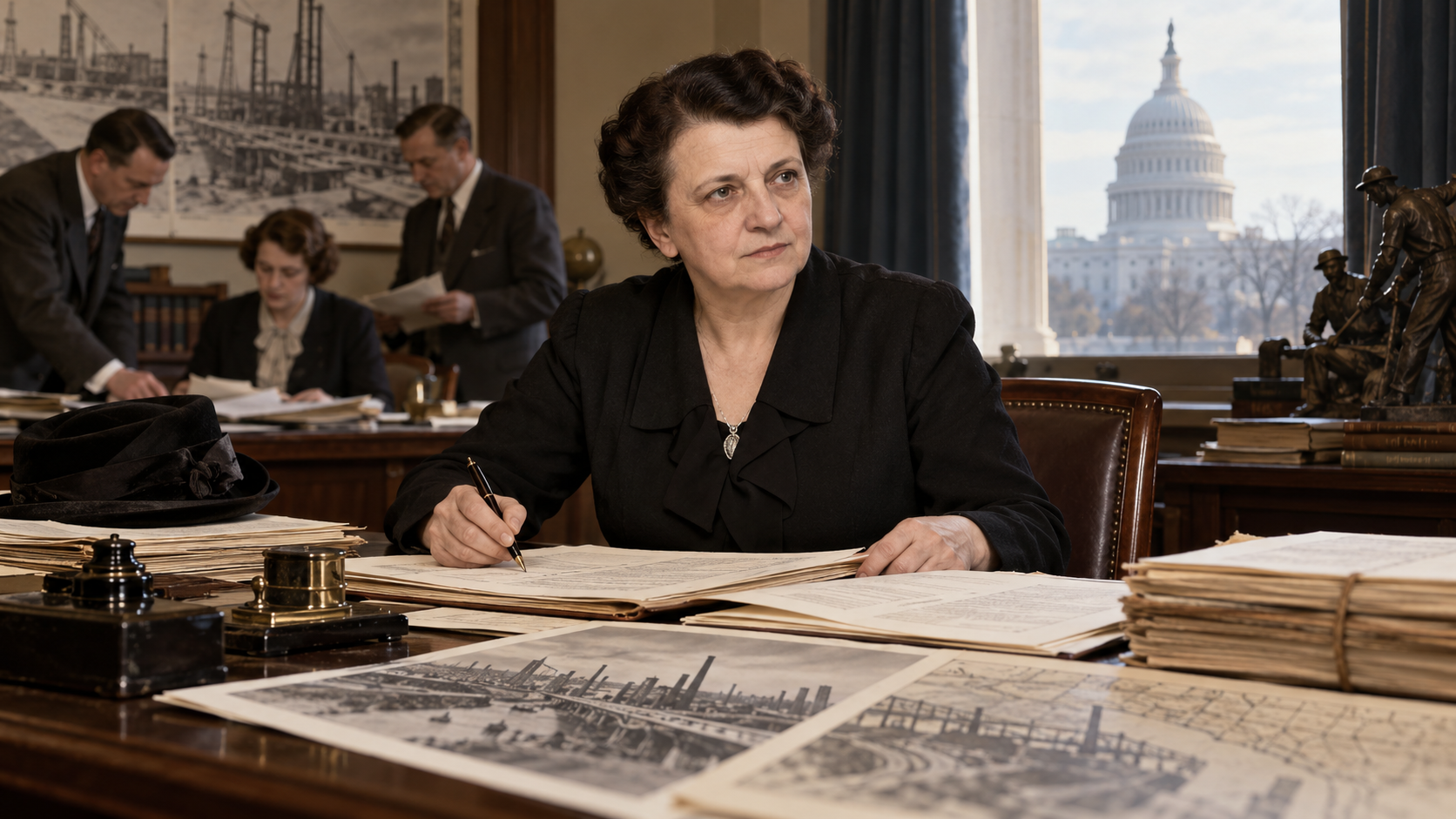
On March 4, 1933, Frances Perkins began serving as secretary of labor in Franklin D. Roosevelt’s administration, becoming the first woman appointed to a United States presidential Cabinet. A veteran social reformer, she arrived with deep experience in factory safety, workers’ compensation, employment policy, and New York government. The date matters in lifestyle history because professional reform work could move from settlement houses and state agencies into the center of federal power. Rather than remaining an isolated announcement or demonstration, the moment gave people a new way to think about working, retiring, supporting a family, and expecting basic standards on the job. Its importance became visible through familiar places, objects, and routines, where a broad historical change could be felt at human scale.
Perkins’s public career had been shaped by witnessing the Triangle Shirtwaist Factory fire and by years of research and advocacy. Taking office amid the Great Depression, she entered a federal government under intense pressure to address mass unemployment, poverty, and unsafe working conditions. The setting shaped how contemporaries understood the event. workers, unemployed families, employers, union members, civil servants, and women seeking public leadership encountered it through legislation, labor statistics, workplace inspections, public hearings, relief programs, and federal administration. Those details show that social change usually travels through ordinary systems such as workplaces, schools, shops, homes, streets, or public institutions. What seems inevitable in hindsight depended on people testing, organizing, purchasing, teaching, maintaining, or protecting the idea in real time.
During her long tenure, the Labor Department contributed to major New Deal measures involving Social Security, unemployment insurance, minimum wages, maximum hours, and child labor. Those policies reached household budgets, retirement plans, workplaces, and family expectations in direct ways. In daily life, households increasingly planned around wage rules, unemployment protection, and old-age security created through public policy. The episode also exposed questions about business resistance, unequal coverage, racial and gender exclusions, and the limits of early social programs. Access and influence were never perfectly even, and later generations adapted the original development to different communities, values, and technologies. Still, the event changed expectations by making greater economic security and safer expectations at work easier to imagine, recognize, or demand.
Perkins served for twelve years and changed assumptions about women’s authority in national government. Her record also demonstrates how administrative expertise, coalition building, and patient drafting can shape everyday security long after a headline fades. Today, echoes remain in labor standards, Social Security, workplace policy, and women’s leadership in public institutions. Looking back helps separate the documented milestone from the myths that often accumulate around famous anniversaries. It also reminds us that lifestyle history is built from choices about design, health, work, leisure, communication, memory, and public space. On this day, Perkins’s first day in office opened a cabinet career that linked government reform to the texture of daily life.
Frances Perkins began serving as secretary of labor in Franklin D. Roosevelt’s administration, becoming the first woman appointed to a United States presidential Cabinet. A veteran social reformer, she arrived with deep experience in factory safety, workers’ compensation, employment policy, and New York government.
Perkins’s public career had been shaped by witnessing the Triangle Shirtwaist Factory fire and by years of research and advocacy. Taking office amid the Great Depression, she entered a federal government under intense pressure to address mass unemployment, poverty, and unsafe working conditions.
During her long tenure, the Labor Department contributed to major New Deal measures involving Social Security, unemployment insurance, minimum wages, maximum hours, and child labor. Those policies reached household budgets, retirement plans, workplaces, and family expectations in direct ways.
The larger theme was that professional reform work could move from settlement houses and state agencies into the center of federal power.
Perkins served for twelve years and changed assumptions about women’s authority in national government. Her record also demonstrates how administrative expertise, coalition building, and patient drafting can shape everyday security long after a headline fades.
Today the story remains visible in labor standards, Social Security, workplace policy, and women’s leadership in public institutions.
Explore more of “This Day in Lifestyles”
Discover more moments in everyday life, design, education, travel, food, fashion, and culture. Each story connects a calendar date with an event that changed how people lived.