

On This Day in Lifestyles: March 9, 1959
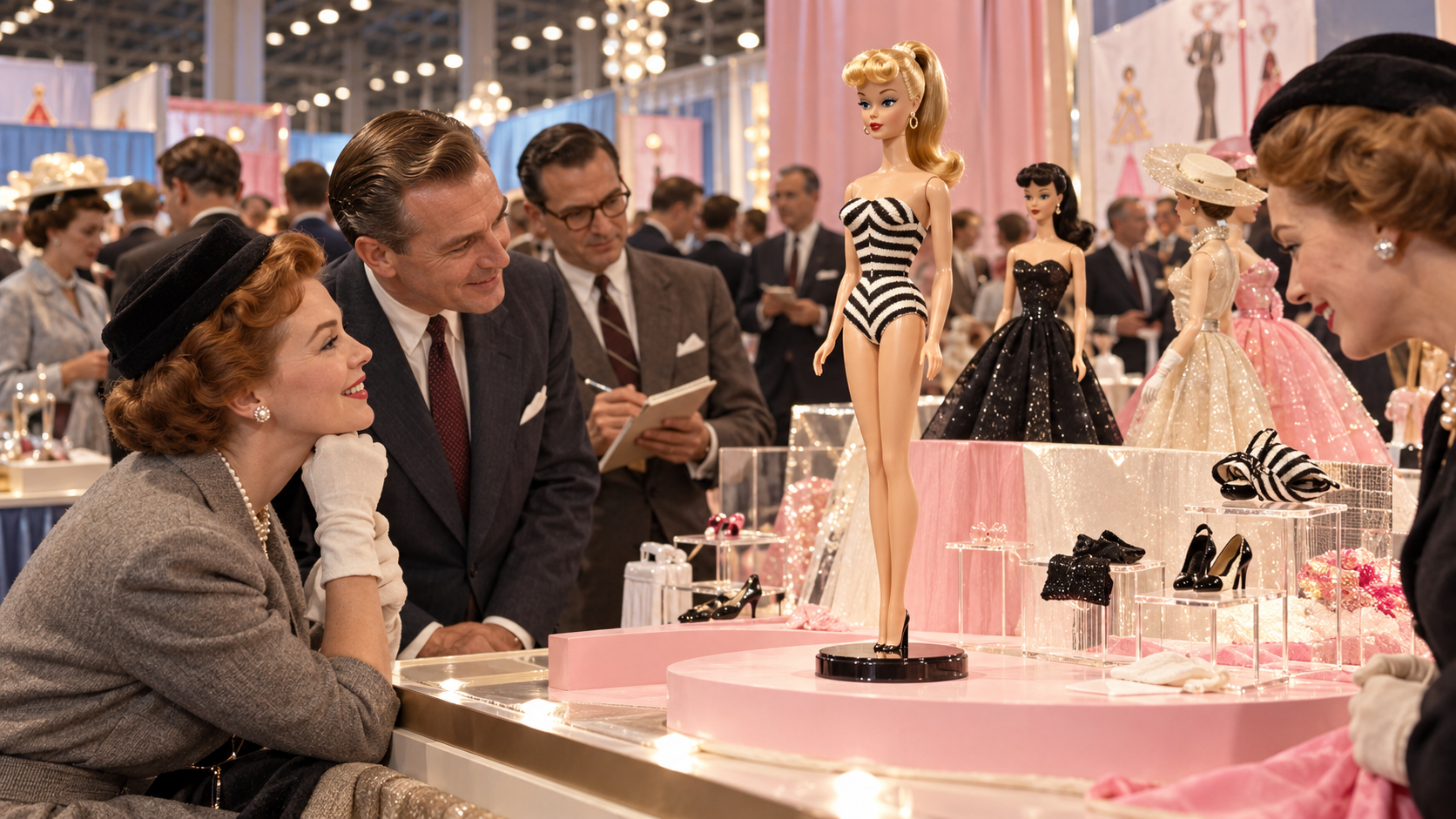
On March 9, 1959, Mattel introduced the Barbie doll to buyers at the American International Toy Fair in New York. Created under Ruth Handler’s leadership, the teenage fashion model appeared in a black-and-white striped swimsuit and offered a different play pattern from the baby dolls that dominated the market. The date matters in lifestyle history because a fashion doll became a flexible script for imagining identity and adulthood. Rather than remaining an isolated announcement or demonstration, the moment gave people a new way to think about dressing dolls, inventing stories, collecting accessories, sharing play, and debating representation. Its importance became visible through familiar places, objects, and routines, where a broad historical change could be felt at human scale.
The doll arrived as television advertising and national retail distribution were transforming the toy business. Her adult wardrobe, accessories, jobs, friends, and settings invited children to imagine social roles and future possibilities, while the constant flow of outfits also supported an expandable product system. The setting shaped how contemporaries understood the event. children, parents, toy designers, retailers, advertisers, collectors, and advocates for broader representation encountered it through toy fairs, television commercials, department stores, catalogs, playrooms, films, museums, and collector communities. Those details show that social change usually travels through ordinary systems such as workplaces, schools, shops, homes, streets, or public institutions. What seems inevitable in hindsight depended on people testing, organizing, purchasing, teaching, maintaining, or protecting the idea in real time.
Barbie became a stage for storytelling about fashion, friendship, work, travel, and aspiration. At the same time, her proportions, beauty standards, consumer emphasis, and early lack of diversity drew persistent criticism and pushed the brand to broaden body types, skin tones, abilities, and careers. In daily life, children used repeated costume changes and invented careers to create stories that went far beyond a single toy. The episode also exposed questions about aspiration versus narrow beauty ideals, creative play versus consumption, and representation across race, body, and ability. Access and influence were never perfectly even, and later generations adapted the original development to different communities, values, and technologies. Still, the event changed expectations by making open-ended role play connected to changing ideas of adulthood easier to imagine, recognize, or demand.
The doll remains a powerful cultural object that people collect, redesign, study, parody, and debate. Her history shows how toys can reflect social change while also teaching children what a culture considers desirable, possible, or normal. Today, echoes remain in playrooms, collector shelves, museums, films, fashion collaborations, and continuing redesigns of who a doll can represent. Looking back helps separate the documented milestone from the myths that often accumulate around famous anniversaries. It also reminds us that lifestyle history is built from choices about design, health, work, leisure, communication, memory, and public space. On this day, the 1959 debut turned one small figure into an enduring argument about play, identity, and possibility.
Mattel introduced the Barbie doll to buyers at the American International Toy Fair in New York. Created under Ruth Handler’s leadership, the teenage fashion model appeared in a black-and-white striped swimsuit and offered a different play pattern from the baby dolls that dominated the market.
The doll arrived as television advertising and national retail distribution were transforming the toy business. Her adult wardrobe, accessories, jobs, friends, and settings invited children to imagine social roles and future possibilities, while the constant flow of outfits also supported an expandable product system.
Barbie became a stage for storytelling about fashion, friendship, work, travel, and aspiration. At the same time, her proportions, beauty standards, consumer emphasis, and early lack of diversity drew persistent criticism and pushed the brand to broaden body types, skin tones, abilities, and careers.
The larger theme was that a fashion doll became a flexible script for imagining identity and adulthood.
The doll remains a powerful cultural object that people collect, redesign, study, parody, and debate. Her history shows how toys can reflect social change while also teaching children what a culture considers desirable, possible, or normal.
Today the story remains visible in playrooms, collector shelves, museums, films, fashion collaborations, and continuing redesigns of who a doll can represent.
Explore more of “This Day in Lifestyles”
Discover more moments in everyday life, design, education, travel, food, fashion, and culture. Each story connects a calendar date with an event that changed how people lived.