

On This Day in Lifestyles: March 11, 1918
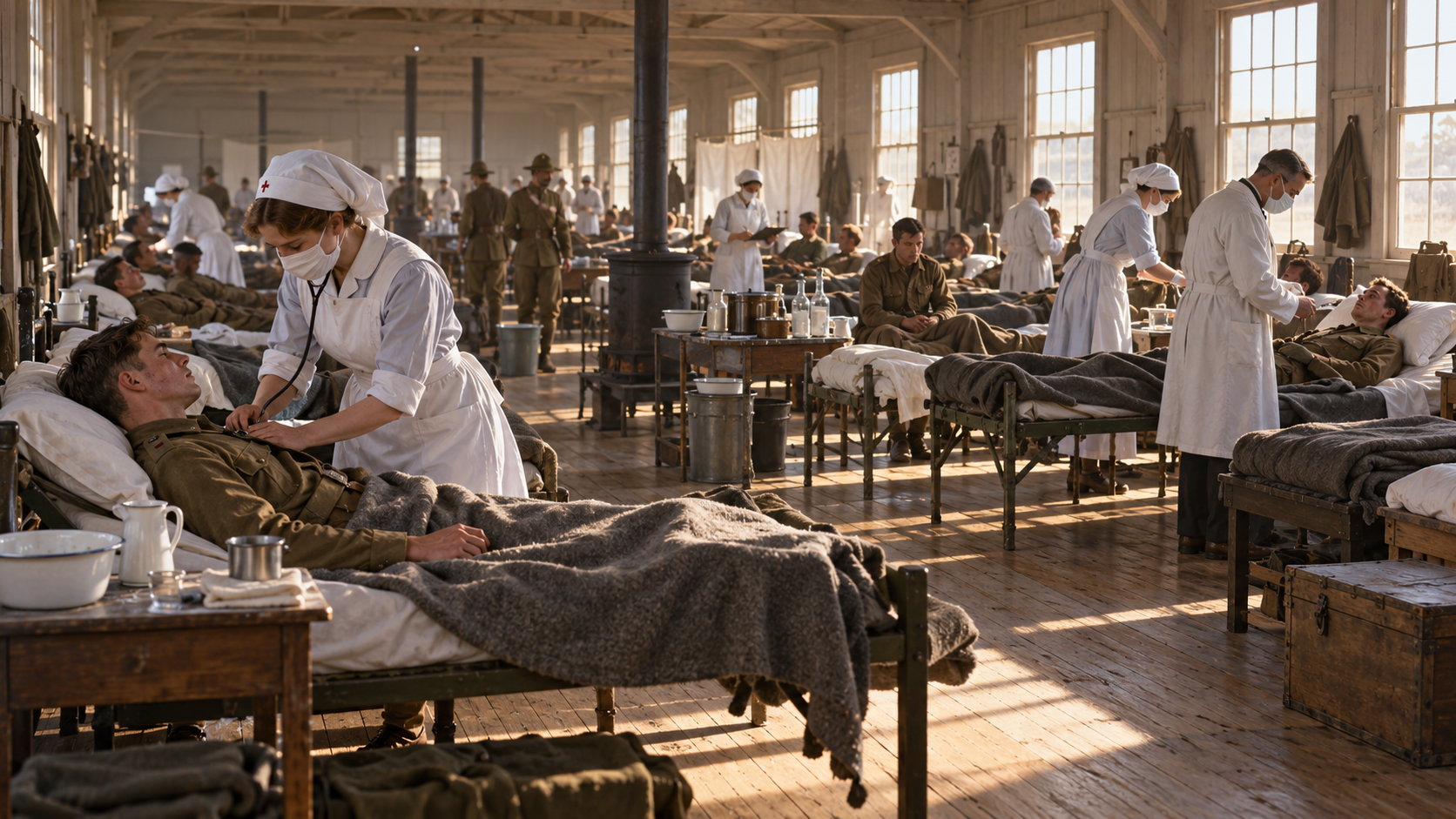
On March 11, 1918, Medical officers at Camp Funston, part of Fort Riley in Kansas, began recording a sudden outbreak of influenza among soldiers. A mess cook was among the first men reported sick, and within hours many others entered the camp hospital with fever, headache, and respiratory symptoms. The date matters in lifestyle history because an outbreak inside an ordinary institution revealed the vulnerability of a connected society. Rather than remaining an isolated announcement or demonstration, the moment gave people a new way to think about caring for the sick, changing gatherings, reporting symptoms, and balancing duty with public health. Its importance became visible through familiar places, objects, and routines, where a broad historical change could be felt at human scale.
Crowded barracks, mass troop movements, and wartime transportation allowed infection to spread rapidly. Historians caution that the pandemic’s true origin remains uncertain, but the Camp Funston reports provide a well-documented early U.S. signal of the global disaster that unfolded in waves during 1918. The setting shaped how contemporaries understood the event. soldiers, cooks, nurses, physicians, families, public officials, workers, and communities around the world encountered it through camp hospitals, troop trains, newspapers, health departments, public notices, workplaces, and family networks. Those details show that social change usually travels through ordinary systems such as workplaces, schools, shops, homes, streets, or public institutions. What seems inevitable in hindsight depended on people testing, organizing, purchasing, teaching, maintaining, or protecting the idea in real time.
Influenza disrupted military routines and then family life, work, schools, worship, travel, and public gatherings. Communities used isolation, closures, masks, nursing, and public notices with uneven timing and results, while households cared for sick relatives under extraordinary strain. In daily life, people altered funerals, schools, shopping, worship, work, and visits as waves of illness reshaped the calendar. The episode also exposed questions about uncertain evidence, wartime censorship, unequal risk, public fatigue, and the balance between individual freedom and collective protection. Access and influence were never perfectly even, and later generations adapted the original development to different communities, values, and technologies. Still, the event changed expectations by making earlier recognition and better preparedness for contagious disease easier to imagine, recognize, or demand.
The pandemic killed millions worldwide and left deep but often quiet family memories. Its records now help researchers study surveillance, communication, inequity, public cooperation, and the human cost of delayed recognition. Today, echoes remain in pandemic planning, disease surveillance, archival research, vaccination programs, and debates about public-health trust. Looking back helps separate the documented milestone from the myths that often accumulate around famous anniversaries. It also reminds us that lifestyle history is built from choices about design, health, work, leisure, communication, memory, and public space. On this day, the Camp Funston reports mark a documented alarm, not a simple answer to where the pandemic began.
Medical officers at Camp Funston, part of Fort Riley in Kansas, began recording a sudden outbreak of influenza among soldiers. A mess cook was among the first men reported sick, and within hours many others entered the camp hospital with fever, headache, and respiratory symptoms.
Crowded barracks, mass troop movements, and wartime transportation allowed infection to spread rapidly. Historians caution that the pandemic’s true origin remains uncertain, but the Camp Funston reports provide a well-documented early U.S. signal of the global disaster that unfolded in waves during 1918.
Influenza disrupted military routines and then family life, work, schools, worship, travel, and public gatherings. Communities used isolation, closures, masks, nursing, and public notices with uneven timing and results, while households cared for sick relatives under extraordinary strain.
The larger theme was that an outbreak inside an ordinary institution revealed the vulnerability of a connected society.
The pandemic killed millions worldwide and left deep but often quiet family memories. Its records now help researchers study surveillance, communication, inequity, public cooperation, and the human cost of delayed recognition.
Today the story remains visible in pandemic planning, disease surveillance, archival research, vaccination programs, and debates about public-health trust.
Explore more of “This Day in Lifestyles”
Discover more moments in everyday life, design, education, travel, food, fashion, and culture. Each story connects a calendar date with an event that changed how people lived.