

Cast-Iron Seasoning Explainer
Seasoning is not a layer of loose grease left on a cast-iron pan. It is a hard, extremely thin film formed when unsaturated cooking oil is spread on the iron and heated. Heat accelerates oxidation and polymerization: reactive parts of fatty-acid molecules form bonds with one another, creating a cross-linked network that adheres to microscopic irregularities in the metal. Repeated thin coats gradually fill roughness, darken the surface, and reduce direct exposure of iron to water and oxygen.
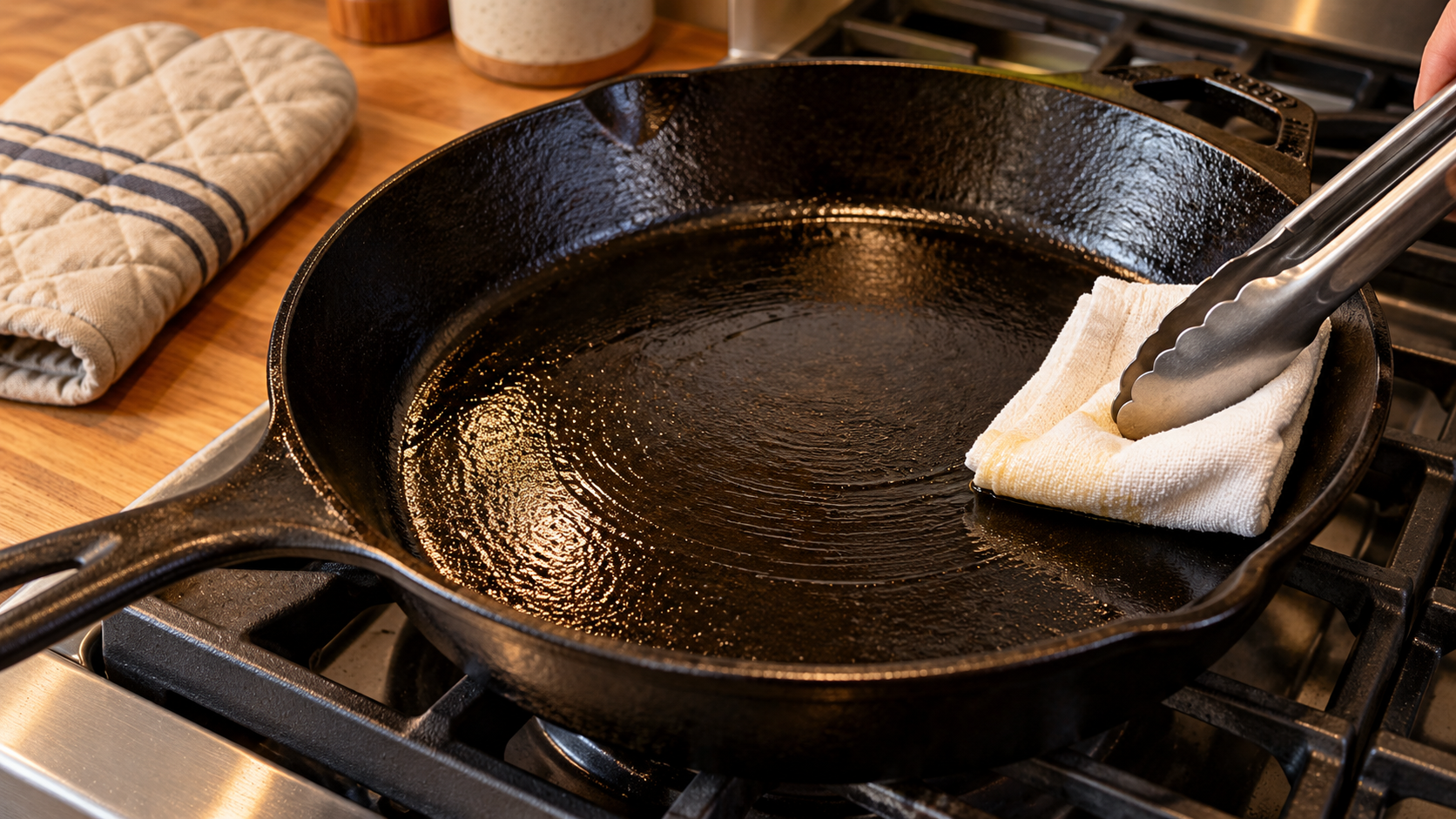
A thick coat works poorly because liquid oil cannot cure evenly. It may pool, become sticky, smoke excessively, or flake. After oil is applied, the pan should look almost dry before heating. Temperature and time must be sufficient for the chosen oil to transform, while ventilation handles normal smoke and odor. Manufacturers provide safe oven or stovetop methods. Turning the pan upside down in an oven can reduce pooling, but a tray should protect the oven and the cookware instructions still govern maximum temperatures.
The finished film is partly protective and partly functional. It slows rust by limiting moisture contact and creates a lower-energy surface from which many foods release more readily. It is not the same as a factory fluoropolymer coating, and it does not make the pan perfectly nonstick. Adequate preheating, cooking fat, and temperature control remain important. Acidic foods can temporarily dull or weaken young seasoning, while well-established layers usually tolerate brief contact better than long simmering.
Routine cooking can maintain the coating because thin traces of oil continue to polymerize. After use, the pan may be washed with hot water, a brush or nonabrasive scrubber, and a modest amount of ordinary dish detergent if needed. Modern detergent does not contain the harsh lye once associated with stripping. What matters most is avoiding prolonged soaking, aggressive abrasion without a reason, and storage while damp. The pan should be dried promptly, often with brief heat, then wiped with the faintest protective oil film.
Rust means water reached exposed iron. Light surface rust can often be removed, the pan cleaned and dried, and seasoning rebuilt. Deep pitting, cracks, or structural damage deserve closer assessment. Old unknown cookware may also require evaluation for contamination before food use. Flaking black material is often failed carbonized residue or overly thick seasoning rather than iron itself. Scrubbing back to a stable surface and applying several thin cured layers is more reliable than covering loose material with more oil.
Seasoning works because common kitchen oil becomes a different material when heated in a thin film on reactive metal. The useful coating is bonded, dry, and gradually renewable. It protects by separating iron from moisture and improves release by smoothing and changing the surface, but it still depends on ordinary care. A seasoned pan can last generations because neither the iron nor its coating is disposable: rust can be removed, the surface can be renewed, and routine cooking continues the chemistry.
A nearly dry film of oil oxidizes and polymerizes under heat, forming a cross-linked coating bonded to the iron. Key terms include seasoning, fatty acid, oxidation, polymerization, cross-linking, rust, thin coat, and cure.
The oil layer was probably too thick or not heated long enough to cure. Clean away unstable residue and rebuild with coats so thin the pan looks almost dry.
Yes. Scratches, thin areas, soaking, or damp storage can expose iron. Dry promptly and renew the film when the surface becomes dull or rust appears.
Explore more "Explainers"
Discover additional explainers across politics, science, business, technology, and other fields. Each explainer breaks down a complex idea into clear, everyday language—helping you better understand how major concepts, systems, and debates shape the world around us.