

Clumping Cat Litter Explainer
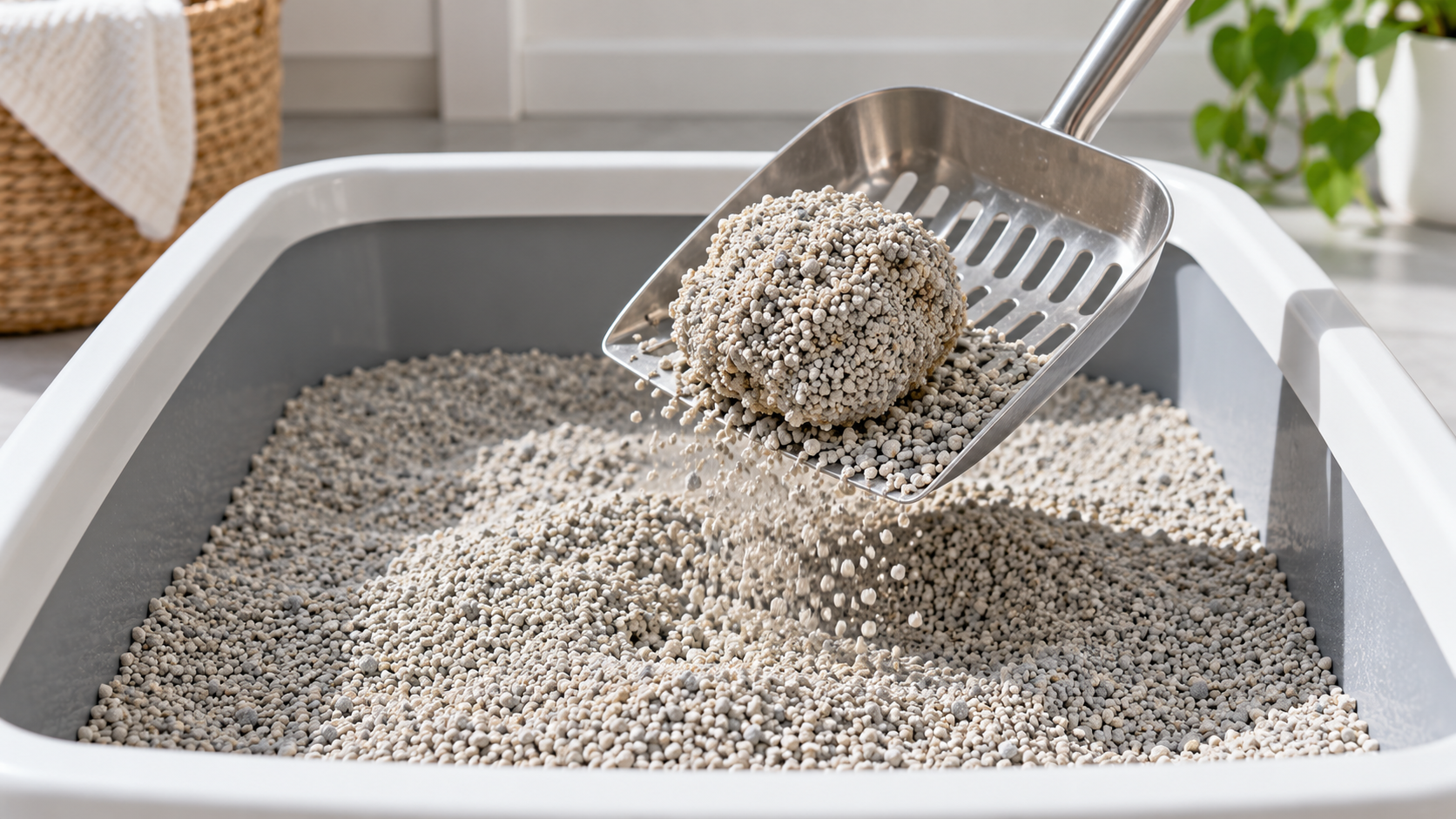
Many clumping cat litters are made primarily from sodium bentonite, a clay rich in the mineral montmorillonite. Its crystals consist of extremely thin charged layers. When liquid reaches the granules, water molecules and dissolved ions enter spaces between those layers and attach to their surfaces. The particles swell dramatically and become plastic and sticky. Neighboring wet granules press together, and the hydrated clay forms a dense cohesive mass around the liquid instead of letting it spread freely through the whole box.
The clump is not created by a chemical hardener like cement. It is a reversible hydration and binding process. Fine particles provide large surface area and seal gaps, while coarser granules add structure and reduce dust. Some products include natural gums, starches, fibers, odor-control minerals, or fragrances. Formulation balances rapid absorption with a clump strong enough to lift after setting but not so impermeable that the surface traps liquid before the interior can absorb it.
Litter depth affects performance. A sufficiently deep bed allows liquid to be surrounded before it reaches the box floor, forming a rounded clump with less adhesion to plastic. If the layer is shallow, urine can spread along the bottom and create a broad fragile mass. Scooping immediately may break a still-soft clump; allowing the product’s recommended set time lets water distribute and clay particles bind. The correct interval depends on the formula and the cat’s habits.
Swelling capacity is also why clay litter must not be flushed. Granules can hydrate and expand inside plumbing or combine with other material in a drain. Used litter belongs in a sealed waste bag according to local rules, even when packaging uses words such as natural. The box should be topped up with compatible fresh litter after clumps are removed, and emptied and washed at a suitable interval with products safe for cats.
Dust control matters because very fine clay can become airborne while pouring or digging. Pouring close to the box, using a low-dust product, maintaining ventilation, and avoiding aggressive shaking reduce exposure. Cats with respiratory disease, kittens that may ingest litter, or animals with special medical needs may require another substrate recommended by a veterinarian. Fragrance and texture preferences also affect whether a cat will use the box consistently.
Clumping works because a mineral that strongly attracts water changes both size and texture when hydrated. Swollen plate-like particles create a low-permeability sticky network, and the surrounding dry litter marks a clean boundary that a scoop can follow. The convenience depends on ordinary maintenance: adequate depth, daily removal, gentle scooping, and full cleaning. A firm clump is evidence of absorbed liquid, not a substitute for monitoring urine amount, discomfort, or changes in litter-box behavior.
Swelling clay particles absorb liquid between charged mineral layers, expand, and stick to neighboring granules to form a cohesive mass. Key terms include bentonite, montmorillonite, hydration, swelling, surface charge, granule, binder, set time, and dust.
The same swelling and binding that creates a clump can occur in plumbing, where hydrated litter may contribute to a stubborn blockage.
The bed may be shallow, the clump may be scooped too soon, or the formula may contain too few fine binding particles for that amount of liquid.
Explore more "Explainers"
Discover additional explainers across politics, science, business, technology, and other fields. Each explainer breaks down a complex idea into clear, everyday language—helping you better understand how major concepts, systems, and debates shape the world around us.