

On This Day in Lifestyles: March 28, 1797
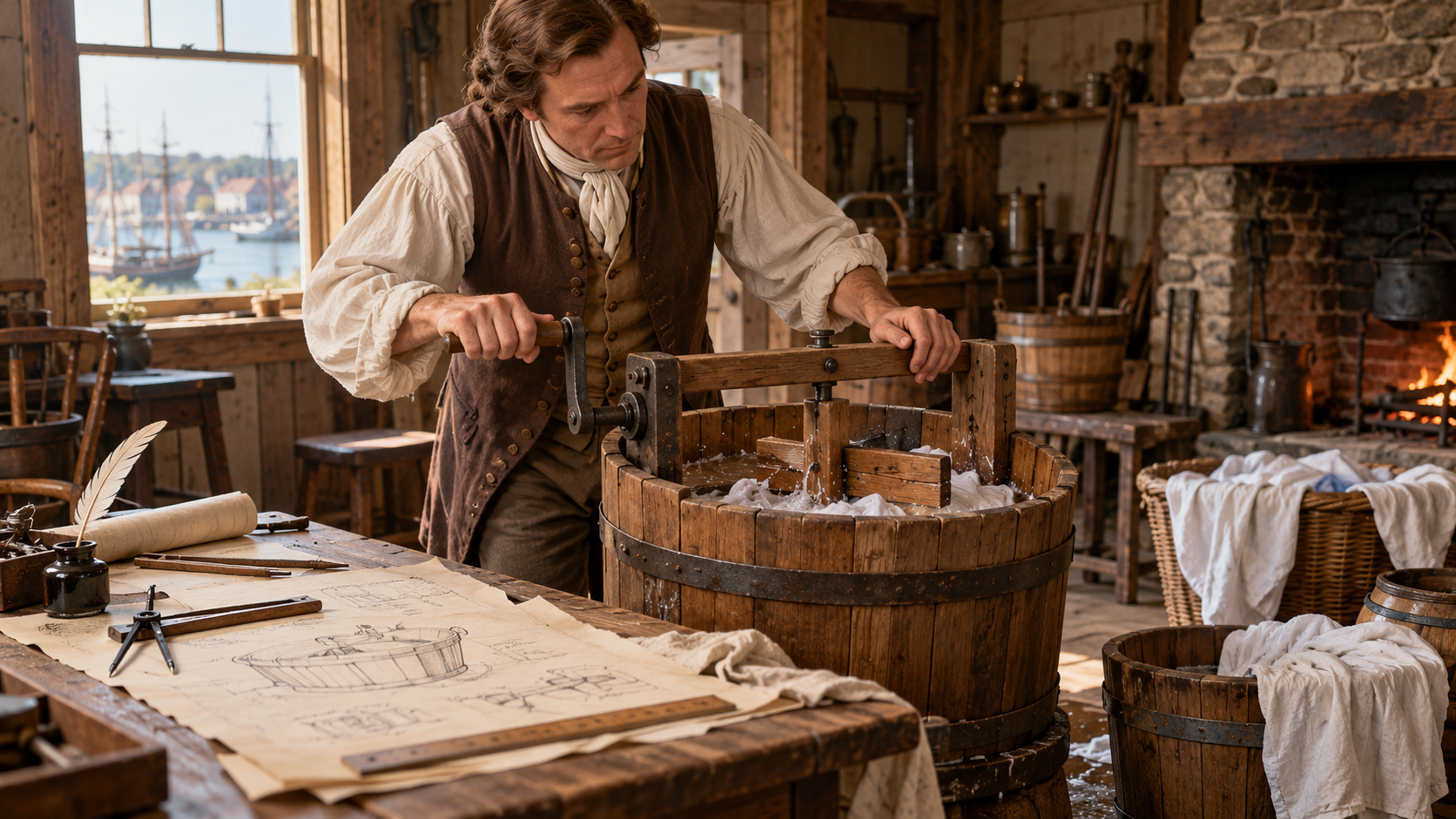
On March 28, 1797, The United States issued Nathaniel Briggs an early patent for a machine intended to wash clothes. The original patent file and drawing were destroyed in the Patent Office fire of 1836, so historians can verify the grant while remaining cautious about claims describing the machine’s exact design. The date matters in lifestyle history because inventors began formalizing mechanical answers to exhausting household work. Rather than remaining an isolated announcement or demonstration, the moment gave people a new way to think about washing, rinsing, wringing, drying, repairing, and organizing the weekly care of clothing and linens. Its importance became visible through familiar places, objects, and routines, where a broad historical change could be felt at human scale.
Laundry was demanding household labor involving water hauling, soaking, boiling, rubbing, beating, rinsing, wringing, and drying. Inventors sought mechanical ways to agitate fabric or reduce effort, but early devices varied widely and still depended on human power, fuel, water, and time. The setting shaped how contemporaries understood the event. household workers, laundresses, servants, inventors, patent officials, manufacturers, consumers, and families encountered it through workshops, patent records, demonstrations, household advice, appliance stores, plumbing systems, laundries, and advertising. Those details show that social change usually travels through ordinary systems such as workplaces, schools, shops, homes, streets, or public institutions. What seems inevitable in hindsight depended on people testing, organizing, purchasing, teaching, maintaining, or protecting the idea in real time.
The patent represents a long search to mechanize one of domestic life’s heaviest recurring tasks. Later drums, wringers, electric motors, plumbing, detergents, and automatic cycles redistributed labor, though access was uneven and laundry work remained strongly shaped by gender, class, race, and paid service. In daily life, families gradually shifted some laundry labor from hands and communal wash spaces to machines and utility rooms. The episode also exposed questions about missing evidence, unpaid labor, unequal access, resource consumption, appliance repair, and the environmental cost of convenience. Access and influence were never perfectly even, and later generations adapted the original development to different communities, values, and technologies. Still, the event changed expectations by making reduced physical strain and time spent on repetitive washing easier to imagine, recognize, or demand.
Modern washing machines save enormous physical effort but also consume water, energy, and materials and can shed textile fibers. The missing 1797 record is a useful reminder to distinguish documented milestones from attractive reconstructions of lost technology. Today, echoes remain in home appliances, laundromats, energy labels, cold-water detergents, repair debates, and efforts to reduce water and fiber pollution. Looking back helps separate the documented milestone from the myths that often accumulate around famous anniversaries. It also reminds us that lifestyle history is built from choices about design, health, work, leisure, communication, memory, and public space. On this day, the 1797 patent is best remembered as a documented step in a long transformation, not a surviving blueprint.
The United States issued Nathaniel Briggs an early patent for a machine intended to wash clothes. The original patent file and drawing were destroyed in the Patent Office fire of 1836, so historians can verify the grant while remaining cautious about claims describing the machine’s exact design.
Laundry was demanding household labor involving water hauling, soaking, boiling, rubbing, beating, rinsing, wringing, and drying. Inventors sought mechanical ways to agitate fabric or reduce effort, but early devices varied widely and still depended on human power, fuel, water, and time.
The patent represents a long search to mechanize one of domestic life’s heaviest recurring tasks. Later drums, wringers, electric motors, plumbing, detergents, and automatic cycles redistributed labor, though access was uneven and laundry work remained strongly shaped by gender, class, race, and paid service.
The larger theme was that inventors began formalizing mechanical answers to exhausting household work.
Modern washing machines save enormous physical effort but also consume water, energy, and materials and can shed textile fibers. The missing 1797 record is a useful reminder to distinguish documented milestones from attractive reconstructions of lost technology.
Today the story remains visible in home appliances, laundromats, energy labels, cold-water detergents, repair debates, and efforts to reduce water and fiber pollution.
Explore more of “This Day in Lifestyles”
Discover more moments in everyday life, design, education, travel, food, fashion, and culture. Each story connects a calendar date with an event that changed how people lived.