

On This Day in Lifestyles: March 31, 1889
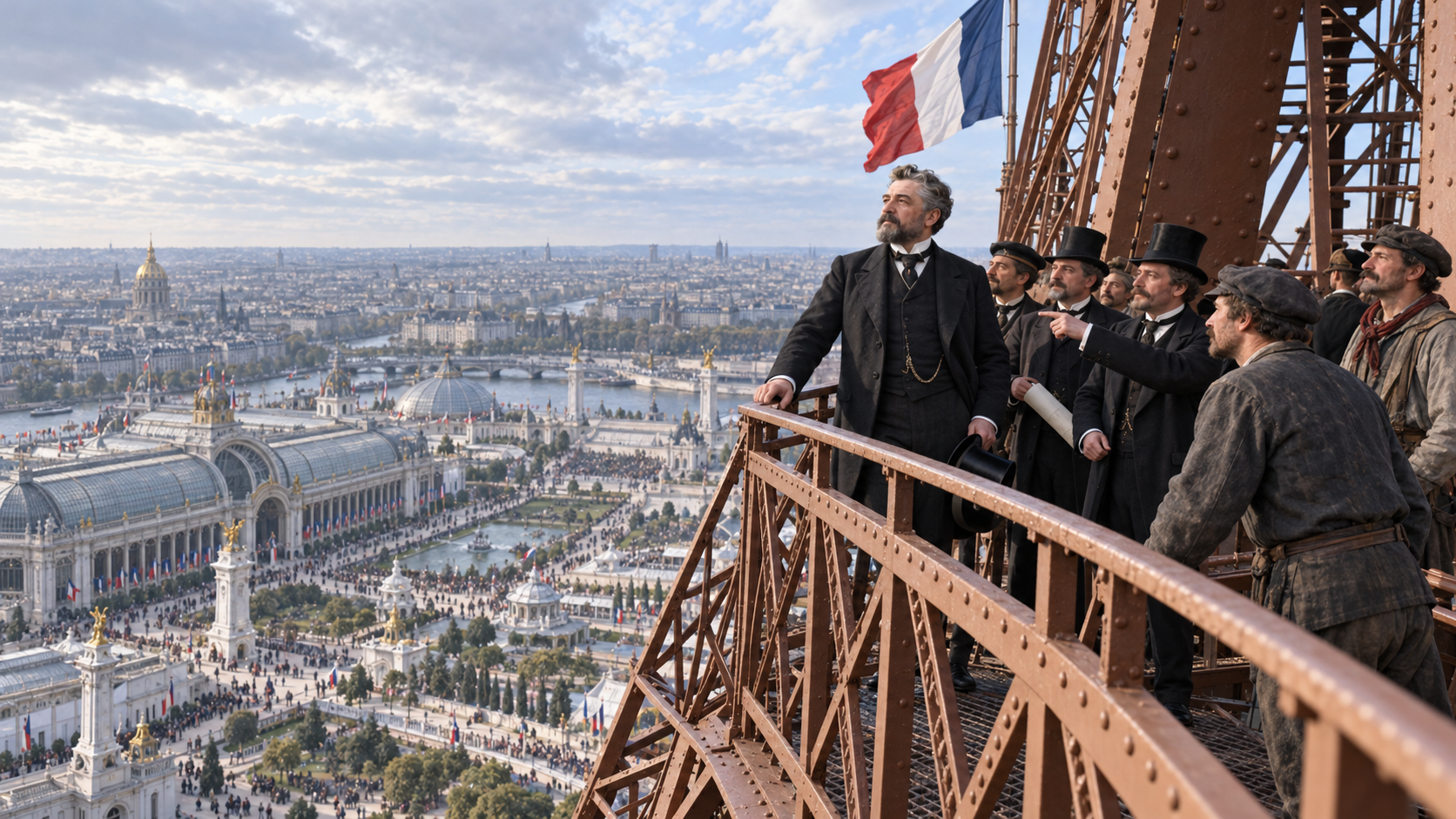
On March 31, 1889, Gustave Eiffel led officials and journalists up the newly completed Eiffel Tower for an inauguration ceremony, raising the French flag above Paris. The elevators were not yet ready, so the ascent required many stairs, underscoring the height and engineering ambition of the structure. The date matters in lifestyle history because engineering became a public spectacle and a permanent image of urban modernity. Rather than remaining an isolated announcement or demonstration, the moment gave people a new way to think about sightseeing, climbing, photographing, dining, navigating a city, and gathering around a shared landmark. Its importance became visible through familiar places, objects, and routines, where a broad historical change could be felt at human scale.
Built for the 1889 Exposition Universelle, the tower used prefabricated iron parts, careful calculations, and a highly organized construction site. Critics had attacked its appearance, but the rising lattice made industrial engineering itself part of the city’s visual culture. The setting shaped how contemporaries understood the event. engineers, ironworkers, architects, exposition organizers, critics, journalists, scientists, radio operators, Parisians, and tourists encountered it through construction drawings, exhibitions, newspapers, observation decks, postcards, radio, film, travel posters, and social media. Those details show that social change usually travels through ordinary systems such as workplaces, schools, shops, homes, streets, or public institutions. What seems inevitable in hindsight depended on people testing, organizing, purchasing, teaching, maintaining, or protecting the idea in real time.
When the exposition opened later that spring, visitors climbed or rode upward for unprecedented views, dining, observation, and spectacle. The tower became both destination and orientation point, changing how tourists pictured Paris and how modern cities used architecture to advertise progress. In daily life, visitors learned to experience a city from above and to organize travel around a single instantly recognizable structure. The episode also exposed questions about innovation versus aesthetic criticism, tourism pressure, maintenance, national symbolism, commercialization, and the labor behind monuments. Access and influence were never perfectly even, and later generations adapted the original development to different communities, values, and technologies. Still, the event changed expectations by making a new public viewpoint and an enduring demonstration of engineering easier to imagine, recognize, or demand.
Originally expected to stand for only twenty years, the tower proved useful for scientific experiments and radio transmission and escaped demolition. It remains a working structure, major attraction, national symbol, and carefully maintained piece of iron infrastructure. Today, echoes remain in Paris travel, nightly illumination, radio infrastructure, maintenance work, scientific history, and countless photographs. Looking back helps separate the documented milestone from the myths that often accumulate around famous anniversaries. It also reminds us that lifestyle history is built from choices about design, health, work, leisure, communication, memory, and public space. On this day, the 1889 inauguration turned an exposition structure into one of the world’s most familiar urban silhouettes.
Gustave Eiffel led officials and journalists up the newly completed Eiffel Tower for an inauguration ceremony, raising the French flag above Paris. The elevators were not yet ready, so the ascent required many stairs, underscoring the height and engineering ambition of the structure.
Built for the 1889 Exposition Universelle, the tower used prefabricated iron parts, careful calculations, and a highly organized construction site. Critics had attacked its appearance, but the rising lattice made industrial engineering itself part of the city’s visual culture.
When the exposition opened later that spring, visitors climbed or rode upward for unprecedented views, dining, observation, and spectacle. The tower became both destination and orientation point, changing how tourists pictured Paris and how modern cities used architecture to advertise progress.
The larger theme was that engineering became a public spectacle and a permanent image of urban modernity.
Originally expected to stand for only twenty years, the tower proved useful for scientific experiments and radio transmission and escaped demolition. It remains a working structure, major attraction, national symbol, and carefully maintained piece of iron infrastructure.
Today the story remains visible in Paris travel, nightly illumination, radio infrastructure, maintenance work, scientific history, and countless photographs.
Explore more of “This Day in Lifestyles”
Discover more moments in everyday life, design, education, travel, food, fashion, and culture. Each story connects a calendar date with an event that changed how people lived.