

Soft-Close Cabinet Hinge Explainer
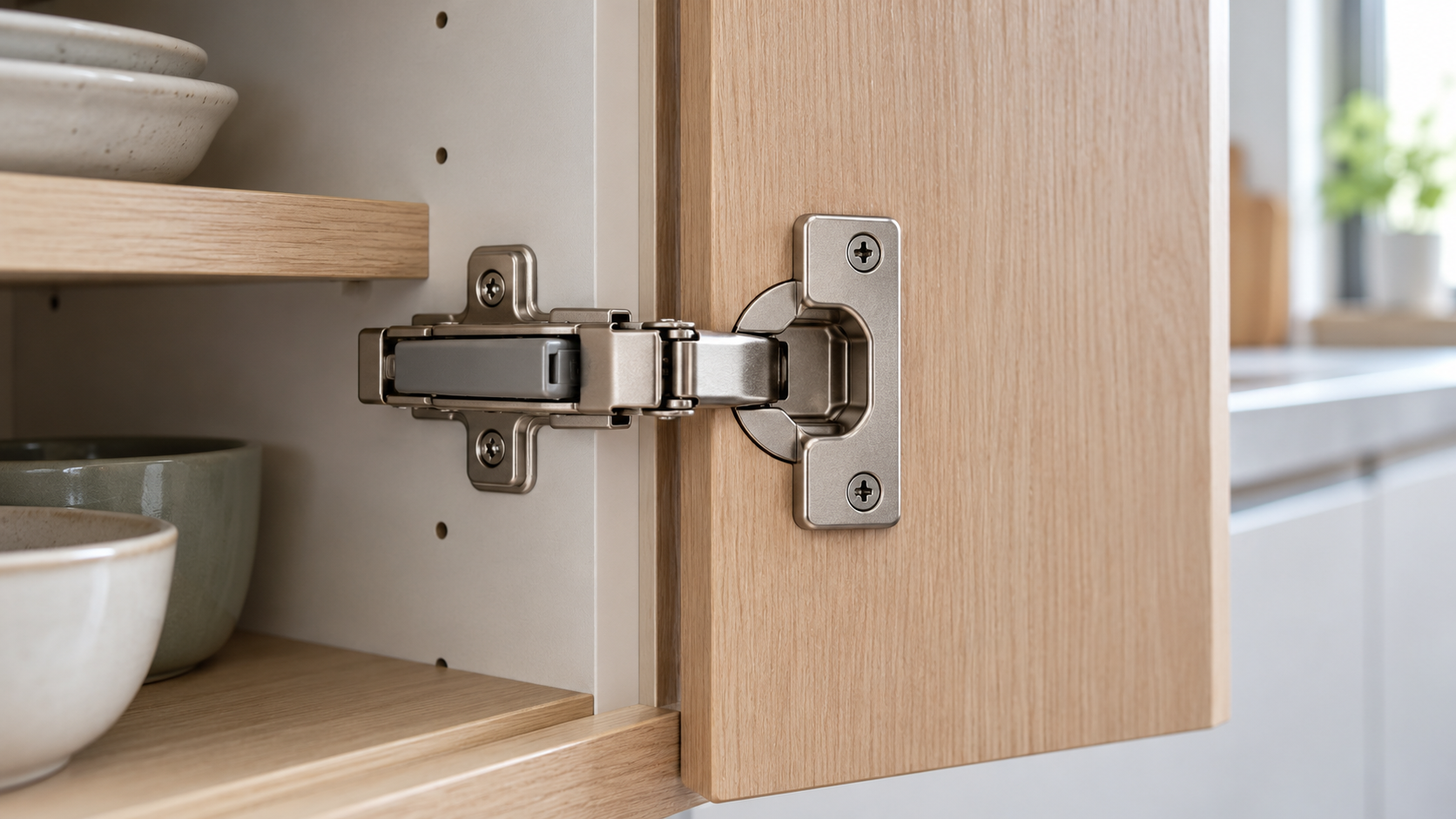
A concealed cabinet hinge guides the door through a compact multi-link motion while a spring helps pull it toward the closed position. A soft-close version adds a damper that engages during the final part of that travel. When the door reaches the engagement angle, a tab or cam presses a small piston into a fluid-filled cylinder. The piston forces oil through a restricted passage, creating resistance that absorbs the door’s motion before the hinge spring seats it gently against the cabinet.
The damper does not usually power the door. Its job is to convert movement into heat in a tiny amount of hydraulic fluid. The narrower the internal passage and the faster the piston moves, the greater the opposing force. A check valve or bypass can allow the piston to reset with little resistance when the door opens. This directional behavior lets the hinge feel normal on the way out while controlling only the closing stroke where a slam would occur.
The hinge cup recessed into the door connects to articulated arms mounted on a plate inside the cabinet. Those arms control overlay, clearance, and the path needed to avoid the frame. Adjustment screws commonly change side-to-side alignment, depth, and height. The soft-close unit may be built into the hinge or clipped onto it. Some systems allow the damping action to be switched off on selected hinges when a small, light door would otherwise close too slowly.
Door mass and speed determine how much energy the damper must handle. A tall heavy door often uses more hinges, spreading both structural load and closing control. If every damper is set aggressively on a very light door, the spring may not overcome the resistance and the door can remain slightly open. If too few dampers serve a large door, it may still strike the cabinet. Manufacturer tables link door dimensions and weight to hinge count and permissible mounting positions.
A door that suddenly slams may have a disabled damper, oil leakage, a broken engagement tab, loose mounting screws, or misalignment that prevents contact. A door that creeps or stops can be rubbing the frame or have excessive damping. Lubricant sprayed into a sealed damper generally does not repair its internal valve and may contaminate surfaces. Cleaning, tightening, and alignment should come first; a failed sealed module is usually replaced with the matching part.
Soft-close action feels simple because the mechanism divides tasks cleanly. The linkage defines the door’s path, the spring supplies closing force, and the damper removes excess energy near the end. No electronics or sensors are required. With the correct hinge geometry and load, the device reduces noise and impact while still pulling the door fully closed. It cannot correct a warped cabinet or an overloaded door, but it makes ordinary repeated use quieter and less abrupt.
A cam engages a small fluid damper near the end of the closing arc. Hydraulic resistance absorbs motion while the hinge spring completes the close. Key terms include hinge cup, linkage, mounting plate, spring, cam, piston, bypass, and damper.
The hinge needs to move freely through most of its arc. Late engagement controls the impact-prone final motion without making the whole door feel heavy.
Yes. A very light door with several active dampers may close too slowly or stop short. Some hinges let installers disable selected dampers to match the load.
Explore more "Explainers"
Discover additional explainers across politics, science, business, technology, and other fields. Each explainer breaks down a complex idea into clear, everyday language—helping you better understand how major concepts, systems, and debates shape the world around us.