

Seat-Belt Retractor Explainer
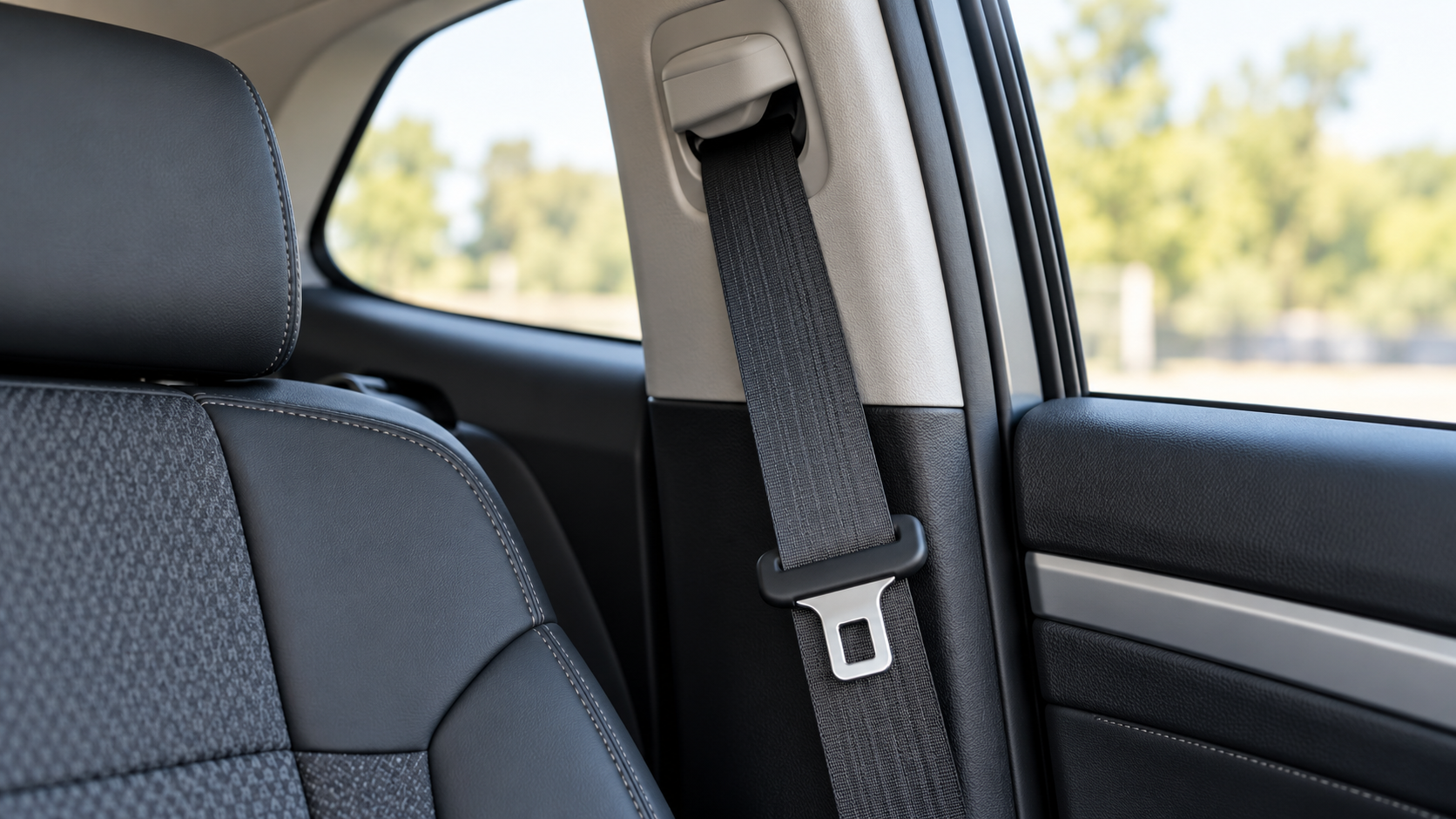
A seat-belt retractor stores webbing on a spring-loaded spool inside the vehicle pillar or seat. During ordinary movement, the spool turns freely enough for an occupant to lean forward, and the spring gently winds slack back in. A locking mechanism changes that behavior when motion becomes abrupt. Depending on the design, it senses how quickly webbing leaves the spool, a rapid change in vehicle motion, or both. The sensor then drives a pawl into a toothed wheel and stops further payout.
In a webbing-sensitive mechanism, fast spool rotation moves a small inertia mass relative to the spool. That movement triggers the locking pawl. In a vehicle-sensitive mechanism, a pendulum or ball responds when the car decelerates sharply or tilts beyond a threshold, lifting a lever that locks the gear. Normal slow extension does not create enough relative motion, so the belt remains comfortable. A quick tug is therefore likely to lock the spool even while the vehicle is parked.
Locking the retractor prevents additional webbing from feeding out, but existing slack and belt stretch still matter. Many modern vehicles add pyrotechnic pretensioners that fire at the start of a serious crash and pull a short length of belt tight. Load limiters may then allow controlled webbing payout at high force, reducing peak pressure on the chest while the belt and air bag manage the occupant’s motion together. These devices are calibrated safety components and are not reusable after deployment.
Some retractors also provide an automatic locking mode for installing a child restraint. Pulling the shoulder belt all the way out may switch the mechanism so it ratchets back and cannot extend again until fully rewound. This feature is not universal and its use depends on the vehicle and child-seat instructions. The latch plate, lower anchors, and retractor type must be identified correctly; a belt that locks in a crash is not automatically set for a particular installation method.
The webbing should lie flat across the shoulder and low over the pelvis, without twists, clips, cushions, or routing behind the back. Dirt, spills, or aggressive chemicals can damage fibers and retractor operation. A belt that fails to retract, shows cuts or fraying, was loaded in a crash, or has a warning light needs inspection under the vehicle maker’s guidance. Opening the spring housing or pretensioner is unsafe because stored mechanical or pyrotechnic energy may remain.
A retractor solves two opposing needs: freedom during routine travel and restraint during sudden motion. Its inertia devices make that choice mechanically within milliseconds, while the return spring manages slack in the background. Crash protection still depends on correct seating, belt fit, and the coordinated vehicle restraint system. The spool lock does not freeze the person perfectly in place; it limits forward travel so the belt can distribute force across stronger areas of the body.
The spool moves freely during slow use, but a rapid webbing pull or sudden vehicle deceleration moves an inertia sensor that engages a locking pawl. Key terms include spool, return spring, inertia sensor, pawl, pretensioner, load limiter, webbing, and latch plate.
Fast spool acceleration shifts a small inertia component relative to the rotating assembly, triggering the pawl before much additional webbing can leave.
During a qualifying crash, it rapidly removes some belt slack. It works with the retractor and may require replacement after deployment.
Explore more "Explainers"
Discover additional explainers across politics, science, business, technology, and other fields. Each explainer breaks down a complex idea into clear, everyday language—helping you better understand how major concepts, systems, and debates shape the world around us.