

On This Day in Business: April 11, 2000
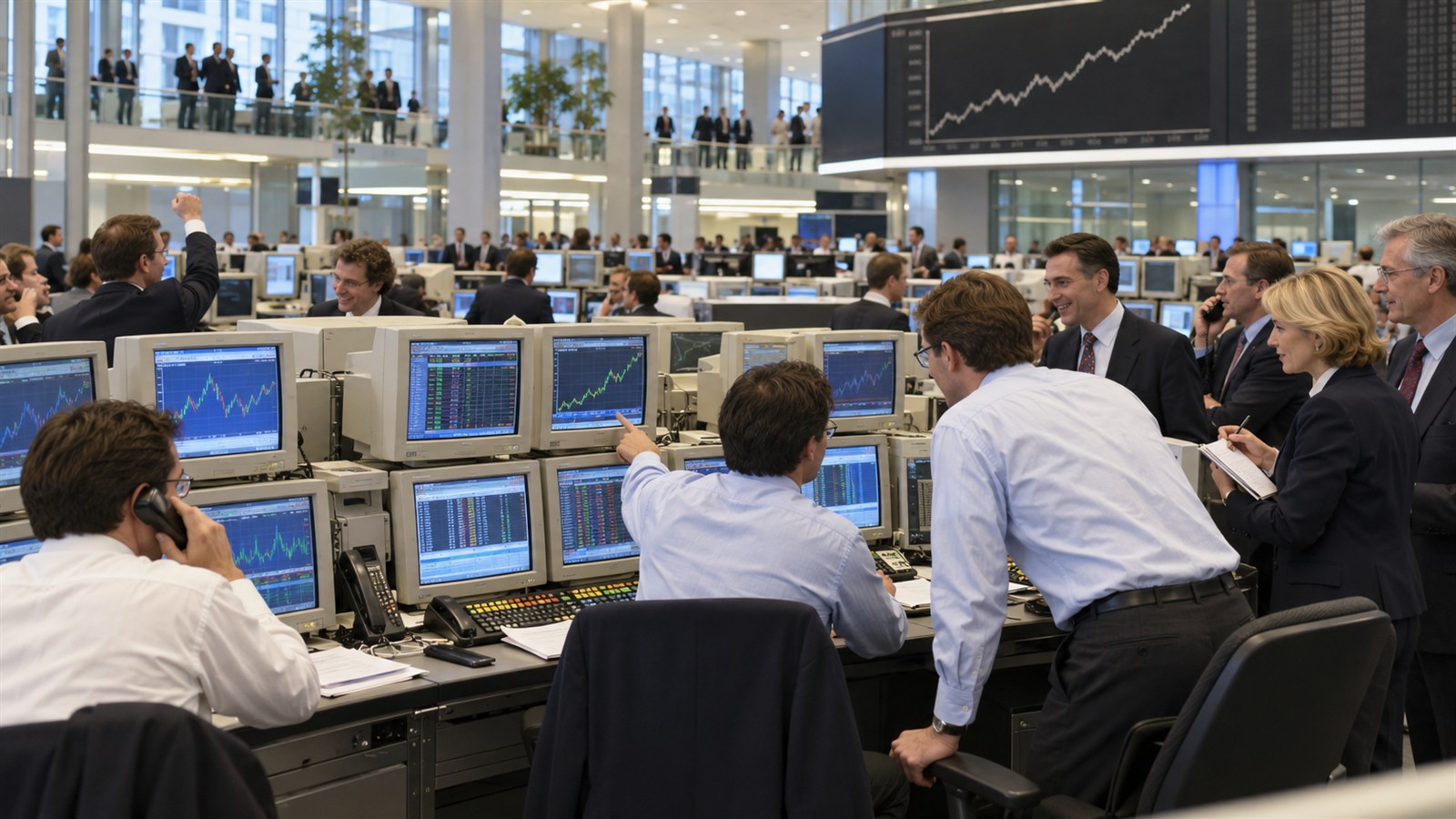
On April 11, 2000, Europe's first exchange-traded funds began trading on Deutsche Börse's Xetra market. The initial products tracked the EURO STOXX 50 and STOXX Europe 50 indexes, giving investors a security that could provide broad equity exposure while trading throughout the day like a share. Index funds already allowed investors to hold baskets of stocks, but the exchange-traded structure added intraday pricing, brokerage access, and a creation-and-redemption process designed to keep the market price close to the value of the underlying portfolio. The launch introduced a new distribution format for diversified investing in European markets.
An ETF depends on coordination among an index provider, fund manager, exchange, market makers, custodians, brokers, and authorized participants. Large institutions can exchange baskets of securities for fund shares or reverse the process, creating an arbitrage mechanism when the ETF price moves away from its holdings. Retail investors do not perform those creations directly, but they benefit from the liquidity and price alignment the process can support. Xetra's electronic market gave the products continuous visibility and access across borders, fitting a Europe that had recently introduced the euro and was seeking deeper financial integration.
Adoption expanded as issuers added sectors, countries, bonds, commodities, and investment strategies. Lower operating costs and transparent rules made many ETFs attractive to institutions and households, while the ability to trade quickly supported hedging and portfolio adjustment. Growth also introduced risks. A fund can be liquid on ordinary days yet face stress when underlying markets are disrupted. Specialized or leveraged products may behave differently from simple index trackers, and investors still pay spreads, taxes, and brokerage costs. Regulators and exchanges therefore had to develop disclosure, market-making, and resilience practices around a rapidly expanding category.
The European launch shows how financial innovation often changes packaging more than the underlying asset. Investors could already own the component shares, but the ETF transformed a portfolio into a standardized, continuously traded product. That convenience widened distribution and supported competition among exchanges and asset managers. It also shifted value toward infrastructure capable of calculating indexes, publishing prices, managing baskets, and supplying liquidity reliably. The lesson extends beyond funds: when a complex service is bundled into an accessible instrument with clear rules, new customers and uses may emerge even though the underlying economics are familiar. Competition also shifted from selling investment judgment alone to supplying reliable exposure. Fees, tracking accuracy, spreads, tax treatment, and trading quality became visible dimensions on which similar funds could compete. Scale often lowered costs, encouraging concentration among major issuers and exchanges. The product's apparent simplicity therefore rests on operational excellence behind the scenes. A tracker that fails during stress undermines the very convenience that attracted investors in the first place.
Index funds had demonstrated demand for low-cost diversified exposure, while electronic exchanges made continuous trading increasingly practical.
Deutsche Börse and product providers combined fund structures, benchmark indexes, market makers, and Xetra's trading infrastructure.
Two equity ETFs began trading on April 11, 2000, tracking major euro-area and broader European blue-chip indexes.
The creation-and-redemption process supported price alignment but relied on institutions, liquid underlying securities, and functioning markets.
European ETFs expanded into many assets and strategies, becoming important tools for long-term investing, allocation, and short-term hedging.
The launch illustrates how standardized packaging and exchange distribution can make an existing investment idea more flexible and scalable.
Explore more of "On This Day ..."
Discover more events from the same date across news, politics, technology, sports, and other fields. Each link highlights significant moments that shaped history on different fronts.