

On This Day in Business: April 20, 2010
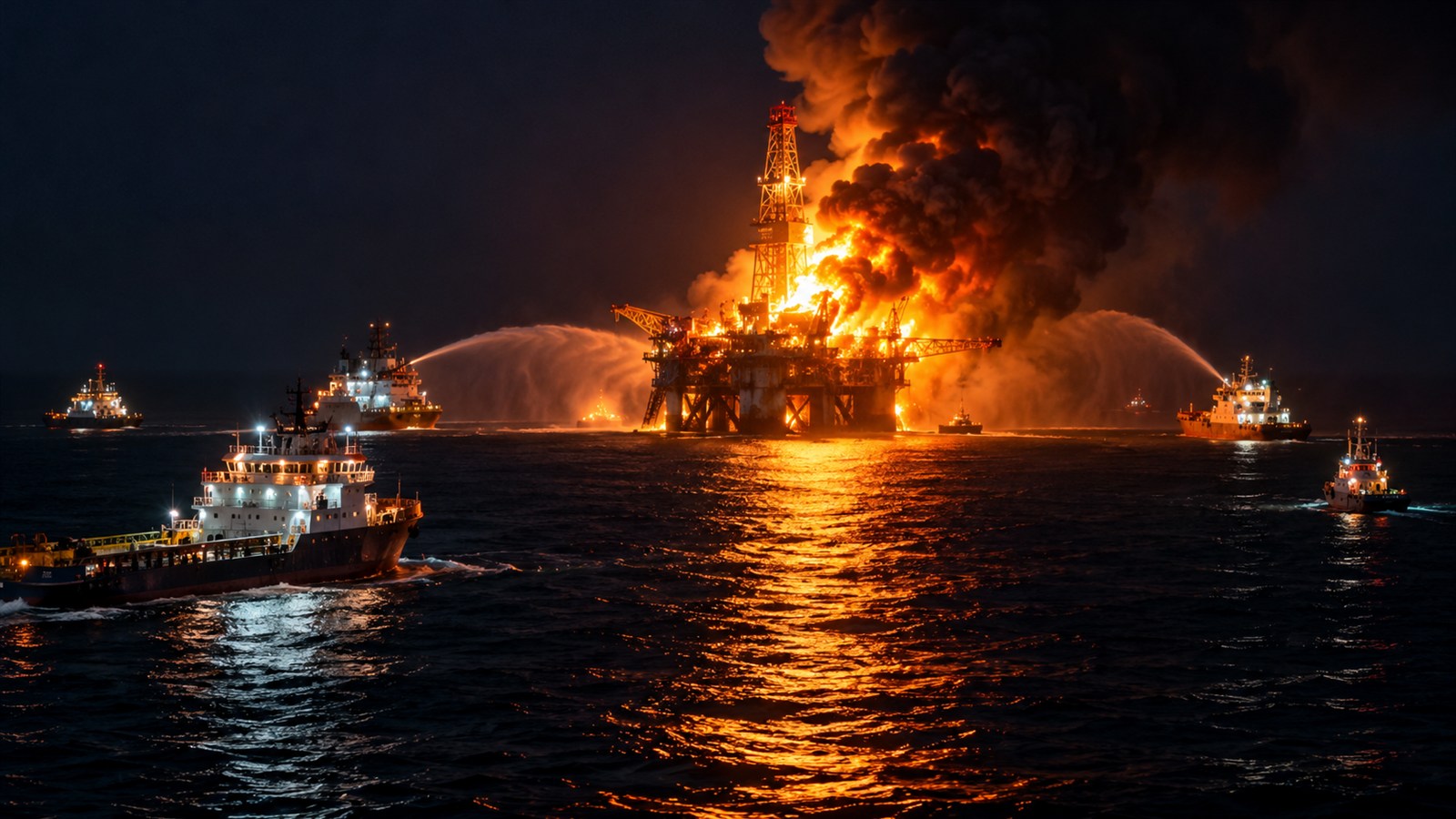
On April 20, 2010, an explosion and fire struck the Deepwater Horizon drilling rig in the Gulf of Mexico. Eleven workers were killed, others were injured, and the rig sank two days later. Oil then flowed from the Macondo well nearly a mile below the surface for almost three months. The disaster became the largest marine oil spill in United States history, affecting fisheries, tourism, wildlife, coastal communities, and offshore operations. The tragedy began during temporary abandonment of the well, when barriers and tests failed to prevent hydrocarbons from reaching the rig.
Deepwater drilling depends on a network of owners, operators, contractors, equipment suppliers, and regulators. Responsibilities are divided, but hazards move across organizational boundaries. Investigations found problems involving cement, pressure-test interpretation, well design, decision-making, emergency systems, and oversight. Schedule and cost pressures existed alongside uncertain technical signals. When several defenses failed, the blowout preventer did not seal the well. The accident demonstrated that safety cannot be treated as the responsibility of one crew or component; it must be integrated across contracts, incentives, procedures, and independent authority to stop work.
Response teams attempted containment at unprecedented depth while oil spread through the Gulf. Fishing areas closed, businesses lost revenue, and extensive federal, state, corporate, and scientific resources went into cleanup and assessment. BP established claims processes and incurred enormous costs through response, settlements, penalties, and restoration. The federal government imposed a temporary drilling moratorium and revised offshore safety regulation. Long-term studies continued to measure ecological and economic effects, showing that the balance-sheet consequences of industrial failure can develop over years rather than one reporting period.
Deepwater Horizon is a business lesson in low-probability, high-consequence risk. Performance metrics can reward speed and efficiency while hiding whether protective barriers are weakening. Contractors may optimize their assigned tasks without seeing the system-wide danger. Boards and executives therefore need independent safety information, clear accountability, and incentives that treat prevention as productive capacity rather than delay. The disaster also shows that reputation, license to operate, supply continuity, and environmental liability are financially material. April 20 marks a human loss first, and an enduring warning that complex operations require humility about uncertainty and relentless attention to weak signals. Insurance cannot substitute for prevention in such a system. Policies and contractual indemnities may finance part of a loss, but they cannot restore lives, ecosystems, community trust, or years of management attention. Some consequences exceed limits or remain disputed. Risk transfer works best after a company has demonstrated disciplined controls, because insurers price the quality of the operation. Deepwater Horizon showed that unresolved technical uncertainty is not an ordinary cost variance; it can threaten the entire enterprise.
The Macondo project combined extreme water depth, high pressures, specialized contractors, and a temporary-abandonment procedure with many interacting barriers.
Warnings in pressure tests and well behavior were not resolved before hydrocarbons traveled up the well and reached the drilling rig.
The April 20 explosion killed eleven workers, destroyed the rig, and opened a spill that continued for nearly three months.
Containment and cleanup were complicated by depth, scale, weather, uncertain flow, and the wide distribution of oil through the Gulf ecosystem.
Claims, penalties, settlements, regulatory changes, and restoration turned operational failure into years of financial and institutional consequences.
The event shows why process safety must cross company boundaries and carry authority equal to production, schedule, and cost objectives.
Explore more of "On This Day ..."
Discover more events from the same date across news, politics, technology, sports, and other fields. Each link highlights significant moments that shaped history on different fronts.