

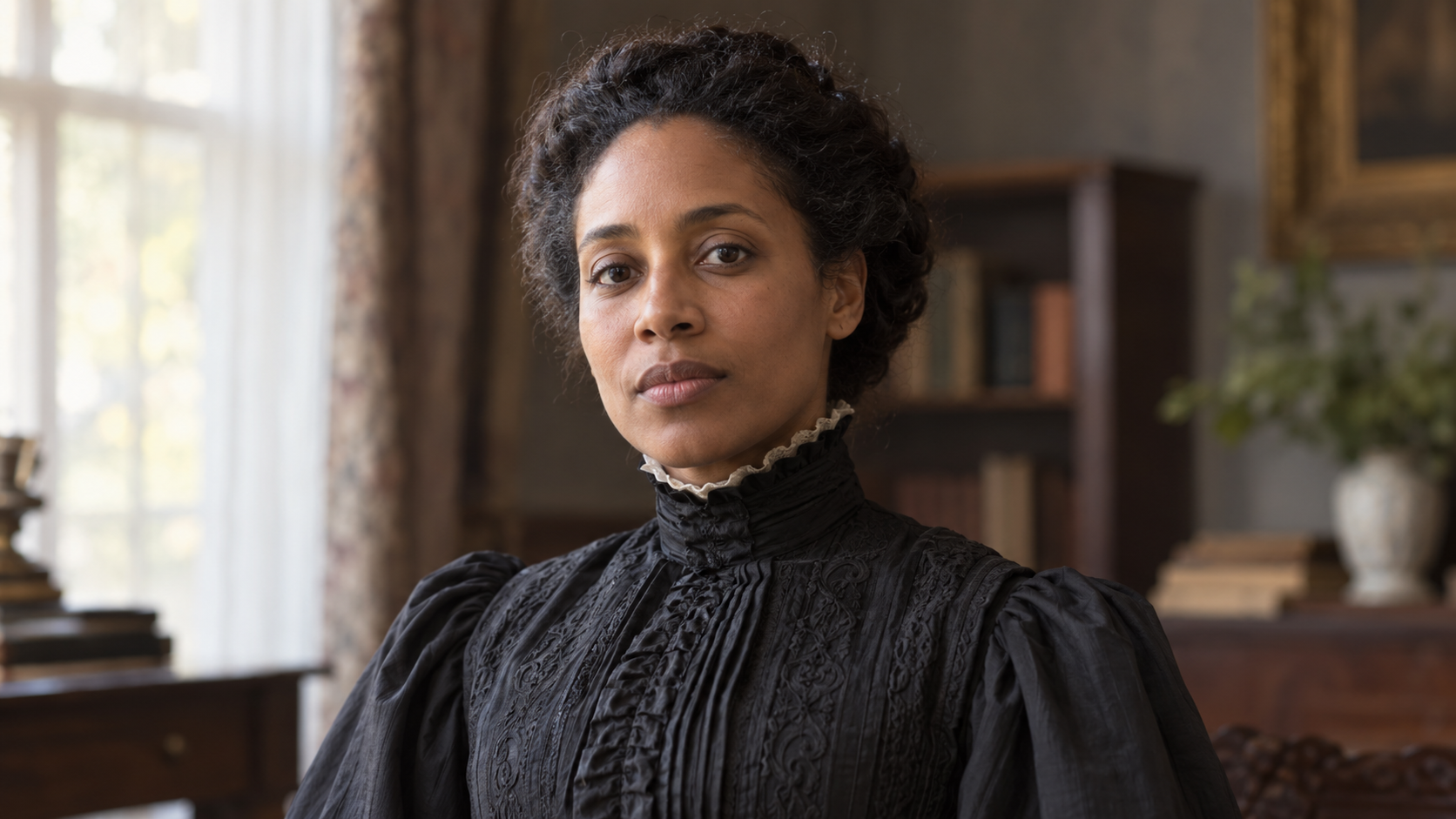
“The cause of freedom is not the cause of a race or a sect, a party or a class,—it is the cause of human kind, the very birthright of humanity.”
Anna Julia Cooper wrote this sentence in A Voice from the South, published in 1892. It appears in her discussion of the status of women in America, where she considers the purpose and reach of movements for reform. Cooper’s list moves deliberately from race and religious sect to party and social class. Each grouping can organize a claim to freedom, but none can rightfully monopolize freedom itself. The final phrase places the claim on a wider foundation: membership in humanity. Her statement therefore addresses both people who deny another group’s rights and reformers who defend their own cause while overlooking the people outside its familiar boundaries.
Cooper makes the point especially demanding by applying it to the women’s movement. In the surrounding passage, she suggests that the movement could embody universal good if its pioneers understood the full scope of their undertaking. The qualification matters. She does not assume that a campaign becomes inclusive merely because its leaders use generous language. A movement can challenge one form of exclusion while reproducing another through its priorities, membership, or account of whose experience counts. For Cooper, universal freedom requires more than adding another group to an existing hierarchy. It requires examining the hierarchy’s claim to distribute rights according to race, wealth, religion, or political allegiance in the first place.
The book gives this argument a particular voice. Cooper writes as a Black woman of the South, bringing education, racial inequality, and women’s civic standing into the same field of discussion. That perspective helps explain why a narrow account of progress would be inadequate. An institution might improve opportunities for some women while leaving Black women excluded; a racial reform could likewise neglect the constraints imposed on women within the community it sought to assist. Cooper’s sentence does not reduce these experiences to one interchangeable injury. Instead, it establishes a common standard by which different exclusions can be examined. Recognizing a shared birthright should make people more attentive to particular barriers, rather than less interested in their differences.
For readers evaluating a reform campaign, Cooper offers a useful test of consistency. Who receives the benefits when a proposal succeeds, and who remains outside the definition of the people it serves? Does a coalition treat another group’s freedom as expendable when it becomes inconvenient? Those questions follow from the distinction between a universal right and a sectional advantage. They also explain why the quotation belongs in political discussion even though Cooper’s work reaches beyond elections and government offices. Public life depends on the boundaries communities draw around education, opportunity, and participation. Her sentence asks those communities to justify their boundaries against a principle that no party, class, or race can claim as its private possession.
The sentence appears in the chapter The Status of Woman in America in Cooper's 1892 collection A Voice from the South.
The original text prints human kind as two words. Later presentations sometimes modernize that spelling without changing the central idea.
Cooper follows the declaration with a challenge to the women's movement to understand the universal scope of its work.
Her list of race, sect, party, and class identifies several ways a movement can mistake a group's advantage for a freedom shared by everyone.
The passage invites scrutiny of who a reform includes and which barriers remain after its most visible demand is satisfied.
Universal rights need attention to particular experiences. Cooper's reasoning makes inclusion a practical responsibility rather than a ceremonial claim.
Explore more "Quotes of The Day"
Discover more notable quotes from influential voices across politics, science, business, technology, sports, and culture. Each quote offers insight into how ideas, beliefs, and decisions shape the world around us.