

Recounts Explainer
A recount is an additional count of votes in a particular election contest. Its purpose is to verify the accuracy of the totals by examining the ballots or vote records through a legally defined procedure. A close margin can make small discrepancies especially significant, but the conditions for a recount depend on the jurisdiction. Recounting is different from running the election again. It revisits votes already cast rather than giving the electorate another opportunity to choose a candidate or decide a ballot measure.
Some laws require an automatic recount when a margin meets a specified threshold. Other systems allow an eligible candidate, voter, or other authorized requester to seek one within a deadline. A court order can also lead to a recount in appropriate circumstances. There is no universal United States threshold or request period applying to every contest. Rules may require the requester to pay costs, and they may define when those costs are reimbursed. The election office’s current instructions identify the applicable route.
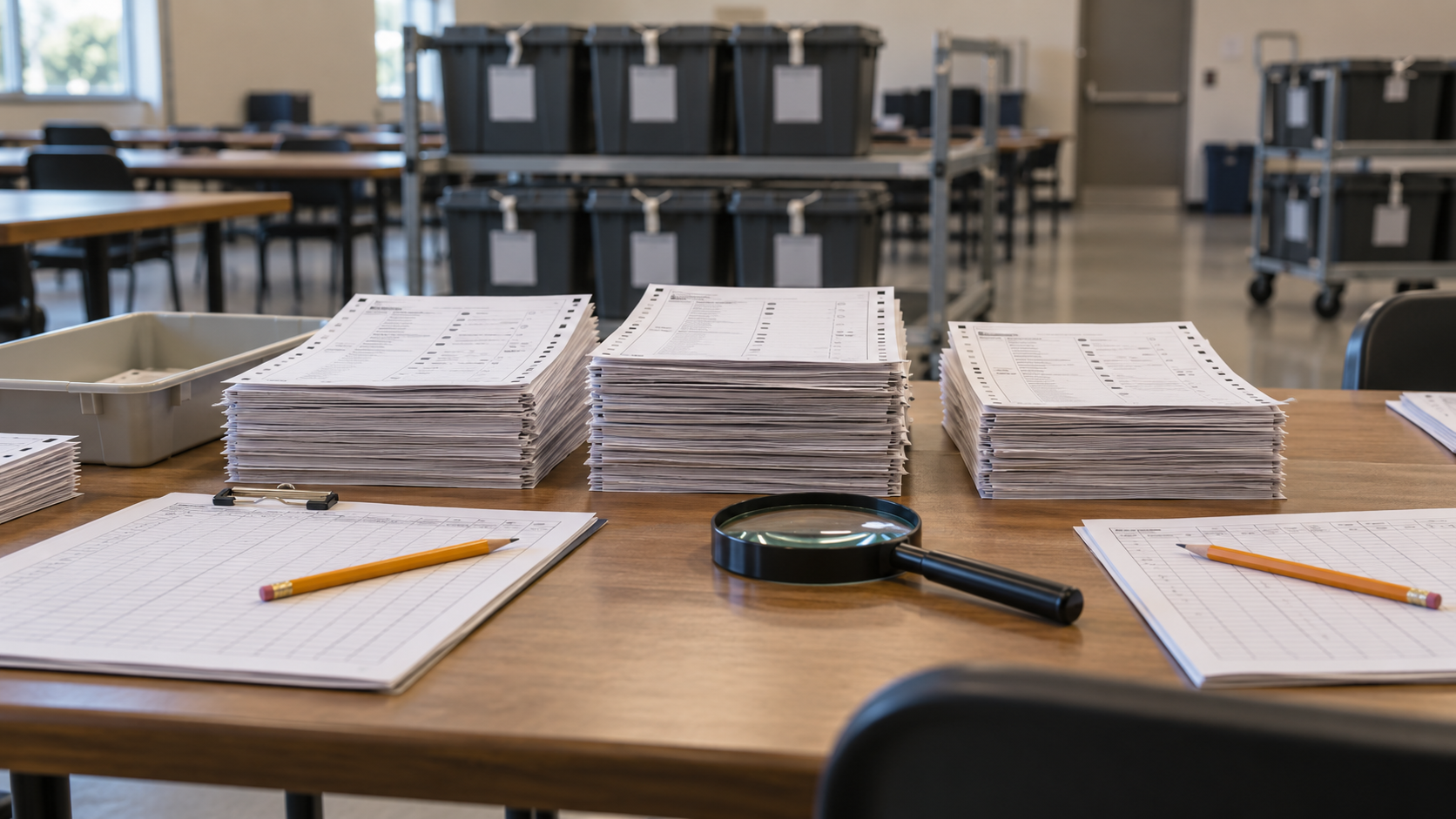
The method can involve a manual examination of ballots, another tabulation using equipment, or a combination prescribed by law. Officials maintain custody of the materials and apply standards for interpreting voter marks. Observers may be allowed under rules that protect security and orderly work. The geographic scope also matters: a partial recount may not be sufficient to change an official outcome under the governing law. Accurate reporting should explain what was counted again, how it was counted, and whether the review covered the whole contest.
A recount can confirm the original result or reveal differences that require correction. A changed total does not automatically establish intentional fraud; the cause needs investigation and evidence. Conversely, a recount is not designed to resolve every possible allegation about eligibility, misconduct, or election law. Those claims may belong in a separate legal contest or investigation. Recounts provide a defined way to test counting accuracy, especially when margins are narrow. Their value depends on consistent standards, transparent procedures, and careful distinction between corrected numbers and conclusions about why an error occurred.
A recount revisits existing votes. A new election asks voters to cast new ballots and is a different remedy.
Automatic and requested recounts have different triggers. Some states do not provide an automatic recount at all.
The law determines the method, deadlines, eligible requesters, and any payment requirements. Those details differ by contest and state.
Security records and observation rules help preserve confidence that the materials being reviewed are the original election materials.
Counting differences can arise without deliberate wrongdoing. The reason for a discrepancy requires evidence beyond the revised total.
An audit checks aspects of the election process, while a legal contest can challenge broader issues. Neither is simply another name for a recount.
Explore more "Explainers"
Discover additional explainers across politics, science, business, technology, and other fields. Each explainer breaks down a complex idea into clear, everyday language—helping you better understand how major concepts, systems, and debates shape the world around us.