

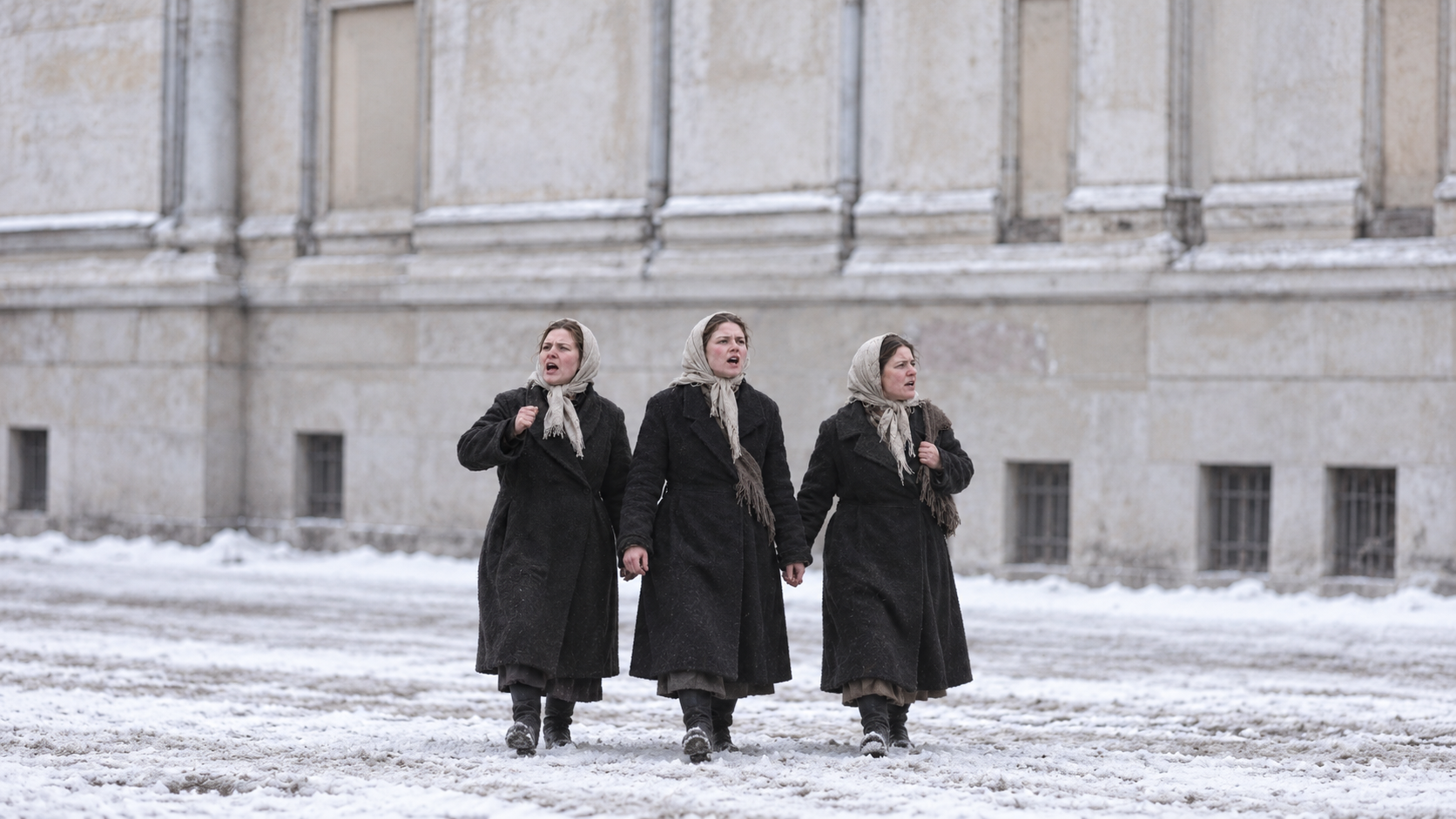
On This Day in Politics: March 8, 1917
On March 8, 1917, women in Petrograd, the Russian capital now called St. Petersburg, joined demonstrations and strikes demanding bread and an end to the hardships of war. Women workers helped turn International Women’s Day into the opening of a revolutionary crisis. Their protest did not immediately remove Tsar Nicholas II, but it set events in motion that soon brought down the monarchy. The date requires a calendar explanation: Russia still used the Julian calendar, where it was February 23. March 8 is the corresponding Gregorian date, which is why an uprising beginning in March is usually remembered as the February Revolution.
The demonstrations arose from pressures that reached into workplaces and households alike. World War I had drawn men into military service and placed growing demands on women who worked in factories while sustaining their families. Food shortages made daily survival a political question. International Women’s Day already belonged to the socialist and labor movement, with earlier observances in the United States and Europe and Russian celebrations before 1917. It provided an occasion for women to assemble around grievances that official institutions had failed to resolve. Their participation challenged both the imperial authorities and the assumption that political initiative belonged mainly to male party leaders.
The women’s action helped spread unrest beyond its starting point. Other workers joined, demonstrations grew, and the government’s ability to control the capital deteriorated over the following days. Soldiers’ decisions about obeying orders became crucial to the monarchy’s survival. The resulting collapse brought a provisional government rather than an immediate Bolshevik government; the Bolsheviks seized power in a separate revolution later in 1917. These stages should not be compressed into a single afternoon. March 8 mattered as the beginning of a rapidly widening confrontation, one whose participants could demand urgent change without sharing a complete agreement about the system that should replace imperial rule.
Women remained politically active after the initial uprising, through further strikes, public demonstrations, and campaigns over rights and the war. They were not a single bloc: differences of class, political allegiance, and attitudes toward continued fighting shaped their choices. The revolution therefore opened arguments about representation and equality rather than settling them. The association between the Petrograd protests and March 8 also became part of the history of International Women’s Day, linking the anniversary to collective action as well as commemoration. Remembering the event puts working women near the center of political change. Their demands over food, work, and family survival exposed weaknesses in a state struggling to maintain authority during a devastating war.
Russia’s Julian calendar was thirteen days behind the Gregorian calendar in 1917. February 23 and March 8 refer to the same day.
International Women’s Day had roots in socialist and labor organizing before the Petrograd uprising. It was not first invented in 1917.
Women workers helped widen protests over food and the war into a crisis of imperial authority. Other workers and soldiers became essential participants.
The monarchy fell later in the unfolding crisis. The Bolshevik seizure of power occurred in a separate revolution later that year.
Women continued to organize after the first demonstrations. Their views differed over class, representation, and whether Russia should continue fighting.
The anniversary connects struggles over daily living conditions with larger questions of state power and political participation.
Explore more of "On This Day ..."
Discover more events from the same date across news, politics, technology, sports, and other fields. Each link highlights significant moments that shaped history on different fronts.