

On This Day in Politics: March 7, 1965
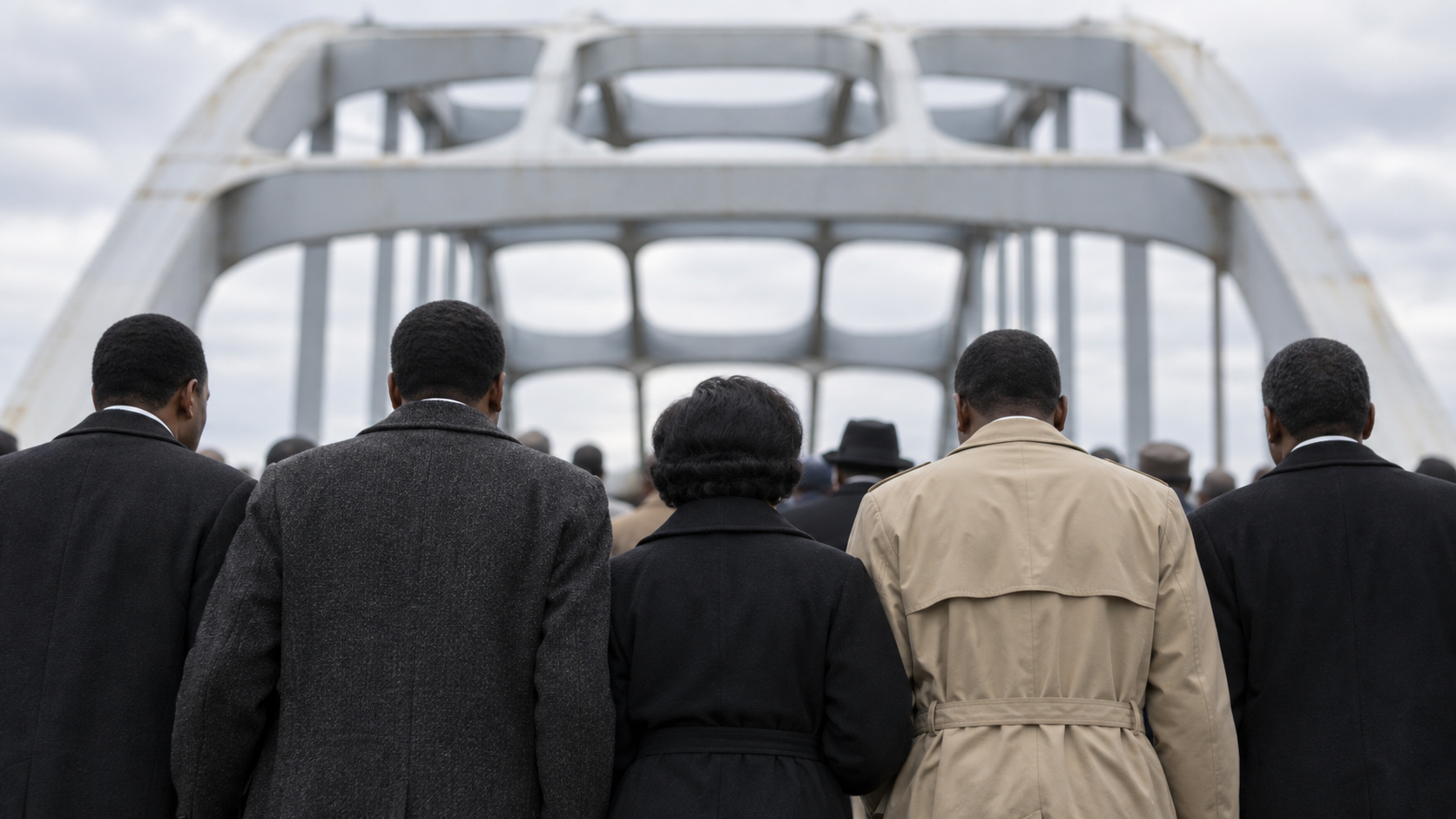
On March 7, 1965, Alabama state troopers and other law enforcement personnel attacked peaceful voting rights marchers outside Selma after they crossed the Edmund Pettus Bridge. Led by John Lewis of the Student Nonviolent Coordinating Committee and Hosea Williams of the Southern Christian Leadership Conference, the demonstrators intended to walk to Montgomery, the state capital. Instead, their first attempt ended in tear gas, beatings, and injuries. The confrontation became known as Bloody Sunday. Photographs and television coverage brought the violence into homes far beyond Alabama, placing the state’s suppression of political participation before a national audience and intensifying demands for federal action.
The march grew from organizing that had begun well before the television cameras arrived. The Dallas County Voters League, local leaders including Amelia Boynton and Frederick Douglas Reese, and civil rights organizations had challenged barriers that kept Black citizens from registering and voting. Their work faced intimidation and official resistance. In February, a state trooper shot Jimmie Lee Jackson during a protest in nearby Marion; Jackson later died. His death helped prompt the decision to march from Selma to Montgomery. The planned journey connected a local demand for accountability with the broader insistence that Black Americans must be able to exercise voting rights without coercion.
Hundreds of participants set out from Brown Chapel AME Church on the afternoon of March 7. As they crossed the bridge, the roadway’s rise initially concealed the forces waiting beyond it. Officers ordered the marchers to disperse and then advanced against them. Lewis suffered a skull fracture, while Boynton was beaten unconscious. The demonstrators retreated toward Selma, and injured participants received treatment at local medical facilities. The day did not produce a completed march or an immediate change in registration rules. It exposed the gulf between the formal promise of citizenship and the violence used to prevent people from asserting that promise in public.
The campaign continued after Bloody Sunday. Martin Luther King Jr. led another bridge crossing on March 9 before turning back, and a protected march beginning on March 21 finally reached Montgomery on March 25. President Lyndon B. Johnson pressed Congress for voting rights legislation, which he signed on August 6. That law emerged from sustained local work, national organizing, legislative action, and the public response to events such as Selma; it was not the achievement of one day alone. March 7 remains central because it made resistance to equal participation unmistakable. Its history also restores attention to the residents and organizers whose repeated efforts made a national breakthrough possible, often at severe personal cost.
Local organizers in the Dallas County Voters League pursued registration long before the famous bridge confrontation. The campaign depended on their networks and persistence.
The death of Jimmie Lee Jackson after a February protest in Marion helped spur plans for the journey to Montgomery.
John Lewis and Hosea Williams led the first march. Martin Luther King Jr. led the subsequent March 9 demonstration.
Bloody Sunday ended with a retreat to Selma. The successful march to the state capital occurred later in March.
The Voting Rights Act was signed on August 6, 1965. Selma strengthened pressure for legislation but did not substitute for congressional action.
Images of the attack connected local repression to national political responsibility. The story links voting access with the protection of peaceful assembly.
Explore more of "On This Day ..."
Discover more events from the same date across news, politics, technology, sports, and other fields. Each link highlights significant moments that shaped history on different fronts.