

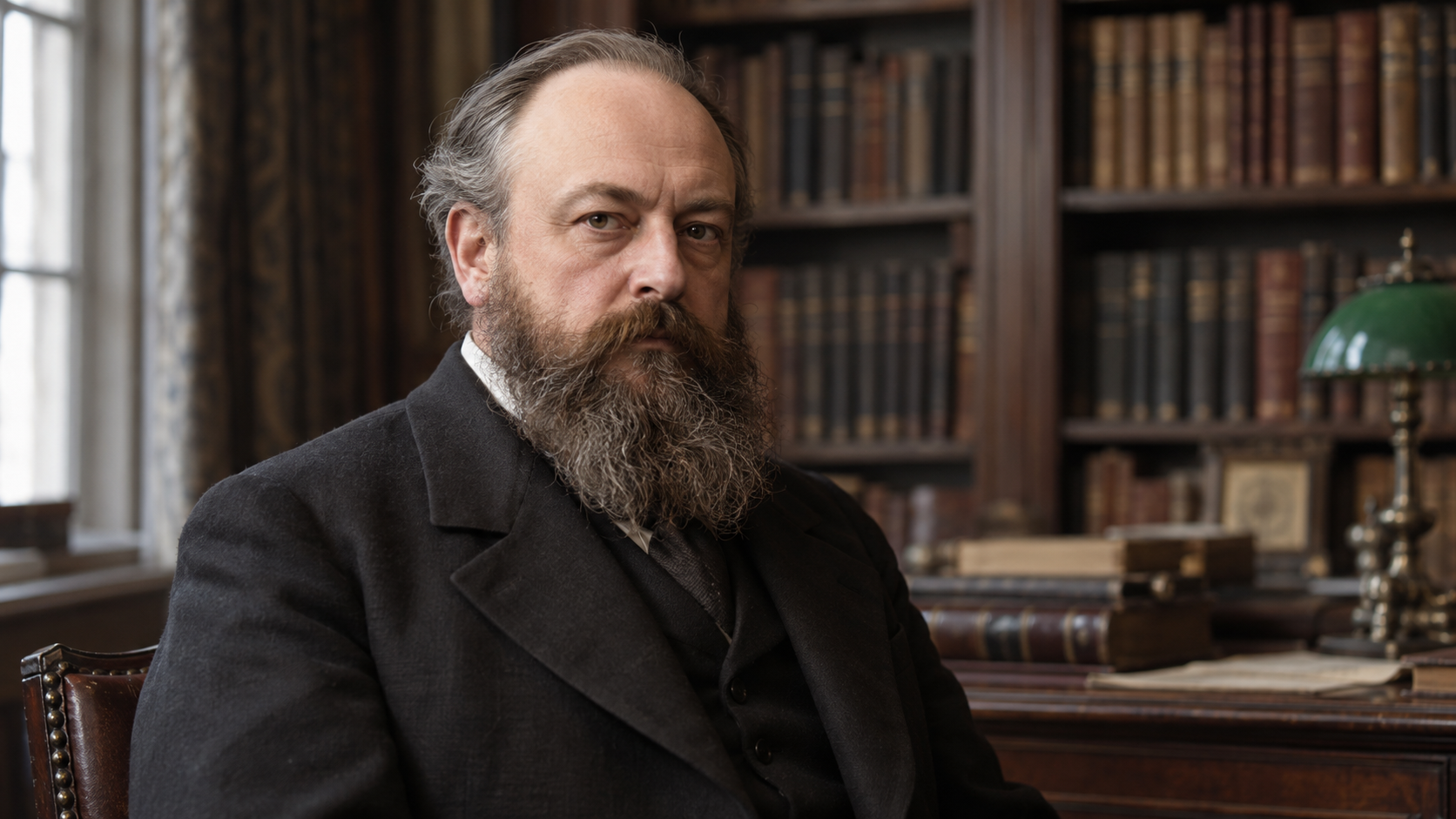
“Power tends to corrupt and absolute power corrupts absolutely.”
Lord Acton wrote this sentence to the historian Mandell Creighton on April 5, 1887. The letter concerns the moral standards applied to powerful figures in history, especially rulers and religious authorities. Acton objected to judging them more generously because of their rank or the scale of their responsibilities. The quotation is often presented as a general warning about politics, but its original setting is a disagreement about historical judgment. He wanted the conduct of influential people examined with at least the seriousness applied to ordinary people. Authority could increase their responsibility instead of supplying a reason to excuse what they had done.
The word tends matters. Acton describes a pressure associated with power rather than saying that every officeholder is immediately and identically corrupt. Power can weaken restraints, place people beyond criticism, and make their own purposes appear inseparable from a greater cause. The second clause intensifies the warning when authority becomes absolute. If no effective challenge is permitted, the opportunities for self-correction become narrower. The sentence therefore directs attention to relationships and institutions as well as character. It asks what happens when people can act without having to answer to others who possess enough independence to question their decisions or expose their effects.
In the letter, Acton resists the assumption that a favorable judgment of kings and popes should be the starting point for a historian. His disagreement belongs to a debate over how to assess past conduct, not simply a proposal for a particular election rule or administrative reform. That context helps explain the force of his language. A historian who treats status as an excuse can reproduce the deference that helped an abuse occur. Acton instead links greater power with greater moral accountability. The argument still requires careful evidence about actions and circumstances. A warning about corruption cannot substitute for establishing what a particular person did or distinguishing an accusation from a supported conclusion.
For modern readers, the quotation offers questions about accountability. Can decisions be challenged, can their consequences become public, and can an institution correct misconduct without depending entirely on the goodwill of the person in charge? Those questions give the warning practical content. They also prevent a simple assumption that replacing one leader automatically removes the problem. A new occupant may inherit the same unchecked opportunities. Acton's sentence is most useful when it encourages scrutiny of the conditions surrounding authority and the standards used to evaluate it. Its historical origin supplies an additional reminder: the way a society later tells the story of powerful people can either examine responsibility or grant them another layer of protection through admiration.
Acton wrote to Mandell Creighton on April 5, 1887, during a disagreement over the moral judgment of powerful historical figures.
The immediate issue was whether rulers and religious authorities should receive special indulgence because of their position.
The word tends describes a pressure associated with power. The stronger second clause warns about authority without effective limits.
Acton's moral argument still requires evidence about particular actions. The quotation is not proof of misconduct by any specific officeholder.
The warning invites examination of independent criticism, public information, and institutions able to correct abuses.
Historical storytelling can also excuse authority. Acton asks that reputation and rank should not place responsibility beyond examination.
Explore more "Quotes of The Day"
Discover more notable quotes from influential voices across politics, science, business, technology, sports, and culture. Each quote offers insight into how ideas, beliefs, and decisions shape the world around us.