

On This Day in Health: November 22, 1862
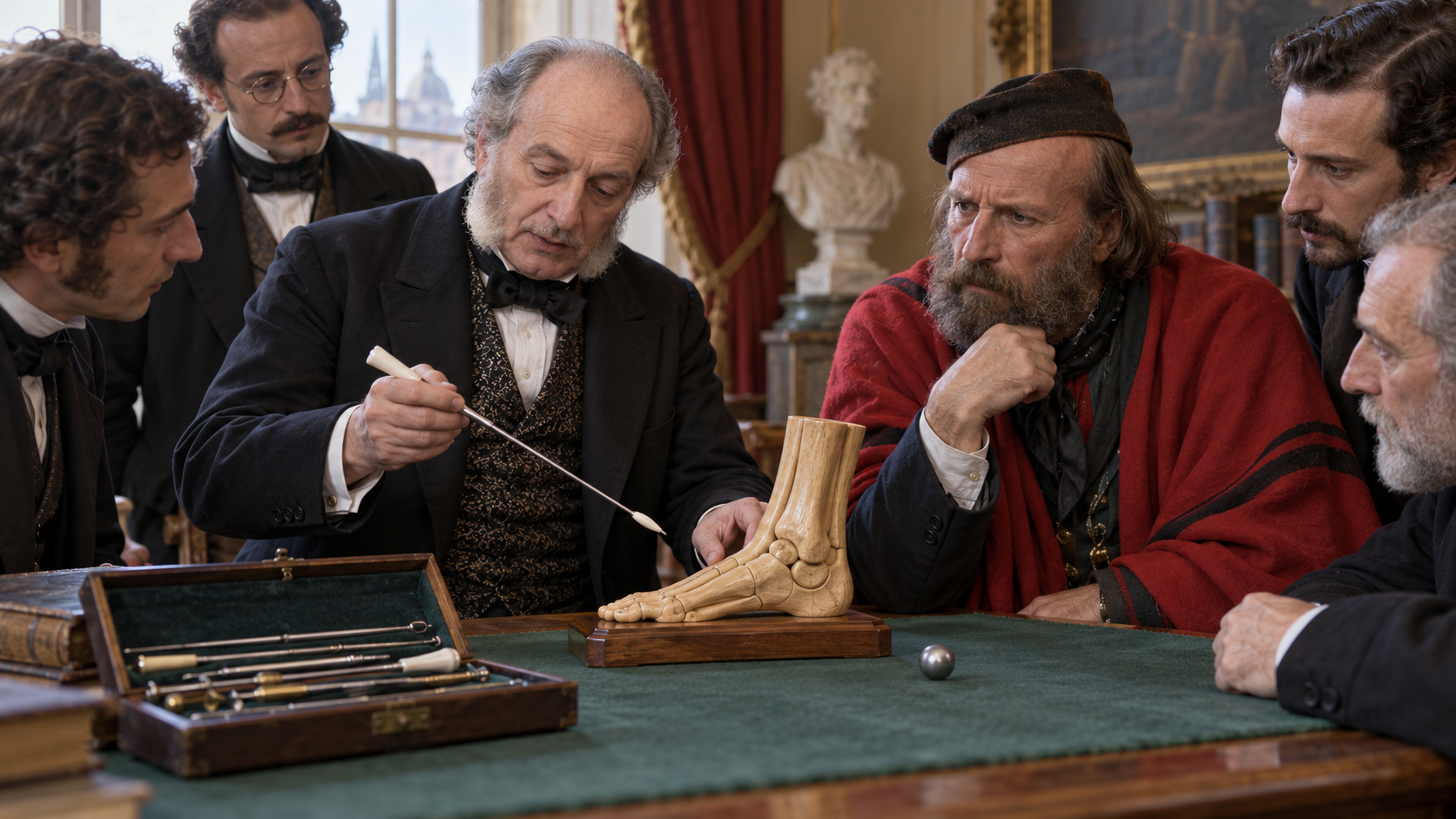
On November 22, 1862, French surgeon Auguste Nelaton examined Giuseppe Garibaldi and used a specially designed porcelain-tipped probe to confirm a bullet lodged in his ankle. This date matters because it fixes a broad medical story to a specific moment, place, and group of people. It also shows how health history is shaped carefully by institutions and practical choices as well as laboratory discoveries.
The background was already developing before that day. Garibaldi had been wounded at Aspromonte, and physicians disagreed about whether the projectile remained. Repeated probing without imaging caused pain and risked infection, while ordinary instruments could not reliably distinguish bone from lead. Those conditions defined what participants could attempt and what patients or communities could reasonably expect. The available tools, social expectations, and professional structures all shaped the result. Change also depended on cooperation among people whose roles were not always recorded equally. They explain why later accounts sometimes compress years of preparation into a single anniversary. Looking at that preparation keeps credit broad and makes the turning point easier to understand without turning it into a miracle story.
What happened on the date was consequential but limited. Nelaton's probe carried an unglazed porcelain tip. When it rubbed against the hidden bullet, a dark lead mark appeared, providing evidence that guided Italian surgeon Ferdinando Zannetti's successful removal. The method depended on physical contact and could create a false result or additional tissue injury. Surgery occurred before antisepsis and antibiotics, and the famous patient received international expertise unavailable to most wounded people. The distinction is important: the event did not instantly solve the underlying health problem, and later progress depended on follow-up research, training, policy, funding, and public trust. Contemporary evidence also helps separate what participants knew then from interpretations added after the result became famous.
Its longer legacy reaches beyond the original setting. The case became an early example of a diagnostic instrument answering a focused question and reducing uncertainty before treatment. Radiography soon made internal localization far more informative. Today's trauma care uses imaging, sterile exploration, vascular and nerve assessment, and selective removal rather than assuming every retained projectile requires surgery. Seen in context, the anniversary is useful because it connects a concrete historical episode with continuing questions about evidence, access, safety, and responsibility in health care. That connection is stronger when the people affected, the limits of the achievement, and the work still unfinished remain part of the account.
Nelaton's probe carried an unglazed porcelain tip. When it rubbed against the hidden bullet, a dark lead mark appeared, providing evidence that guided Italian surgeon Ferdinando Zannetti's successful removal.
The method depended on physical contact and could create a false result or additional tissue injury. Surgery occurred before antisepsis and antibiotics, and the famous patient received international expertise unavailable to most wounded people.
The case became an early example of a diagnostic instrument answering a focused question and reducing uncertainty before treatment.
Garibaldi had been wounded at Aspromonte, and physicians disagreed about whether the projectile remained. Repeated probing without imaging caused pain and risked infection, while ordinary instruments could not reliably distinguish bone from lead.
French surgeon Auguste Nelaton examined Giuseppe Garibaldi and used a specially designed porcelain-tipped probe to confirm a bullet lodged in his ankle.
Radiography soon made internal localization far more informative. Today's trauma care uses imaging, sterile exploration, vascular and nerve assessment, and selective removal rather than assuming every retained projectile requires surgery.
Explore more of "On This Day ..."
Discover more events from the same date across news, politics, technology, sports, and other fields. Each link highlights significant moments that shaped history on different fronts.