

Wood Glue Bonding Explainer
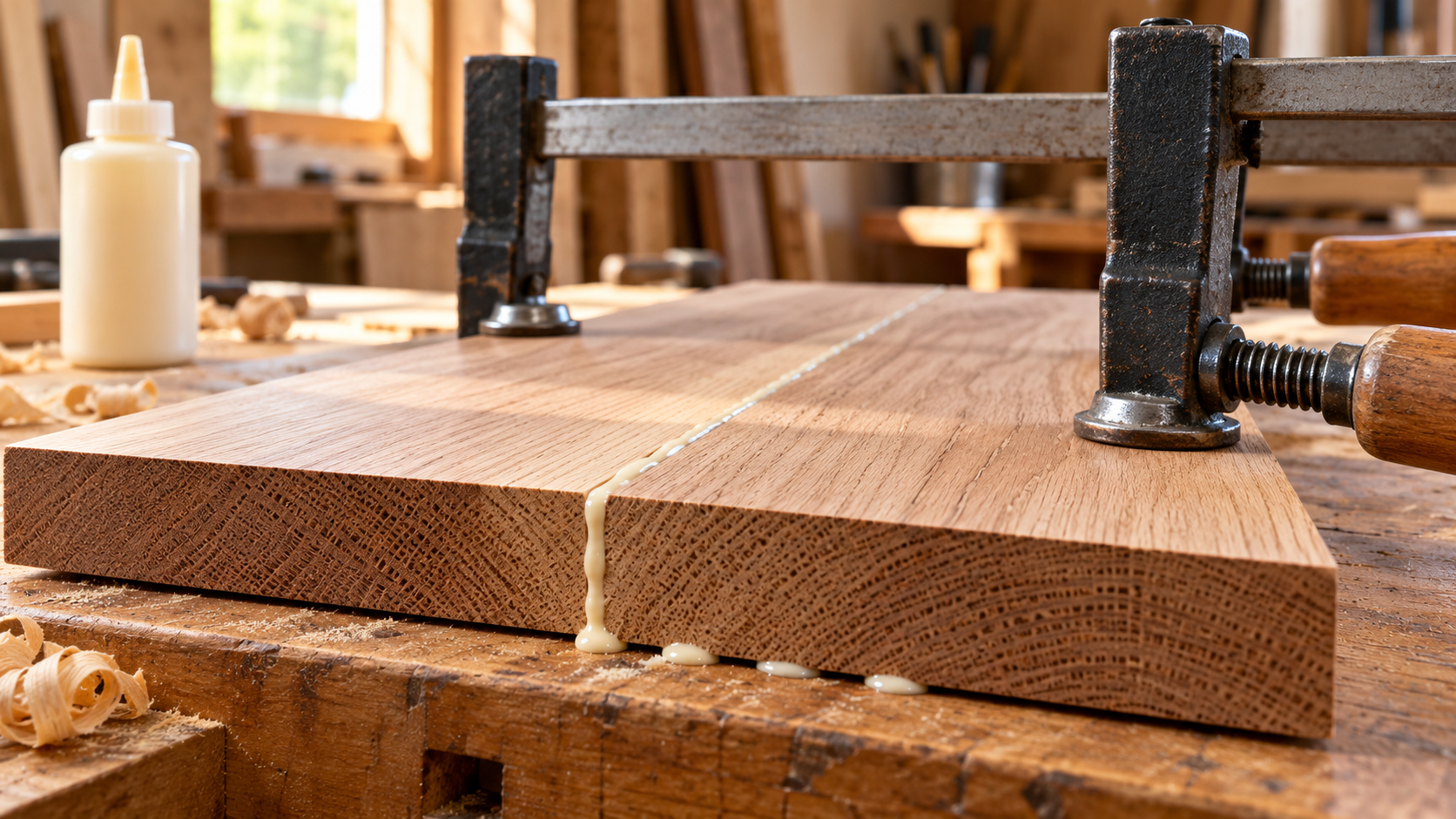
Common woodworking glue is a water-based polymer emulsion, often described broadly as PVA glue. When spread on wood, the liquid wets the surface and flows into pores, vessel openings, and small irregularities. Clamping brings the two prepared faces into close contact and squeezes the adhesive into a thin, continuous layer. As water leaves the joint and polymer particles come together, they form a solid film that adheres to both pieces and transfers force across the seam.
The bond is more than glue acting as tiny hooks. Adhesion includes intimate molecular attraction at the wood surface, while penetration and mechanical interlocking help distribute load in the porous structure. Cohesion is the strength within the cured adhesive itself. A successful joint needs both. If the glue does not wet a contaminated surface, adhesion fails. If the layer remains weak or too thick, it may fail internally even though some material stays attached to each board.
Wood preparation controls contact. Joint faces should fit closely without requiring extreme clamp force to close gaps. Freshly machined surfaces usually bond better than burnished, oily, dusty, or weathered ones. End grain absorbs liquid rapidly and may need a product-specific approach because it can starve the bond line. Dense tropical woods, treated lumber, and high-moisture stock can require different adhesives. The correct product is chosen for the species, service moisture, temperature, and structural demand.
Clamps hold parts in alignment and maintain contact while the adhesive develops strength. They should produce even pressure rather than crushing fibers or squeezing out nearly all of the glue. Open time limits how long coated pieces can wait before assembly; closed-assembly time and clamp time are separate values. Temperature affects viscosity, water movement, and film formation. A joint that seems set enough to handle may still need many hours before machining or carrying its design load.
Water resistance labels do not mean every cured glue line is waterproof or suitable for continuous immersion. Exterior joints also face swelling, shrinkage, ultraviolet exposure, and repeated stress. A glued joint should be designed so loads spread through long-grain surfaces rather than peel a small edge apart. Old finish, wax, or failed adhesive must be removed before repair. Food-contact, structural, and outdoor uses should follow the specific manufacturer’s certification and instructions.
Wood glue performs best when the joint becomes a thin engineered interface, not a filler for poor carpentry. The liquid first creates contact, the carrier water leaves, and polymer chains consolidate into a film connected to the wood’s surface structure. Proper fit, compatible moisture, adequate pressure, and sufficient cure time allow the load to pass gradually from one board through the adhesive and into the other. In a well-made joint, the surrounding wood may fail before the bond line does.
Wood glue wets and penetrates the surface, then cures into a cohesive polymer film that transfers load between closely fitted pieces. Key terms include wetting, penetration, adhesion, cohesion, bond line, open time, clamp pressure, and cure.
Only to a point. Even pressure creates close contact, but excessive force can crush fibers or squeeze away too much adhesive and starve the joint.
Most common wood glues are strongest in a thin bond line. A wide gap leaves a thick, less-supported adhesive mass and reduces effective surface contact.
Explore more "Explainers"
Discover additional explainers across politics, science, business, technology, and other fields. Each explainer breaks down a complex idea into clear, everyday language—helping you better understand how major concepts, systems, and debates shape the world around us.