

On This Day in Business: May 1, 1931
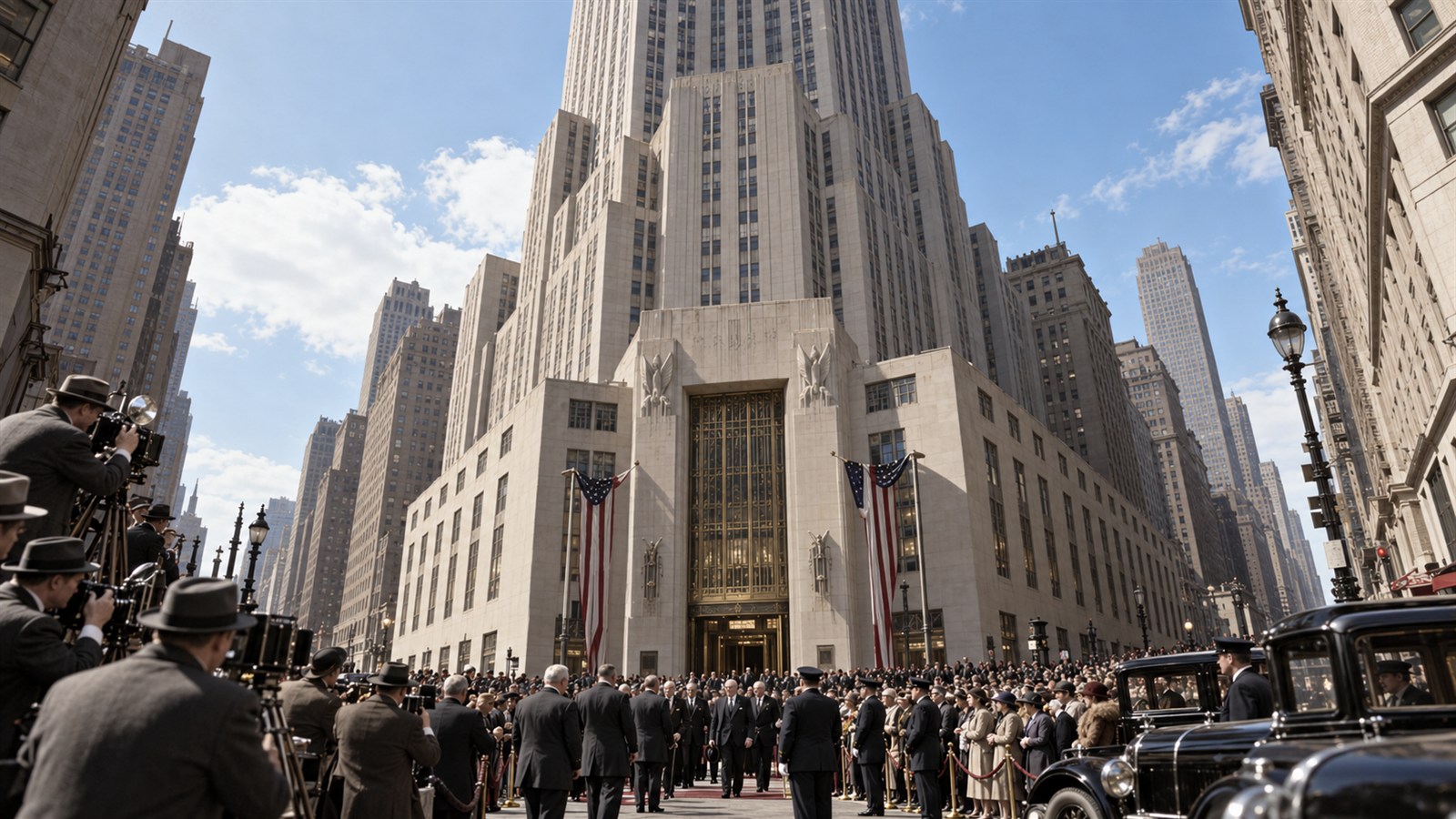
On May 1, 1931, the Empire State Building officially opened at Fifth Avenue and 34th Street in New York City. President Herbert Hoover marked the occasion from Washington by pressing a ceremonial button that switched on the tower’s lights, while former New York governor Alfred E. Smith led events at the building. Rising 102 stories, the skyscraper had moved from groundbreaking to completion in little more than a year. Its opening transformed the former Waldorf-Astoria hotel site into a record-setting office property and gave Depression-era New York a visible statement of engineering skill, private capital, and confidence in the city’s future.
The project was a contest in speed as well as height. Empire State Inc., backed by investors including John J. Raskob and Pierre du Pont, sought a prestigious tower that could compete for tenants and for the title of world’s tallest building. Architects Shreve, Lamb & Harmon designed a structure that could be erected rapidly with standardized parts. General contractor Starrett Brothers & Eken coordinated thousands of workers, suppliers, and daily deliveries on a constrained Manhattan site. Steel, stone, windows, and interior components moved through a tightly sequenced operation that resembled an assembly line turned upright, reducing delay while the building rose at an extraordinary pace.
Opening day did not guarantee immediate commercial success. The Great Depression had weakened demand for premium office space, leaving large portions of the tower unleased and inspiring the mocking nickname “Empty State Building.” Observation-deck revenue and aggressive promotion helped carry the property while occupancy slowly improved. The building’s height also created a powerful marketing asset: visitors paid for a view that no competing address could offer. Over time, broadcasting equipment, tourism, and stronger office demand diversified the economics of the skyscraper beyond rent alone and turned a difficult launch into a durable real-estate franchise.
The opening matters because it shows that construction triumph and investment return can arrive on different schedules. Management delivered the physical asset with remarkable speed, yet the surrounding economy determined how quickly that asset could earn its keep. Patient financing, multiple revenue streams, and an unmistakable identity allowed the property to outlast its weak first market. The Empire State Building became a business lesson in long-lived infrastructure: a developer must coordinate design and construction, but also survive demand cycles after the ribbon is cut. Its value ultimately rested on making one costly building useful to tenants, broadcasters, tourists, advertisers, and a city that adopted it as a symbol.
Investors planned a record-height office tower on the former Waldorf-Astoria site as New York skyscraper competition intensified.
A standardized design and carefully timed deliveries allowed crews to erect the steel frame at a pace rarely matched for a project of its size.
Herbert Hoover activated the lights from Washington on May 1, 1931, while Alfred E. Smith led the ceremony in New York.
The Depression left many floors vacant, forcing the owners to rely on promotion, patience, and observation-deck income.
Broadcasting tenants and tourism broadened the property’s revenue while the office market gradually recovered.
The building endured because its engineering achievement became a flexible commercial asset and a globally recognized address.
Explore more of "On This Day ..."
Discover more events from the same date across news, politics, technology, sports, and other fields. Each link highlights significant moments that shaped history on different fronts.