

On This Day in Business: May 21, 1927
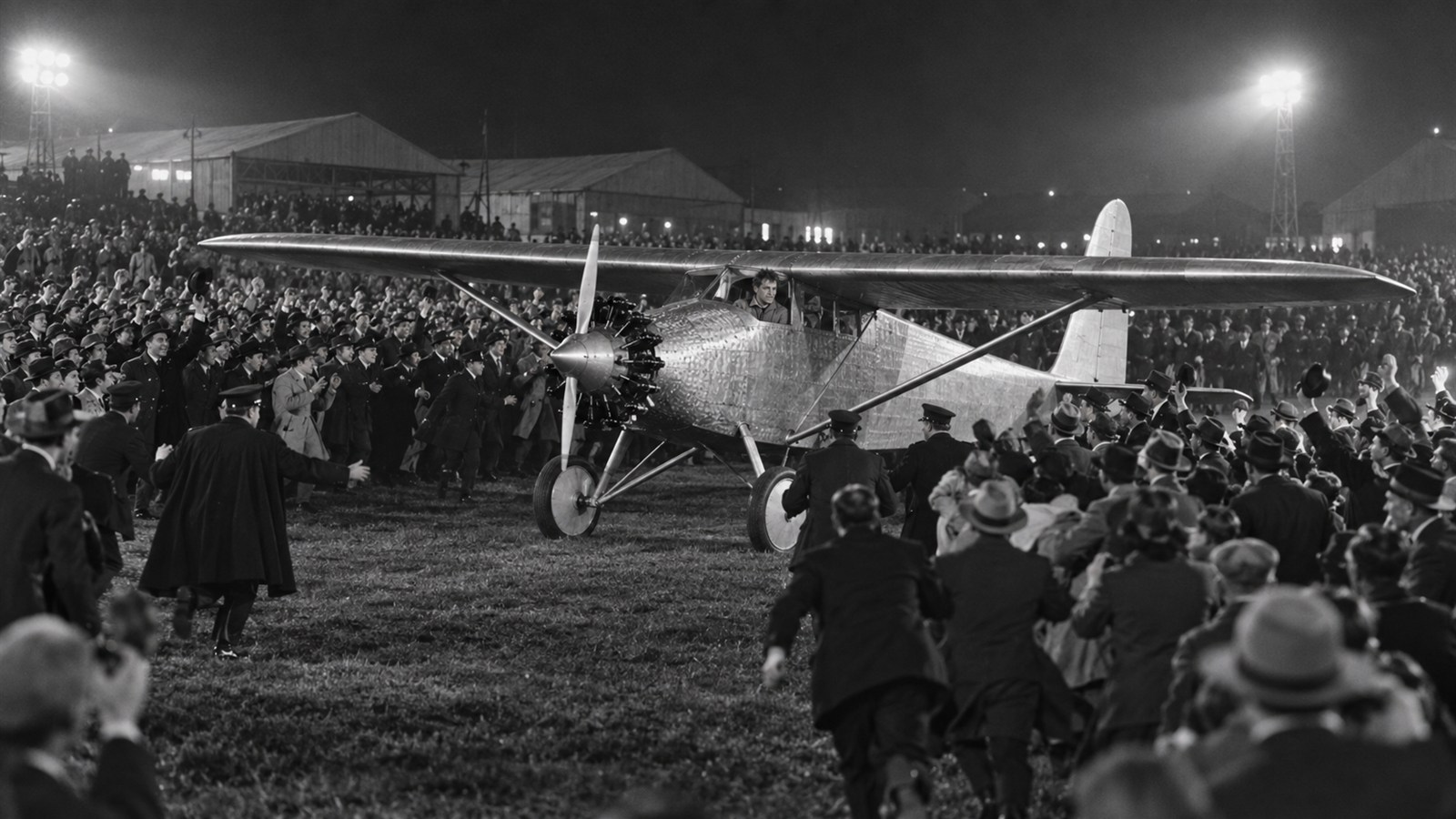
On May 21, 1927, Charles Lindbergh landed the Spirit of St. Louis at Le Bourget airfield near Paris after flying solo and nonstop from New York. The flight took roughly thirty-three and a half hours and won the $25,000 Orteig Prize offered for a nonstop journey between New York and Paris. A vast crowd surrounded the aircraft when it arrived. Lindbergh’s achievement turned an aviation wager into worldwide news and gave the public a vivid demonstration that long-distance flight could connect major commercial centers across the Atlantic.
The flight was also an entrepreneurial project. St. Louis backers financed the effort, Ryan Airlines built a purpose-designed aircraft, and Lindbergh made tradeoffs that favored range, reliability, and fuel capacity over comfort and forward visibility. He flew alone to reduce weight and chose a single-engine design he trusted. Navigation depended on planning, instruments, dead reckoning, and constant attention rather than radio guidance. The project’s tight scope helped the small team move faster than better-funded rivals, but it concentrated enormous risk in one pilot and machine.
Public enthusiasm after the landing had commercial consequences. Interest in flying, pilot training, airmail, airports, and aircraft companies rose during the late 1920s. Lindbergh became a valuable public figure for aviation and later served as a technical adviser, survey pilot, and promoter of airline routes. The achievement did not by itself create safe scheduled transatlantic passenger service; aircraft, weather forecasting, navigation, regulation, and operating economics still required years of development. It did, however, change expectations about what aviation could become.
The Paris landing matters because a well-chosen demonstration can compress years of abstract progress into one market-changing image. The public saw a plane arrive, a prize awarded, and a distance conquered. Investors and operators still had to turn that feat into repeatable service, but the perceived future of aviation moved closer. The business lesson is to distinguish a prototype milestone from an operating system while respecting the value of both. Lindbergh proved possibility through focus and personal risk; commercial aviation later scaled through standardization, crews, maintenance, airports, schedules, insurance, and regulation. A spectacular first can create demand, but dependable repetition creates the industry. Prize design deserves attention as well. Raymond Orteig did not fund aircraft development directly; he offered a reward for a verified outcome and let competing teams choose their methods. Such prizes can attract more experimentation than the sponsor could manage internally. They work best when the goal is clear, judging is credible, and the achievement has value beyond the purse.
The Orteig Prize offered $25,000 for a nonstop flight between New York and Paris, attracting several competing teams.
St. Louis investors and Ryan Airlines backed a light, fuel-heavy aircraft built around Lindbergh’s chosen strategy.
After roughly thirty-three and a half hours alone, Lindbergh landed at Le Bourget on May 21, 1927.
Global publicity increased public interest in aircraft, airmail, pilot training, airports, and airline investment.
Scheduled transatlantic service still required safer equipment, navigation, weather systems, regulation, and repeatable operations.
The flight changed expectations by proving possibility; the industry grew by turning the demonstration into dependable service.
Explore more of "On This Day ..."
Discover more events from the same date across news, politics, technology, sports, and other fields. Each link highlights significant moments that shaped history on different fronts.