

On This Day in Business: May 25, 1977
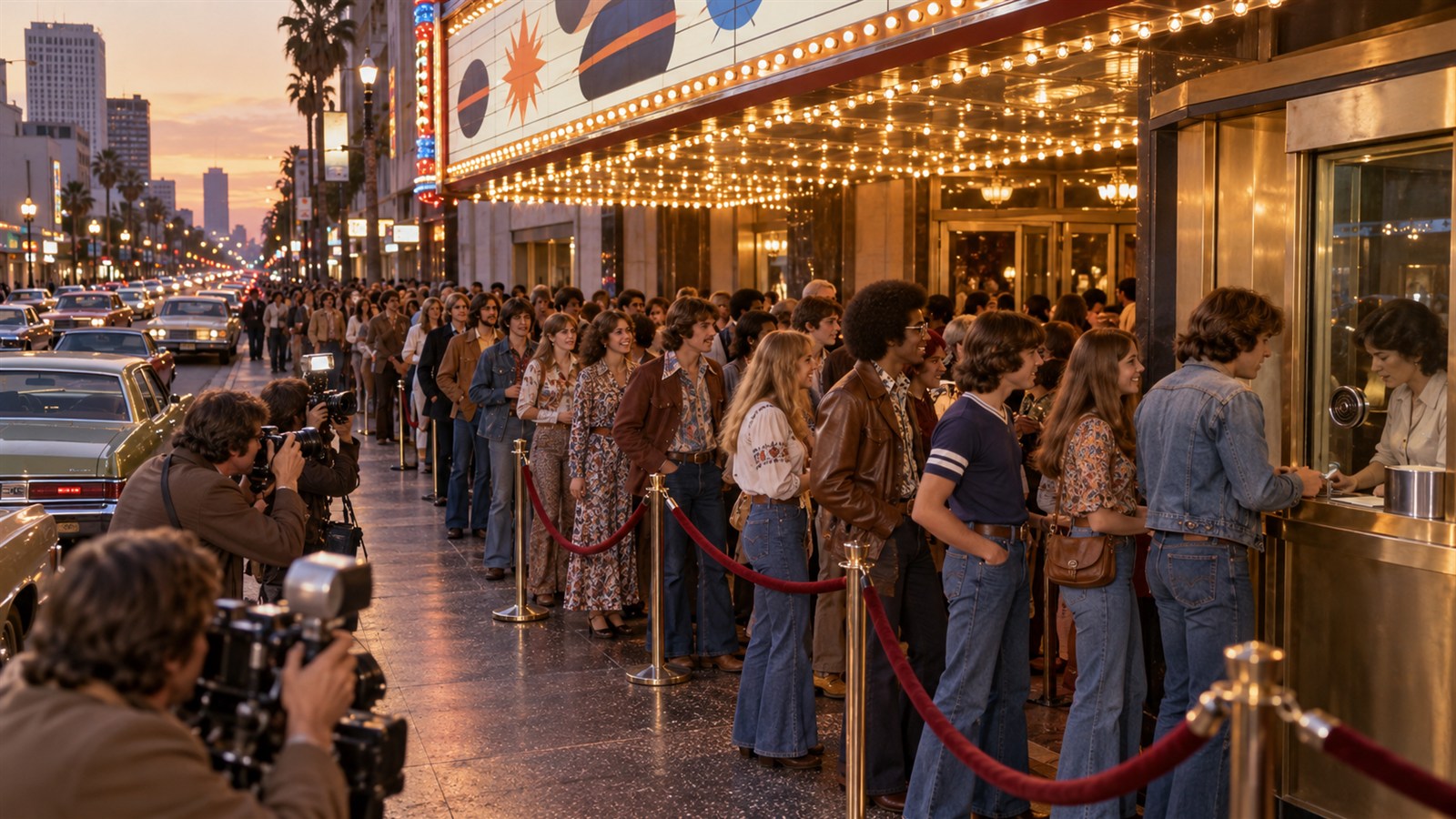
On May 25, 1977, Star Wars opened in a limited number of U.S. theaters. George Lucas’s space fantasy arrived with uncertain expectations after a difficult production and an unusual release strategy from 20th Century Fox. Audiences quickly formed long lines, and the film expanded to more screens as word of mouth grew. Its combination of mythic storytelling, visual effects, sound, music, and fast pacing made the theatrical experience feel new. The release became a box-office phenomenon and laid the foundation for one of the most valuable entertainment franchises in business history.
The production itself required new capabilities. Lucas created Industrial Light & Magic to deliver effects the existing industry could not supply at the needed scale and style. Custom motion-control cameras, model work, compositing, and sound design converted limited resources into a convincing world. The work was expensive and uncertain, but it became reusable expertise. Later productions could build on equipment, people, and methods developed for the first film. A creative bottleneck therefore produced an independent technical organization that eventually served many studios and expanded the market for effects-heavy filmmaking.
Merchandising changed the economics. Lucas retained sequel and merchandising rights that the studio considered less important than its immediate film risk. Demand for toys exceeded the ability to supply products during the first holiday season, but licensing later generated enormous revenue across figures, books, games, apparel, and promotions. Characters and settings functioned as a flexible commercial universe rather than material limited to one ticket purchase. Sequels, home video, television, theme-park attractions, and later corporate ownership extended the same intellectual property across generations and distribution technologies.
The opening matters because it showed how entertainment value can compound through rights and capabilities outside the original release. Box office supplied the first proof of demand, but licensing, sequels, and effects expertise created long-lived assets. The case also emphasizes contractual foresight: a right that appears peripheral before success may become more valuable than the initial fee. Franchises still require stewardship; excessive repetition can weaken audience trust, while careful expansion can make each new product strengthen the whole. Star Wars began as a risky film on a few screens, then became an ecosystem because its owner could coordinate stories, technology, consumer products, and distribution around a world audiences wanted to revisit. Release timing contributed to the surprise. A limited opening concentrated scarce prints where demand could be observed, and strong attendance gave theater owners evidence to expand bookings. Word of mouth performed work that a large advertising budget might otherwise have carried. The rollout converted uncertainty into staged commitment, allowing distribution to grow as the market revealed itself.
George Lucas pursued a fast, mythic space adventure that traditional production methods could not fully realize.
Industrial Light & Magic developed motion-control photography, models, and compositing to solve the film’s effects problems.
The film opened in limited release on May 25, 1977, then expanded as lines and word of mouth signaled demand.
Merchandising and sequel rights that seemed secondary became central assets after the box-office success.
Toys, books, games, home video, television, and attractions turned one film into a multigenerational franchise.
The enduring business lesson is to protect adaptable rights and reusable capabilities around a successful creative work.
Explore more of "On This Day ..."
Discover more events from the same date across news, politics, technology, sports, and other fields. Each link highlights significant moments that shaped history on different fronts.