

On This Day in Business: May 28, 1937
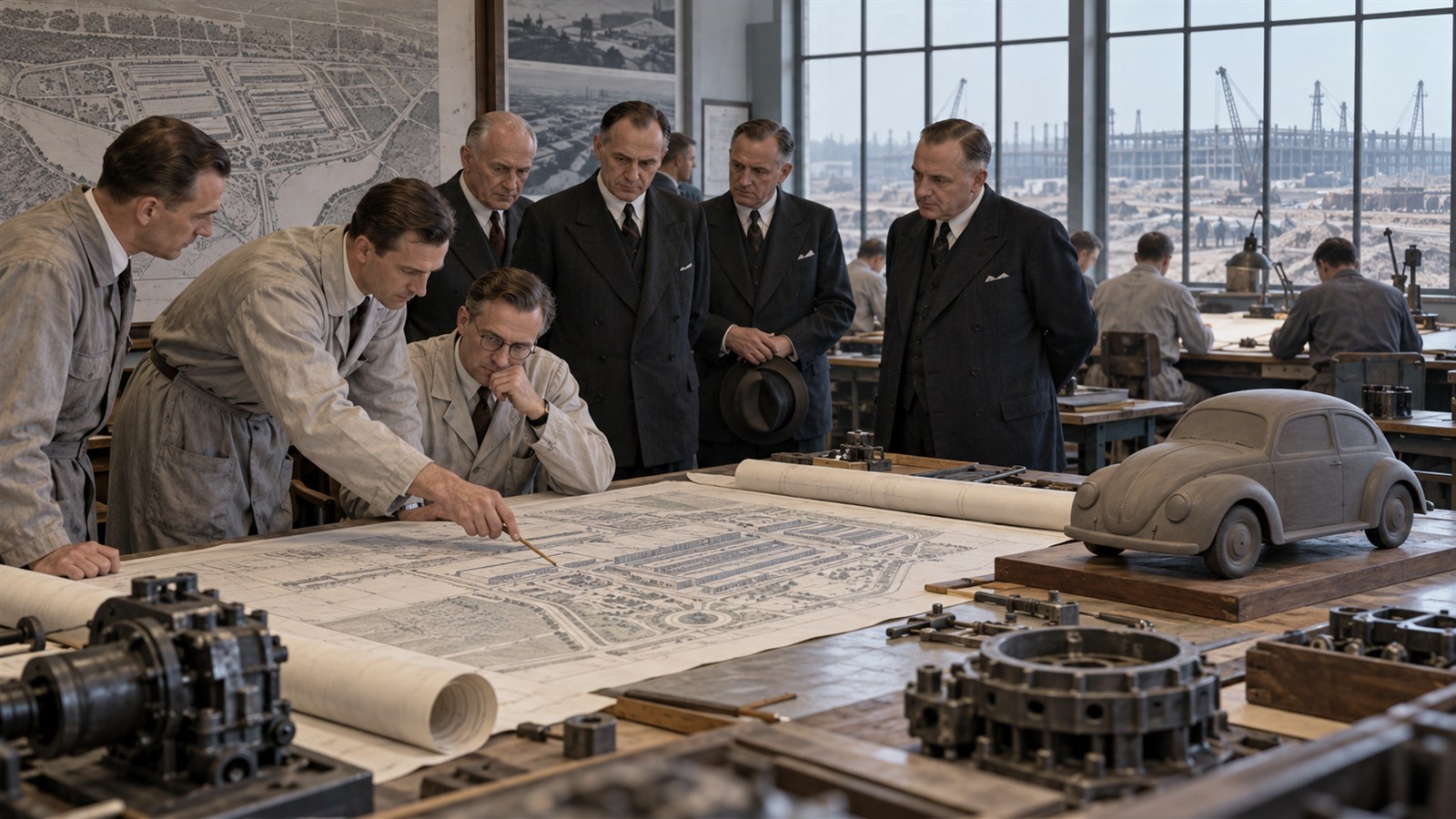
On May 28, 1937, the German Labour Front founded Gesellschaft zur Vorbereitung des Deutschen Volkswagens mbH, the company that later became Volkswagen. It was created within Nazi Germany’s effort to develop a mass-market “people’s car” and was a subsidiary of a major National Socialist organization, not an independent consumer startup. Ferdinand Porsche’s design work supplied the technical basis, while propaganda promised ordinary German savers an affordable automobile. The organization soon planned a vast factory and a new town near Fallersleben, tying industrial policy, motorization, and regime messaging together.
The savings program collected weekly payments from participants, but civilian buyers did not receive the promised cars before World War II redirected production. The factory manufactured military vehicles and other war-related goods. Volkswagen’s own historical work documents the use of forced labor, including concentration-camp prisoners and workers brought from occupied countries under coercive conditions. Any account of the company’s founding must therefore distinguish later consumer success from the dictatorship, exploitation, and war economy that shaped the original enterprise.
After the war, the British military government took control of the damaged plant and supported production of the small car later widely known as the Beetle. West German reconstruction, export markets, dealer networks, and effective manufacturing turned the company into a major automaker. Volkswagen later expanded its product range and acquired other brands. The postwar business built enormous commercial value, but the company’s archival and memorial programs acknowledge that its industrial base and early organization cannot be separated from forced labor and National Socialist rule.
The founding matters because corporate history is an asset only when it is handled honestly. A familiar product can encourage a simplified origin story, yet omitting coercion and state power distorts how capital, facilities, and labor were assembled. Companies inheriting difficult histories face obligations to preserve records, support research, compensate where possible, and avoid using nostalgia to erase victims. Volkswagen’s later achievements in engineering and global distribution do not retroactively cleanse its creation. The business lesson is that institutional continuity carries liabilities as well as brands and factories. Responsible stewardship requires confronting both, especially when commercial success rests on assets first developed under an abusive regime. Historical accountability also influences present trust. Museums, memorial sites, archives, and commissioned scholarship cannot undo exploitation, but they can prevent a corporation from treating victims as inconvenient footnotes. Stakeholders increasingly judge whether companies investigate their past with independence and specificity. Ethical memory is therefore part of governance, especially when a brand asks consumers to celebrate longevity.
The Nazi regime promoted mass motorization and used an affordable-car promise as part of a broader political program.
The German Labour Front founded Volkswagen’s precursor company on May 28, 1937.
A savings plan collected money from workers, but civilian participants did not receive the promised cars before the war.
Wartime production relied extensively on coerced and forced labor, including concentration-camp prisoners.
British postwar administration restarted the plant, and later export growth turned the Beetle into a global product.
The company’s history demonstrates that long-lived institutions inherit moral responsibilities along with industrial assets.
Explore more of "On This Day ..."
Discover more events from the same date across news, politics, technology, sports, and other fields. Each link highlights significant moments that shaped history on different fronts.