

On This Day in Business: May 31, 1911
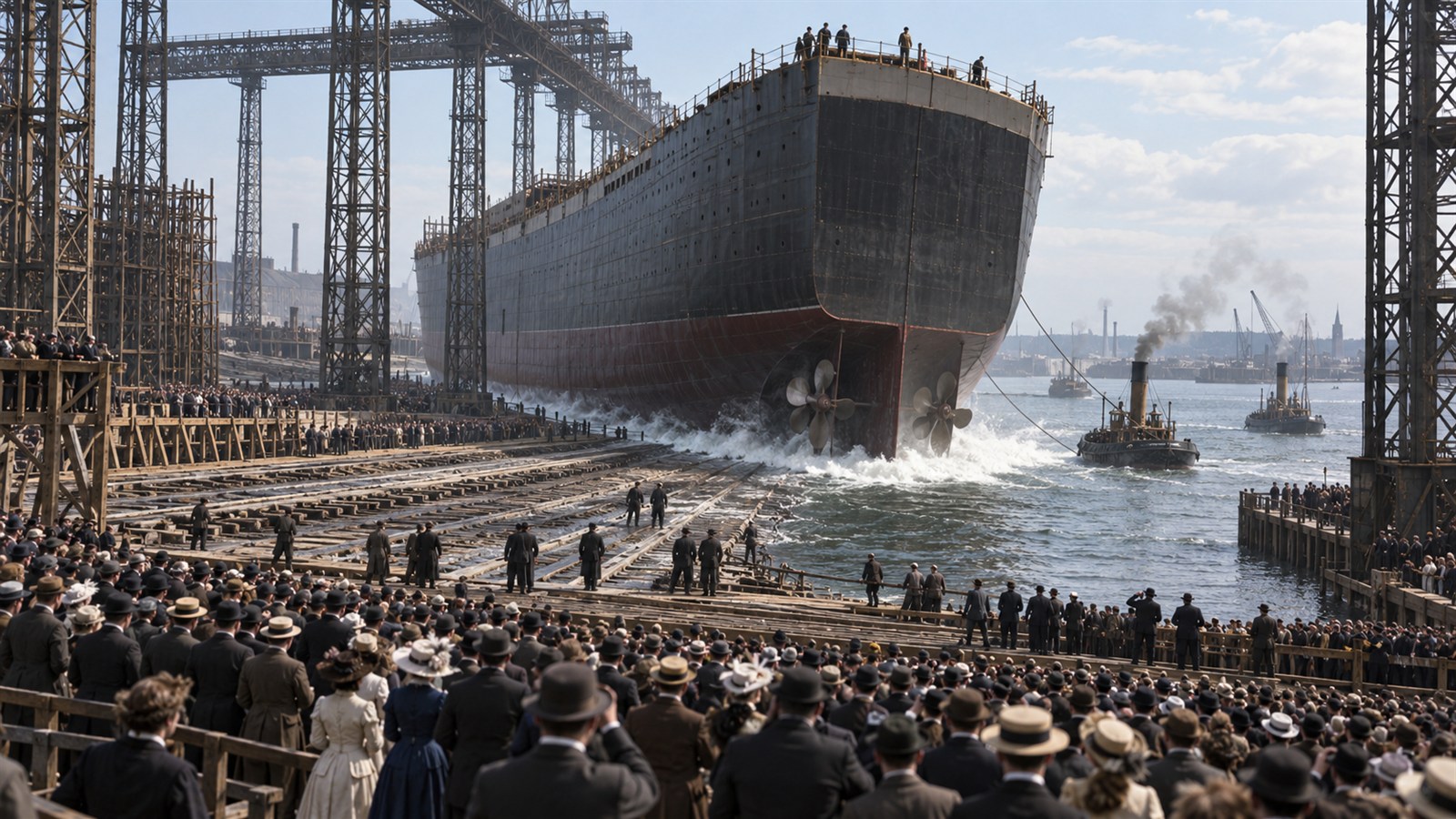
On May 31, 1911, the hull of RMS Titanic slid from Slipway No. 3 at Harland & Wolff’s Belfast shipyard into the River Lagan. Built for the White Star Line, the 46,328-ton vessel was the second of three Olympic-class liners intended for the competitive North Atlantic passenger trade. Launching did not mean the ship was finished. Machinery, funnels, interiors, communications equipment, fittings, and furnishings still had to be installed during months of work. The event marked the transition from hull construction to outfitting and publicly demonstrated the industrial capacity behind one of the world’s largest ships.
Ocean liners were complex businesses as well as machines. They carried first-, second-, and third-class passengers, mail, and cargo on schedules connecting European ports with New York. White Star emphasized size and comfort, while rival lines competed on speed, service, routes, and prestige. Harland & Wolff coordinated steel, engines, electrical systems, woodworking, textiles, and thousands of skilled workers. The launch itself required carefully greased slipways, restraining equipment, tugs, and precise timing so the enormous hull entered the water safely without propulsion of its own.
Contemporary attention focused on engineering and commerce, not the disaster that would follow in April 1912. On launch day, Titanic represented capital committed to expanding migration, tourism, mail, and transatlantic trade. That distinction matters when evaluating the business decision. Owners, builders, regulators, and operators had to make assumptions about demand, competition, safety, and the limits of technology. After the sinking, inquiries, public reaction, and international rules changed lifeboat requirements, radio watch practices, and ice monitoring, reshaping the economics and governance of passenger shipping.
The launch matters because large assets pass through many milestones before they begin earning revenue. Design, financing, construction, launch, outfitting, trials, staffing, marketing, and operation each contain different risks. A visually successful ceremony can hide unresolved dependencies elsewhere in the system. Titanic’s later history makes that lesson impossible to ignore, but the May 1911 event should be understood on its own terms as an industrial handoff. Shipbuilding created the platform; only safe and disciplined operation could create a durable service. The liner business depended on integrating thousands of components and decisions, and failure in one area could overwhelm excellence in all the others. Launch publicity also served the order book. A giant hull entering the water reassured passengers, agents, investors, and national audiences that an expensive program was advancing. Milestone communication can maintain support during a long project, but it must not be confused with readiness. Good governance pairs ceremony with independent checks on the work that remains.
White Star Line ordered Olympic-class ships to compete through size, comfort, capacity, and scheduled North Atlantic service.
Harland & Wolff coordinated steelmaking, engines, electrical work, joinery, and thousands of shipyard workers.
Titanic’s bare hull entered the River Lagan on May 31, 1911, after a carefully managed slipway launch.
Months of machinery installation, interior outfitting, testing, crewing, and provisioning still remained.
The ship represented investment in passenger travel, migration, mail, cargo, and national industrial prestige.
Its full history demonstrates that launching a large asset is only one stage in the harder task of operating it safely.
Explore more of "On This Day ..."
Discover more events from the same date across news, politics, technology, sports, and other fields. Each link highlights significant moments that shaped history on different fronts.