

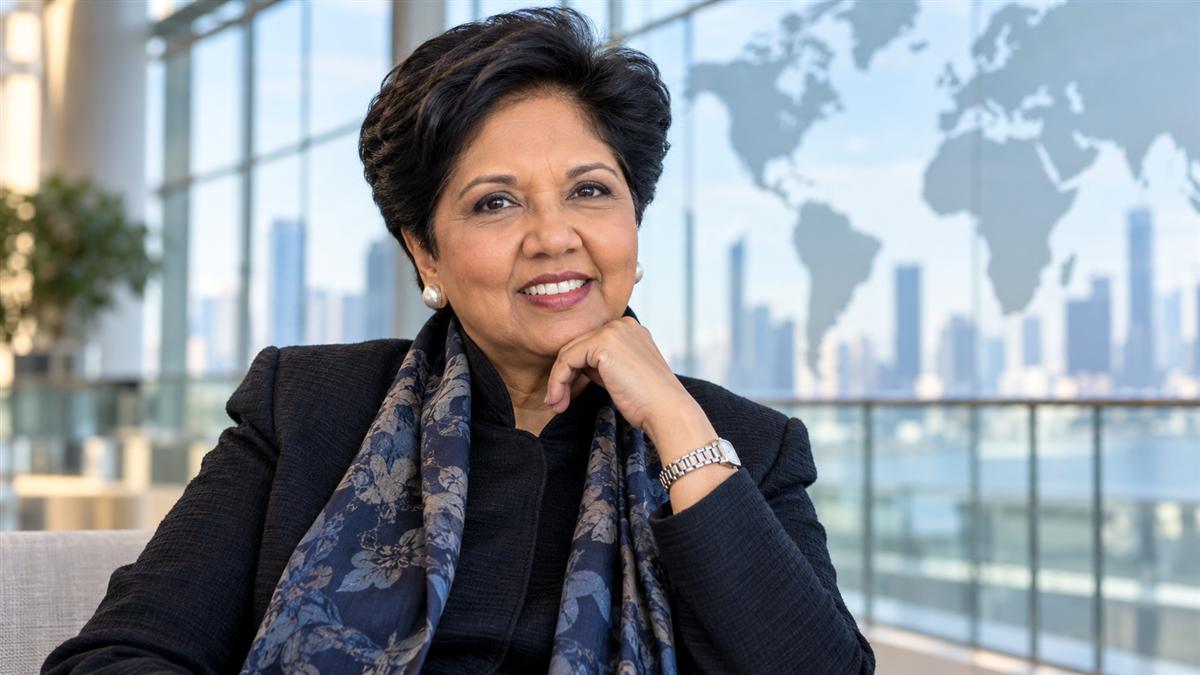
“I had adopted a philosophy that people should be able to bring their whole selves to work.”
Indra Nooyi wrote this in her memoir My Life in Full while reflecting on leadership at PepsiCo. Her career crossed countries, cultures, family responsibilities, and demanding executive roles, making the boundary between professional and personal identity impossible to treat as a simple door. The philosophy challenges workplaces that reward only a narrow performance of confidence, availability, or sameness. People arrive with histories, obligations, strengths, and perspectives that shape how they contribute. Inviting the whole self means designing work so that difference does not have to be hidden before talent can be taken seriously.
The business case is practical. Teams learn more when people can question assumptions from distinct experiences, and organizations retain capability when caregiving or identity is not treated as a lack of commitment. Leaders can model openness without requiring disclosure, create flexibility tied to clear outcomes, and evaluate contribution rather than conformity to informal rituals. Benefits, scheduling, leave, accessibility, and promotion criteria communicate more than inclusion statements. A person should be able to understand what excellence requires while having more than one legitimate way to demonstrate it.
Bringing a whole self to work does not erase privacy, boundaries, or professional responsibility. No employee should be pressured to reveal personal information or convert identity into unpaid educational labor. Teams still need shared standards for conduct and performance. The aim is not an environment without roles; it is one where the role does not demand unnecessary concealment or assimilation. Leaders must also protect people from retaliation when openness exposes disagreement, disability, faith, family need, or a less dominant cultural style.
Hybrid work has made hidden responsibilities more visible while creating new risks of intrusion. Cameras, presence data, and constant messaging can turn flexibility into surveillance. Companies can set core collaboration windows, document decisions, make advancement independent of office proximity, and ask employees which constraints prevent strong work. Managers should judge systems through outcomes across groups, not through anecdotes from the most comfortable participants. Nooyi’s philosophy becomes concrete when people can contribute their full capability without surrendering the parts of life that make them human. Promotion reviews provide a revealing test of the philosophy. Leaders can compare who receives flexible arrangements, visible assignments, sponsorship, and forgiveness for a failed stretch. If accommodations are available mainly to people already trusted by senior managers, formal openness may reinforce informal privilege. Publishing criteria and reviewing patterns across groups helps turn individual discretion into a system that supports difference without requiring every employee to negotiate from unequal power.
Nooyi described this leadership philosophy in her 2021 memoir My Life in Full.
Her account connects executive responsibility with culture, family life, and the systems that shape who can thrive at work.
Inclusive design lets different experiences and responsibilities inform strong work without demanding conformity.
Whole-self language must preserve privacy and boundaries; disclosure should never become a condition of belonging.
Hybrid work can expand flexibility while also increasing surveillance and proximity bias.
Clear outcomes, fair advancement, documented decisions, and multiple legitimate work styles turn inclusion into operating practice.
Explore more "Quotes of The Day"
Discover more notable quotes from influential voices across politics, science, business, technology, sports, and culture. Each quote offers insight into how ideas, beliefs, and decisions shape the world around us.