

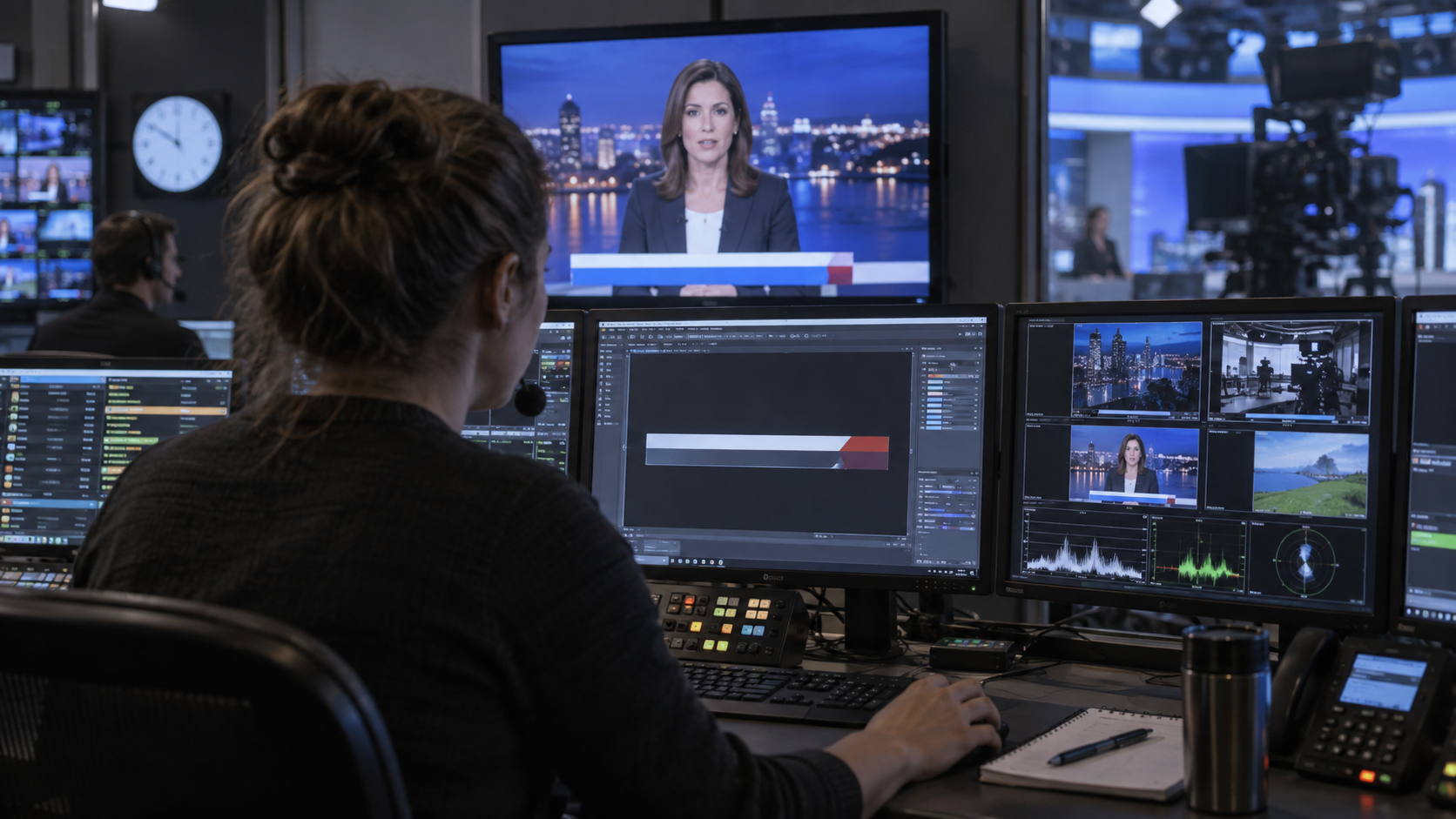
How Lower Thirds Add Context Without Interrupting the Picture
A lower third is a graphic placed in the lower portion of a television picture. It commonly identifies a speaker by name and title, but it can also label a location, summarize a developing story, display a quote, or direct viewers to additional information. The term describes its general screen position, not a requirement to fill exactly one-third of the image.
In news, lower thirds provide context that spoken narration may not repeat. A viewer joining the program midway can quickly learn who is speaking or what event is being shown. During breaking coverage, the graphic may carry a concise headline while anchors explain details that continue to change.
Effective lower thirds are easy to read and visually restrained. Designers choose type size, contrast, color, and placement so the words remain legible on different screens without obscuring important video. Editors also limit the amount of text because viewers have only a few seconds to read it.
Accuracy matters as much as design. A misspelled name, outdated title, wrong location, or premature claim can mislead viewers and harm credibility. Newsrooms therefore check graphic copy, and producers or directors cue the correct version at the appropriate moment during the broadcast.
Lower thirds are part of a larger television graphics system that may include full-screen maps, data displays, scoreboards, and alerts. Their particular strength is efficiency: they add essential identification while leaving most of the scene visible. When used carefully, the graphic supports the reporting instead of competing with it.
No. It may also show a location, headline, topic, quote, alert, or other brief context.
The graphic usually occupies the lower area of the screen, historically described as the lower third.
Graphics staff build the design system, while producers, editors, or operators often enter and cue the specific text.
Explore more "Explainers"
Discover additional explainers across politics, science, business, technology, and other fields. Each explainer breaks down a complex idea into clear, everyday language—helping you better understand how major concepts, systems, and debates shape the world around us.