

Toilet Tank Fill Valve Explainer
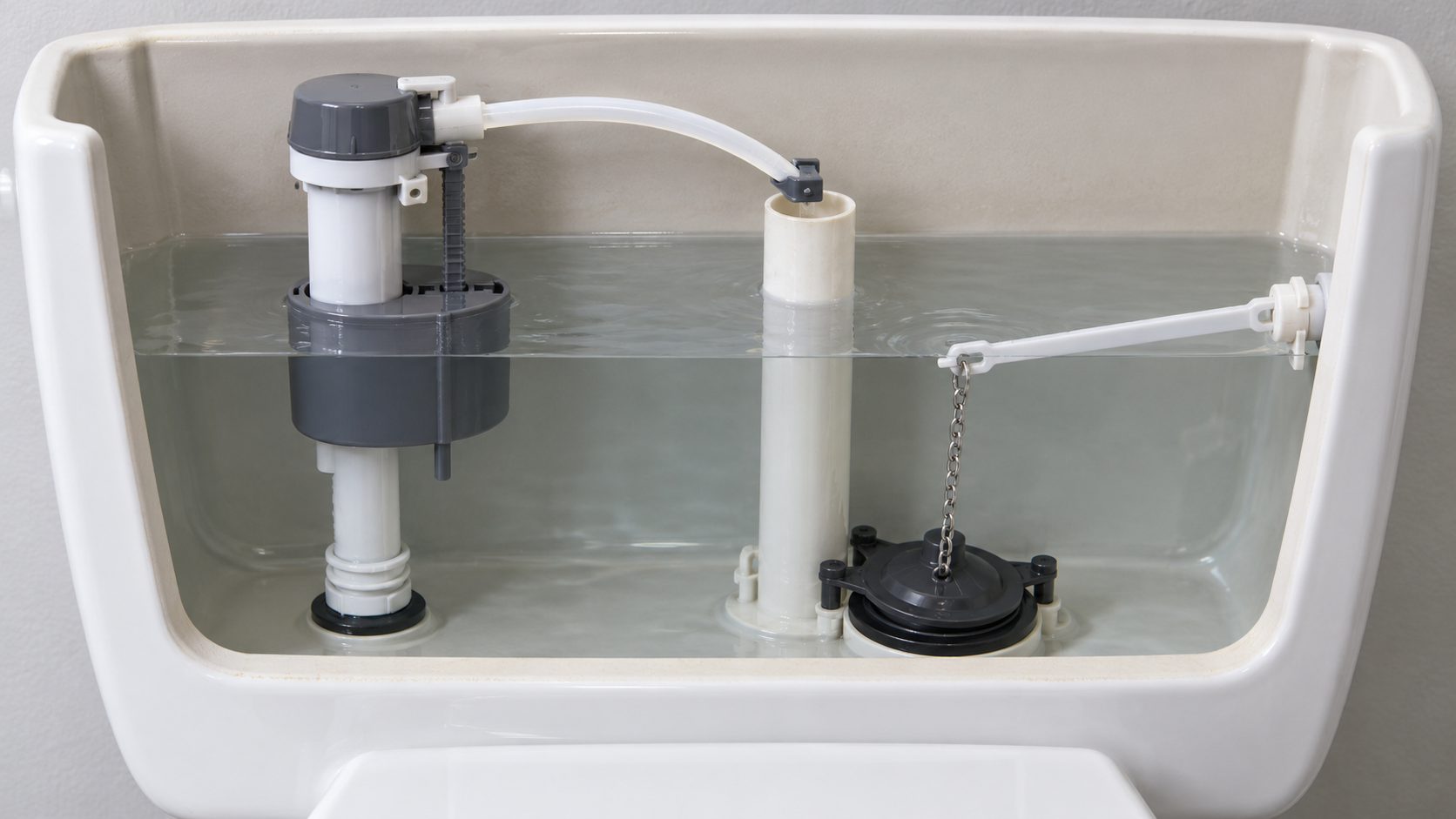
After a toilet flush, the tank water level falls and a float connected to the fill valve drops with it. That movement opens the inlet, allowing pressurized household water to enter the tank. Modern valves often send most flow through a quiet outlet near the bottom while a smaller refill tube directs water into the overflow pipe to restore the bowl’s standing water.
The float may be a cup sliding on the valve body or a ball on an arm. As the tank rises, buoyancy lifts the float. Its linkage moves a lever or small pilot seal inside the valve. In many diaphragm designs, closing a tiny pilot passage lets pressure build above a flexible diaphragm. That pressure presses the main seal onto its seat and stops the much larger inlet flow.
Using water pressure to assist closure lets a light plastic float control a forceful supply line. The float does not directly plug the full opening; it changes pressure balance across the diaphragm. An adjustment screw, rod, or clip changes the height at which the pilot closes. The normal waterline should remain below the overflow tube according to the toilet and valve instructions.
The refill tube has a separate purpose from tank filling. It replaces water lost from the bowl during the flush, but its end should be clipped above the overflow opening rather than pushed deeply down the pipe. A submerged tube can create a siphon that wastes water after the valve closes. Correct refill flow also matters: too little leaves a low bowl level, while excess simply runs down the drain.
A valve that hisses or runs intermittently may be reacting to water leaking past the flush valve, not failing itself. Debris on the fill-valve seal, a stuck float, excessive supply pressure, or an incorrect height can also prevent a clean shutoff. The supply should be closed before service, and parts must match the valve model. Cracked connections and deteriorated hoses require prompt replacement.
The fill cycle is a feedback system based on level. Low water lowers the float and commands flow; rising water increases buoyant force; the float eventually changes the pilot pressure and closes the main seal. The tank then stores enough water for the next flush. The valve needs no electronic sensor because the water itself positions the float that measures and controls its level.
A float rises with the tank water and closes a pilot passage, allowing pressure to push a diaphragm against the inlet seat. Key terms include float, buoyancy, pilot, diaphragm, valve seat, refill tube, overflow pipe, and waterline.
It refills the toilet bowl while the tank fills. Its outlet should remain above the overflow opening to avoid siphoning water continuously.
Water may be leaking slowly from the tank through the flush valve. When the level drops, the float reopens the fill valve to replace it.
Explore more "Explainers"
Discover additional explainers across politics, science, business, technology, and other fields. Each explainer breaks down a complex idea into clear, everyday language—helping you better understand how major concepts, systems, and debates shape the world around us.