

Drain Plunger Pressure Explainer
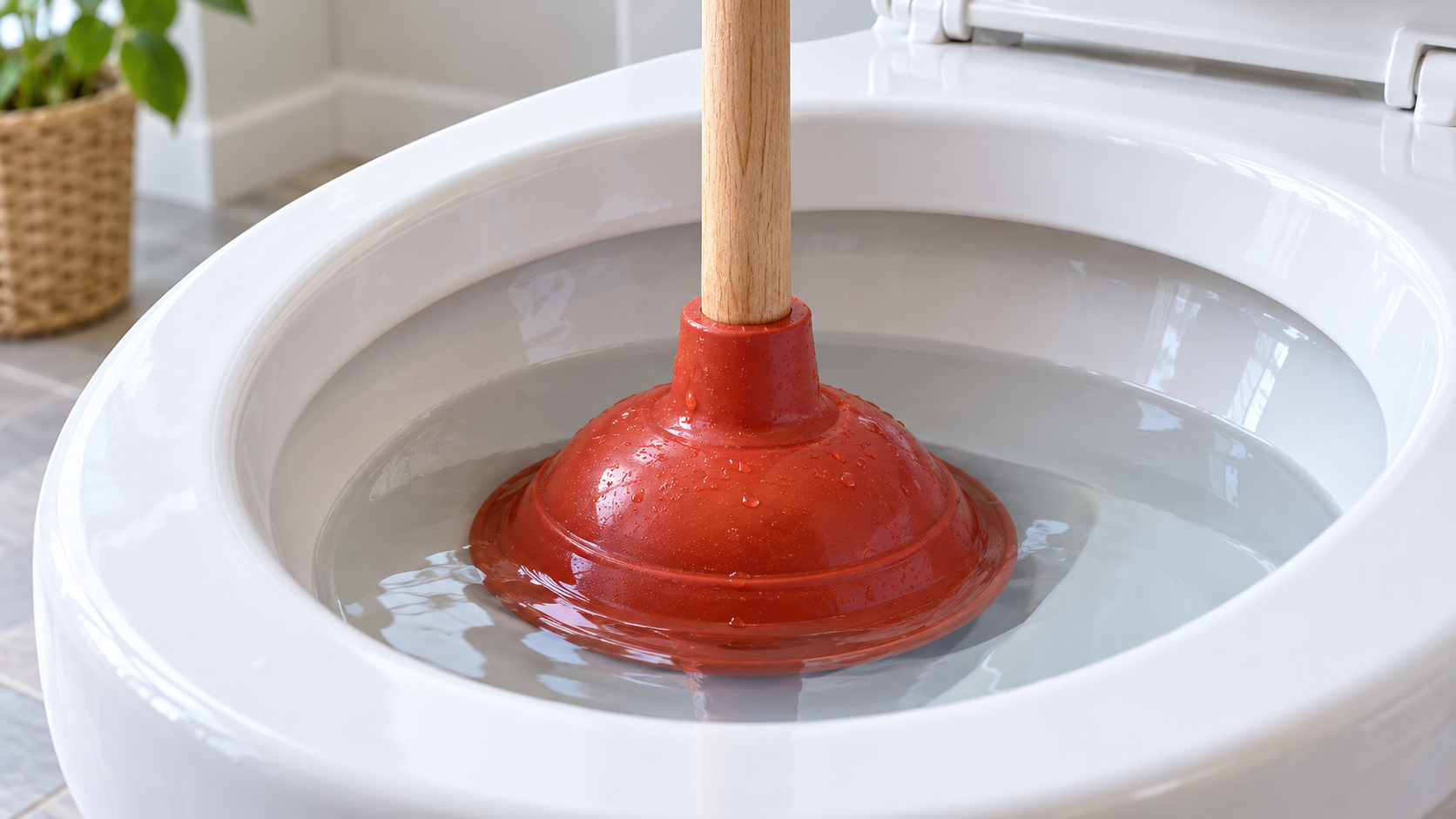
A plunger works by sealing a flexible rubber cup around a drain opening and moving fluid inside the pipe. Pushing the handle collapses the cup and raises pressure beneath it. Pulling back expands the cup and lowers that pressure. Repeated strokes send alternating force through the water toward the obstruction, which can loosen, deform, or shift the clog into a wider section of pipe.
Water is important because it transmits pressure far better than a cup full of compressible air. The plunger rim should be submerged and fitted closely to the fixture surface. A toilet plunger usually has a projecting flange that enters the bowl outlet and improves the seal. A flat cup suits sinks or tubs. The tools look similar, but their contact geometry determines how much pressure reaches the drain.
The first push should be controlled so trapped air does not spray dirty water. Once the cup is flooded, steady forceful strokes move the water column in both directions. Suction is not the only useful action. The outward pressure can break material loose, while the return stroke can pull it away from a tight bend. Keeping the seal intact matters more than moving the handle as fast as possible.
Nearby openings can leak pressure. A sink overflow, second basin, or uncovered branch may need to be sealed with a wet cloth or stopper. Chemical cleaners should not be mixed with plunging because splashes can cause burns and incompatible products can release hazardous gases. A plunger is best for soft, local obstructions; it cannot retrieve a solid object lodged mechanically or repair a damaged pipe.
If several fixtures back up together, the blockage may be farther down the drainage system and professional service may be appropriate. Repeated violent force can damage loose seals or overflow a fixture. After flow returns, running water verifies drainage and carries loosened material onward. The plunger should be cleaned and dried after use, and separate tools for toilets and sinks reduce cross-contamination.
The simple cup is therefore a hand-powered hydraulic actuator. Its flexible walls change the volume of a temporarily sealed chamber, creating positive and negative pressure pulses. The water delivers those pulses around bends to the clog. Success depends on matching the cup to the opening, removing air, preserving the seal, and moving the fluid with controlled strokes rather than merely pressing on the visible drain.
A sealed rubber cup changes volume over the drain, sending alternating pressure through water to loosen and move a clog. Key terms include seal, cup, flange, water column, pressure pulse, suction, overflow, and obstruction.
Water is far less compressible than air, so cup movement produces a stronger pressure change in the pipe instead of merely squeezing an air pocket.
An open overflow provides an easy path for pressure to escape, weakening the pulses that should travel down the drain toward the blockage.
Explore more "Explainers"
Discover additional explainers across politics, science, business, technology, and other fields. Each explainer breaks down a complex idea into clear, everyday language—helping you better understand how major concepts, systems, and debates shape the world around us.