

Padlock Shackle and Latch Explainer
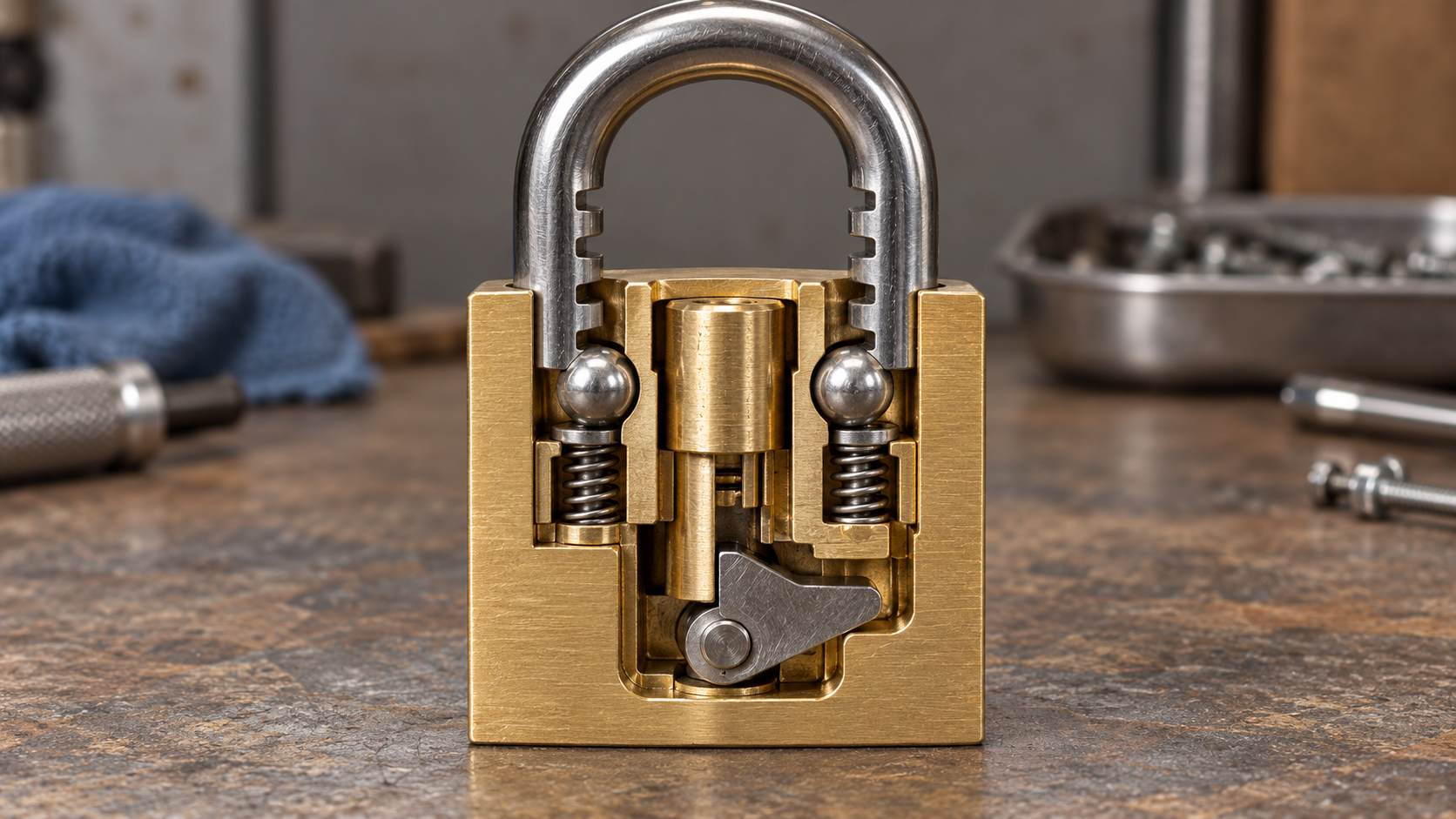
A padlock closes when its U-shaped shackle enters holes in the lock body and internal locking pieces engage notches near the shackle ends. Those pieces may be steel balls, dogs, or levers. Once engaged, they block the shackle from moving upward even when someone pulls on it. The body surrounds the mechanism and gives the user a portable way to join a hasp, chain, or cable.
In many keyed padlocks, inserting the correct key aligns pins or discs so the cylinder can rotate. A cam on the back of that cylinder then moves the locking pieces inward, away from the shackle notches. A spring may lift one side of the shackle when it is released. Removing the key returns the cam and locking pieces to their secure positions, although exact sequences vary among lock designs.
Single-locking models secure one shackle leg and use a fixed pivot or heel on the other. Double-locking models engage both legs, improving resistance to twisting and pulling. Ball-bearing locks use round elements that are difficult to push aside by striking the body. Combination padlocks replace the key cylinder with wheels or a dial, but their decoded mechanism ultimately permits a gate or cam to release the same kind of shackle restraint.
Closing commonly pushes a beveled shackle surface past spring-loaded locking pieces. When a notch reaches them, they snap outward into it. Some locks require the key to remain turned during closing; others latch simply by pressing the shackle down. The audible click is not proof of good installation. The shackle must pass fully through the hardware, and the hasp or chain must be at least as resistant as the lock.
Weather, grit, and corrosion can prevent locking parts from reaching their full positions. A shackle that will not seat should not be hammered, because misalignment or debris may be blocking it. Lubricants must suit the lock maker and environment. A padlock with a deeply cut shackle, cracked body, loose cylinder, or unreliable latch should be replaced. No small portable lock is immune to tools or prolonged attack.
A padlock works by converting authorization into clearance. The key or combination moves an internal cam only when the correct condition is met; the cam withdraws the locking pieces; and the shackle then has a clear vertical path. Without that movement, strong metal elements occupy the shackle notches and turn pulling force into load on the lock body. Security depends on every link in that mechanical chain.
Internal balls or dogs enter notches in the shackle and block upward movement until a key or combination turns a cam that retracts them. Key terms include shackle, notch, locking dog, ball bearing, cylinder, cam, heel, and double locking.
Locking elements engage both shackle legs rather than only one, making the shackle harder to twist or pull from the body.
A partial engagement or obstructed hasp can create sound without full notch capture. Tugging the shackle verifies that the locking pieces actually seated.
Explore more "Explainers"
Discover additional explainers across politics, science, business, technology, and other fields. Each explainer breaks down a complex idea into clear, everyday language—helping you better understand how major concepts, systems, and debates shape the world around us.