

Refrigerator Magnetic Gasket Explainer
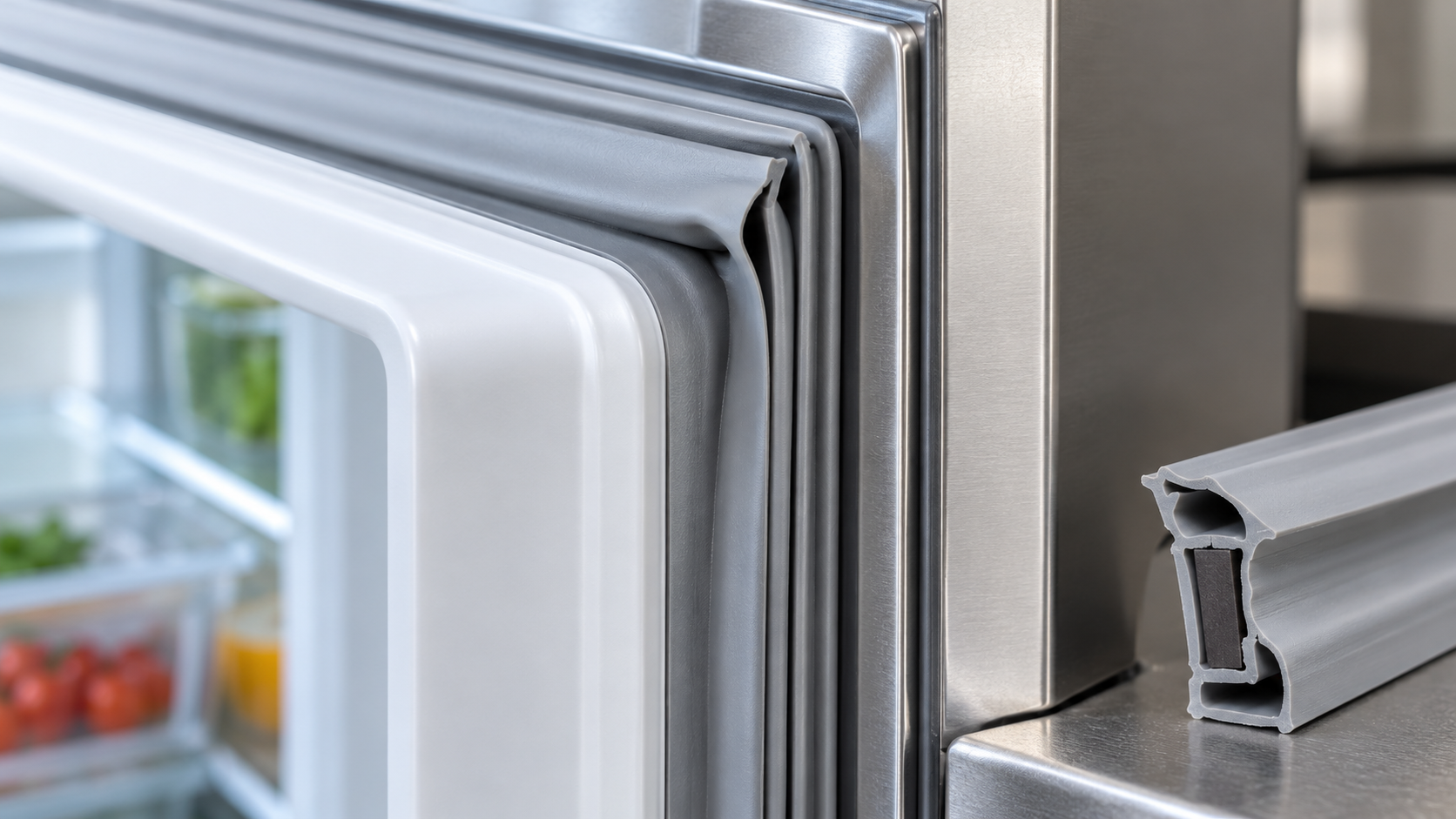
A refrigerator door gasket is a flexible perimeter seal attached to the door liner. Its hollow folds compress when the door closes, allowing the face of the gasket to conform to small irregularities around the cabinet opening. A magnetic strip embedded inside the outer edge attracts the steel cabinet flange. That distributed attraction holds the gasket against the frame along all four sides.
The seal limits exchange between cold dry interior air and warm humid room air. It is not usually a perfect vacuum barrier, but slowing leakage reduces the heat and moisture the refrigeration system must remove. Moist room air entering through a gap can condense or freeze near the opening, while a broad continuous contact band keeps infiltration small during the long periods between door openings.
The pleated profile works like a soft bellows. It lets the magnetic face reach the cabinet even when the door position varies slightly, while the inner portion anchors to a channel or fasteners. Corners are molded or joined so the air path remains closed. The magnetic insert is flexible and runs continuously enough to spread holding force instead of relying on a few strong latches.
A door can feel briefly stuck after closing because warm air that entered is cooled and contracts, lowering pressure inside until it equalizes through small leakage paths or a designed vent. The magnet adds steady closing force, but it is not creating the pressure difference. Hinges, leveling, and loaded door shelves also affect contact. A sagging door can pull one gasket corner away while other sides still look normal.
Crumbs, grease, and sticky residue prevent the soft face from seating. Cleaning should follow the appliance maker’s instructions so solvents do not damage the polymer. A folded gasket may relax with mild approved warming, but cracks, hardened sections, torn corners, or a loose magnetic strip require replacement. The gasket profile and dimensions must match the model, and the door should be checked around its full perimeter.
The seal succeeds through compliance rather than rigid precision. The hollow polymer absorbs small alignment errors, the magnetic strip supplies gentle force everywhere, and the cabinet flange provides a smooth landing surface. Together they maintain a narrow thermal boundary while still letting the door open by hand. Clean contact, sound hinges, and an undamaged continuous gasket are all part of the same sealing system.
A flexible hollow gasket conforms to the cabinet while an embedded magnetic strip holds its face against a steel flange. Key terms include gasket, bellows, magnetic strip, flange, compression, infiltration, condensation, and pressure equalization.
Air admitted during opening cools and contracts after closing, briefly lowering interior pressure until air slowly equalizes through normal paths.
No. The magnet supplies contact force, but the flexible gasket surface forms the actual airflow restriction and must remain clean, continuous, and aligned.
Explore more "Explainers"
Discover additional explainers across politics, science, business, technology, and other fields. Each explainer breaks down a complex idea into clear, everyday language—helping you better understand how major concepts, systems, and debates shape the world around us.