

Bread Dough Gluten Development Explainer
Wheat flour contains storage proteins, especially gliadin and glutenin, that can form gluten when water is added. At first, hydrated flour is shaggy and uneven. Mixing distributes water and brings protein molecules into contact. Kneading repeatedly stretches, folds, and compresses the mass, helping those molecules interact until a connected network extends through the dough.
Gliadin contributes flow and extensibility, while glutenin polymers contribute strength and elasticity. Bonds among the molecules can break and reform as the dough moves. Kneading does not line every strand into a perfect direction; it develops a dynamic three-dimensional network. Starch granules and other flour components remain embedded within that network, which becomes smooth enough to resist tearing while still yielding under steady force.
The network matters because yeast fermentation produces carbon dioxide. Gas expands existing bubbles in the dough, and hydrated gluten walls stretch around them. If the network is too weak, bubbles merge or escape and the loaf spreads. If it is very tight, the dough may resist expansion. Hydration, flour protein level, salt, fat, sugar, acidity, and fermentation time all change how the network develops.
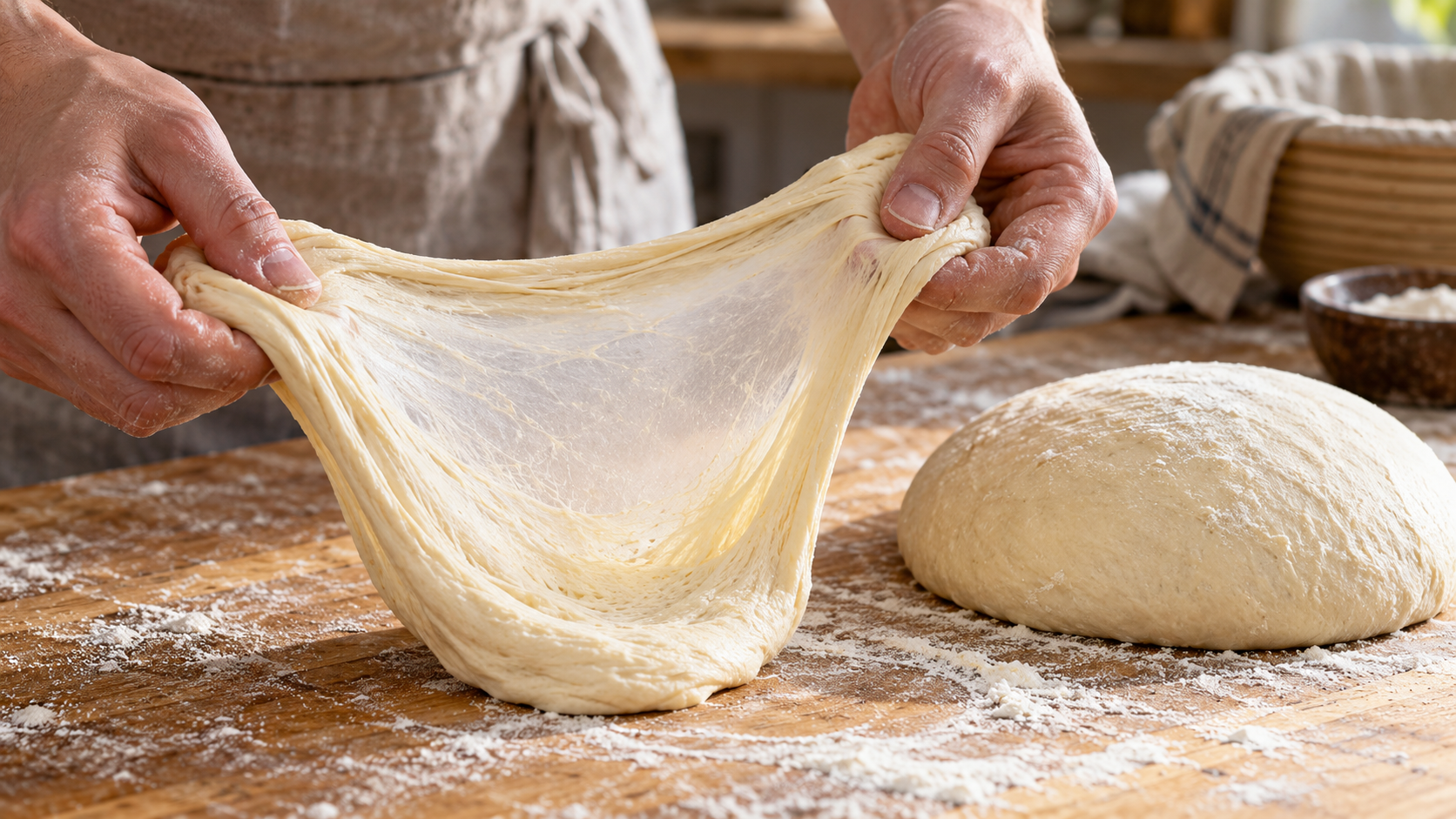
Rest can substitute for some mechanical work. During an autolyse or simple pause, water continues moving through the flour and enzymes begin modifying dough components. Later folds gently reorganize and strengthen the mass. Intensive machine mixing develops structure quickly but also warms and oxidizes the dough. Hand kneading provides feedback: the dough usually becomes less ragged, more elastic, and able to stretch into a thin window.
The windowpane test is an indication, not an absolute rule. Whole-grain bran can cut thin films, very wet dough may remain sticky, and some breads intentionally use limited development. Adding large amounts of flour merely to eliminate surface stickiness can make the final loaf dry. Recipe method and desired crumb should guide mixing. A mixer must also stay within its dough capacity and recommended speed.
Kneading works by giving mobile hydrated proteins repeated chances to connect and redistribute stress. Each stretch exposes new contact, each fold layers the network, and each rest allows tension to relax. The result is not a hard skeleton but a viscoelastic film system: strong enough to trap gas for minutes or hours, yet extensible enough to grow with the bubbles as the dough proofs and bakes.
Water hydrates gliadin and glutenin, while mixing and folding help them form a viscoelastic network that traps gas. Key terms include gluten, gliadin, glutenin, hydration, extensibility, elasticity, fermentation, fold, and windowpane.
Yes. Time, hydration, and periodic folds can develop and organize the network, which is why no-knead and stretch-and-fold methods work.
Extra flour lowers effective hydration and may create a stiff mass that is difficult to expand, producing a drier, denser crumb than intended.
Explore more "Explainers"
Discover additional explainers across politics, science, business, technology, and other fields. Each explainer breaks down a complex idea into clear, everyday language—helping you better understand how major concepts, systems, and debates shape the world around us.