

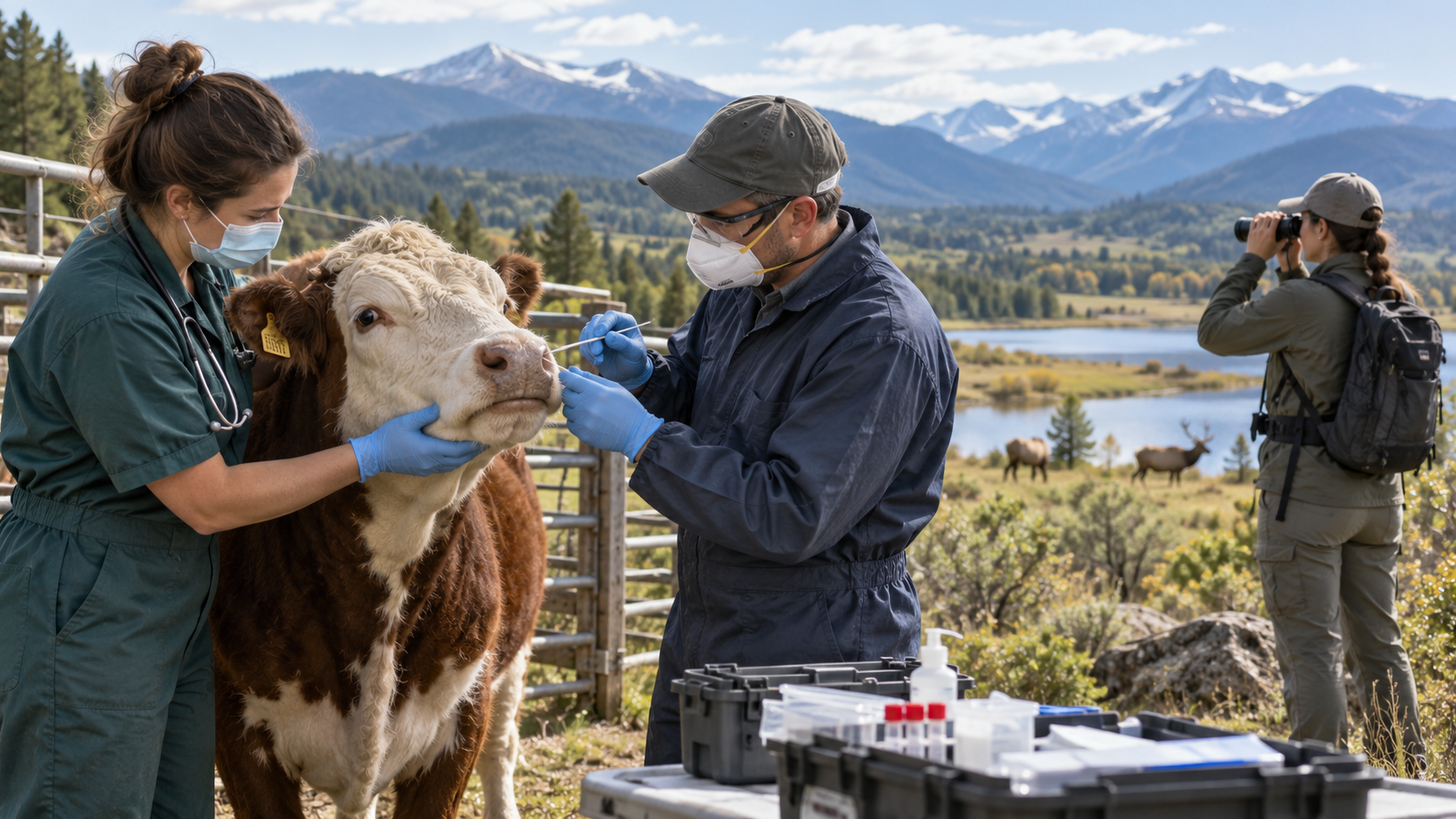
Zoonotic Diseases Explainer
Zoonotic diseases are infections caused by germs that spread between animals and people. The agents can be viruses, bacteria, parasites, or fungi. Transmission may occur through direct contact, bites or scratches, food, water, contaminated environments, or vectors such as mosquitoes and ticks.
Animals can carry a pathogen without looking sick, and the direction of transmission is not always from animals to humans. People can sometimes infect animals as well. Risk depends on the organism, the type and frequency of contact, hygiene, animal health, environmental conditions, and whether a competent vector is present.
Spillover occurs when a pathogen crosses from its usual animal host into people. Land-use change, wildlife trade, intensive animal production, climate, travel, and encroachment can change the opportunities for contact. A spillover event does not automatically lead to an epidemic; sustained human-to-human transmission may never develop.
Prevention combines healthy animal practices, vaccination where available, food safety, vector control, environmental management, protective equipment, and surveillance across human and animal systems. People should avoid handling sick or dead wildlife and follow guidance for pets and livestock. Blaming a species or community can undermine reporting and effective control.
Transmission routes include direct contact, droplets, contaminated surfaces, food and water, and bites from infected vectors.
The relevant precautions depend on the route, so one generic approach cannot prevent every zoonosis.
Spillover is a cross-species transmission event. For wider human outbreaks, the pathogen must also spread efficiently enough among people or through repeated animal exposure.
Genetic change, contact patterns, immunity, and environment influence whether that next step occurs.
Safe animal care, food handling, vaccination, surveillance, and early reporting reduce risk more effectively than fear or indiscriminate animal killing.
Messages should identify specific behaviors and exposures while respecting farmers, animal owners, workers, and affected communities.
Explore more "Explainers"
Discover additional explainers across politics, science, business, technology, and other fields. Each explainer breaks down a complex idea into clear, everyday language—helping you better understand how major concepts, systems, and debates shape the world around us.